

American Football - Game Rules
Object of the Game
The object of American football is to score more points than your opponents in the allotted time. To do this they must move the ball down the pitch in phases of play before eventually getting the ball into the ‘end zone’ for a touchdown. This can be achieved by either throwing the ball to a teammate or running with the ball.
Each team gets 4 chances (downs) to move the ball 10 yards forward. Once they pass the 10 yards their downs reset and they start again for another 10 yards. After 4 downs have passed and they have failed to make it over the 10 yards required the ball will be turned over to the defensive team.
Whilst there are only 11 players from each team on the field at any team, an American football team is actually made up of 45 players. The teams are generally split into three groups of attacking (generally smaller, stronger, faster type of players, including a quarterback who is said to run the attacking plays and throw the ball to their teammates), defence (larger, more powerful players designed to stop players from running) and special team players (responsible for the kicking and punting side of the game with a mixture of larger and faster players).
An American football field is generally around 100 yards long and 160 yards wide. Lines are drawn on the field at 10 yard interval to indicate how far each team has to go before reaching the end zone. The end zones are added at each end of the pitch and are roughly 20 yards in length each. Posts can also be found at each end of which the kicker kicks the ball over.
Scoring
When a player scores a touchdown six points are awarded to their team. A touchdown can be scored by either carrying the ball into the end zone or receiving the ball from a pass whilst in the end zone. After a touchdown has been scored the attacking team have opportunity to kick the ball for an extra point. The ball must pass between the upright posts for a successful kick.
A field goal can be scored from anywhere on the pitch at any time (usually on the final down) and a successful kick will result in three points. A safety is where the defensive team manages to tackle an attacking opponent in their own end zone; for this the team will receive 2 points.
Winning the Game
The team with the most points at the end of the game will be deemed the winner. If the points are tied then over time will come into play where the teams will play an additional quarter until a winner is found.
Rules of American Football
- Games last for four 15 minute quarters. A 2 minute break between the 1st & 2nd and 3rd & 4th quarters is had along with a 15 minute rest between 2nd and 3rd quarters (half time).
- Each team has 4 downs to gain 10 or more yards. They can either throw or run the ball to make the yards. As soon as the team gains the required yards then the downs reset and the yardage resets. Failure to make the yardage after 4 downs will result in a turnover.
- There are hundreds of different plays that players can run on any down. Plays are made up by the teams and often have players running all over the place (routes) in what is essentially organised chaos. The head coach or quarter back calls the on field plays for the attacking team whilst the defensive captain calls the plays for the defensive team.
- At the start of every game is the coin toss to decide which team receives the ball first and which side of the pitch they want to start from.
- The game begins with a kick-off where one team punts the ball down field for the other team to then run back with the ball as far as possible.
- On fourth down the offence has the option to either try to make up the yards they are short or to kick the ball. If they decide to kick they have two options; to punt or to try for a field goal. Depending on their position on the pitch will usually dictate their paly. Anything within 40 yards or so of the opposition’s goal posts will result in a field goal attempt. Further back will likely mean they take the punt option
Archery Rules
The need to master archery – for huntsmen and soldiers alike – inevitably led to practising the art, which in turn led to organised tournaments, the first recorded event of which took place in Finsbury in England in 1583 and included 3000 participants. The development of guns caused archery to lose its appeal on the battlefield, but it remained popular as a pastime and regular competitions were held in various countries. Archery was first included as an Olympic sport in 1900 for men and 1904 for women – one of the earliest sports for female competitors – and then in 1908 and 1920, then dropping out for a few decades before being reintroduced in 1972, since when it has been a mainstay of the Games.
Competitive archery – that is, archery that involves archers aiming arrows at a target – has various forms, but all have the same aim: to shoot your arrows as close to the centre of the target as possible. In the Olympics competitors aim at a target from a distance of 70 metres, and rounds include a ranking round where the overall scores determine the athletes’ rankings priors to a head to head elimination format.
Players & Equipment
While clearly only one archer holds a bow at once, both individual and team competitions are undertaken. Archers must, of course, have a bow, which is described by the World Archery Federation (WA) as “an instrument consisting of a handle (grip), riser (no shoot-through type) and two flexible limbs each ending in a tip with a string nock.”
The bowstring may have any number of strands as long as it fits the bow, and an adjustable arrow rest and a bow sight may also be used. There is little restriction over the types of arrows used, other than those that may cause undue damage to targets, though the maximum diameter of the arrow shaft should not exceed 9.3mm and the diameter of the tips should not exceed 9.4mm. The athletes’ arrows should all be marked with his or her name or initials on the shaft and all arrows used by a competitor in a particular round (or “end”) should be identical.
Finger protection (including tape or gloves) may be used, as are chest protectors, arm guards and other such accessories that offer no explicit advantage other than of a protective or comfort-enhancing nature.
The target itself varies in size –those used in Olympic archery events measure 122cm in diameter – but all contain 10 concentric rings which represent the different scoring sectors. The outermost two rings (called one ring and two ring) are white, thre
Equipment List:Archery
Fundamentals: Basic Extras: Recommended Extras:
Riser Sight Stabiliser
Limbs Arm Guard Finger Sling
Bow String Bow stand Clicker
Arrow Rest Quiver Bowcase/Backpack
Finger Tab Arrow Puller
Arrows Bow Square
Bow String Wax
Stringer
Scoring
Scoring in archery is very simple: you just add up the number of points based on where your arrows hit the target. The highest score for a single arrow is 10 for hitting the inner gold ring, while the least (for hitting the outer white ring) is one point. Arrows missing the target altogether do not score at all.
In Olympic competition athletes must shoot 72 arrows in 12 phases, with the overall cumulative score deciding their ranking. They then go into a head to head knockout competition where they must simply score more than their opponent. Tournaments vary in format and the number of arrows competitors must shoot and the distance to the target.
Winning the Game
As mentioned it would depend on the specifics of the tournament in which the archer is competing, but in an archery competition the winner is either the person who has the highest cumulative total score after a set number of arrows, or the one who has successfully overcome all opponents faced in a knockout scenario.
In the event of a tied score the archer with the highest number of 10s (including inner 10s) is declared the victor. If that number is also equal the one with the greater number of inner 10s is the winner. Alternatively – or subsequently – a shoot-off can be used to separate the competitors who have tied.
Rules of Archery
- Archers must adhere to all official rules in terms of the equipment they use in the performance of their sport, with the main emphasis being on them using no equipment or accessories that would give an unfair advantage over an opponent.
- The maximum time permitted to shoot an end of three arrows is two minutes, and four minutes for an end of six arrows.
- Athletes may not raise the bow arm until the signal to start is given and penalties can be given – in the form of points forfeits – if the bow is drawn after the official practice has been closed.
- An arrow cannot be re-shot under any circumstances. The arrow may be considered not to have been shot if it falls from the bow or misfires, or if the target blows or falls over. Extra time would be given in such circumstances.
- An arrow that rebounds or hangs from the target will still score based on the mark it makes on the target face. Arrows that stick – Robin Hood-style – in the nock of another shall score the same as the arrow in which they are embedded.
- Athletes can be disqualified, have points deducted or be banned from competition for various breaches of rules, based on the severity of the offence.
- If equipment is damaged, appeals can be made to the judge for such equipment to be replaced or fixed, and any time allowances will be at the judge’s discretion.
Athletics Rules
Athletics is the collective name for a collection of sporting events that involve competitors running, throwing, walking and jumping. The roots of athletic events are prehistoric, with ancient communities competing with each other in various running, jumping and throwing events.
Athletic events were prevalent in the ancient Olympics in Greece, starting originally with just a running race and gratefully expanding over time to include various running, jumping and throwing events. To this day, success at the Olympic Games is still seen as the pinnacle of achievement in the sport of Athletics – although there also World Championships and various national and continental championships both indoors and outdoors.
Men's Athletics
Modern day men's athletics includes the following activities:
- 100 metres
- 200 metres
- 400 metres
- 800 metres
- 1500 metres
- 5000 metres
- 10,000 metres
- Marathon
- 110 metres hurdles
- 400 metres hurdles
- 3000 metres steeplechase
- 4 × 100 metres relay
- 4 × 400 metres relay
- 20 kilometres race walk
- 50 kilometres race walk
- High jump
- Pole vault
- Long jump
- Triple jump
- Shot put
- Discus throw
- Hammer throw
- Javelin throw
- Decathlon
Women's Athletics
Modern day women's’ athletics include:
- 100 metres
- 200 metres
- 400 metres
- 800 metres
- 1500 metres
- 5000 metres
- 10,000 metres
- Marathon
- 100 metres hurdles
- 400 metres hurdles
- 3000 metres steeplechase
- 4 × 100 metres relay
- 4 × 400 metres relay
- 20 kilometres race walk
- Pole vault
- Long jump
- Triple jump
- Shot put
- Discus throw
- Hammer throw
- Javelin throw
- Heptathlon
Object of the Game
The objective in all athletics disciplines is to win the event. Depending upon the event, this involves running or walking faster, throwing further, jumping higher or jumping further than your competitors. For decathlon and heptathlon events which feature multiple athletic events, the objective is to collect as many points by performing as well as possible in each separate event.
Players & Equipment
The basic equipment for athletics consists of a vest, shorts and training shoes. Some events require specific pieces of equipment as follows:
- Pole Vault: Pole
- Shot Put: Shot
- Discus Throw: Discus
- Hammer Throw: Hammer
- Javelin Throw: Javelin
- Hurdles: Hurdles
Scoring
The only events in athletics that have any sort of scoring (in the traditional sense of the word) are decathlon and heptathlon. Because these are multi activity events, competitors are awarded points for their performance in each event. At the end of the competition, the athlete with the most amount of points is awarded the gold medal.
With all other events, there are no points. Everyone is ranked on how fast they ran/walked, height or length they jumped or how far they threw.
Winning
For running and walking events, this involves completing the race in the quickest time possible. For throwing events, it involves throwing the furthest and, in jumping events, it involves jumping further or higher than your competitors (depending upon the particular event). In athletics, winners are given a gold medal, those who are second are given a silver medal and bronze medals are given to those who come third. Those athletes finishing outside of the top three are not awarded.
Rules of Athletics
Each individual discipline has its own specific set of rules and competitors are expected to abide by these to ensure that the competition is fair.
Australian Football League - Game Rules
Every Aussie Rules match follows the same format; it is competed between two teams, each of which has 18 players, and four interchange players. Considered a contact sport, AFL is held outdoors on a large oval-shaped grass pitch, and revolves around the advancement of an oval-shaped ball. At each end of the oval are two tall posts and the overall aim of AFL is for a team to score as many goals as they can, by kicking the ball through the opposing team’s goal posts, and to prevent the other team from doing the same – often by obstructing or tackling their opponents. Held in quarters, the winner is the team to have scored the most goals after all four quarters have been played. At the end of each quarter, which lasts 20 minutes, the play rotates and teams attack in the opposite direction.
Each Aussie Rules game is overseen by an umpire, who starts the match after a siren goes off, by bouncing the ball on the ground. Fro every match there are three field umpires, two boundary umpires who conduct throw-ins once the ball is out of play, and two goal umpires who are the official score-keepers. There is also an emergency umpire who can immediately replace any of the umpires if needed. Matches held during the day use a red ball, whereas night time games are played with a yellow ball.
The AFL rules are revised each year to keep concurrent with evolutions in the game itself and public perceptions of the game. Growing recognition of the impact of drugs on sport, as well as improved understanding of the long-term consequences of certain injuries have led to major rule changes in the past.
Listed below are the official rules of Australian Football as laid out by the AFL.
AFL Rules
Every Aussie Rules match follows the same format; it is competed between two teams, each of which has 18 players, and four interchange players. Considered a contact sport, AFL is held outdoors on a large oval-shaped grass pitch, and revolves around the advancement of an oval-shaped ball. At each end of the oval are two tall posts and the overall aim of AFL is for a team to score as many goals as they can, by kicking the ball through the opposing team’s goal posts, and to prevent the other team from doing the same – often by obstructing or tackling their opponents. Held in quarters, the winner is the team to have scored the most goals after all four quarters have been played. At the end of each quarter, which lasts 20 minutes, the play rotates and teams attack in the opposite direction.
Each Aussie Rules game is overseen by an umpire, who starts the match after a siren goes off, by bouncing the ball on the ground. Fro every match there are three field umpires, two boundary umpires who conduct throw-ins once the ball is out of play, and two goal umpires who are the official score-keepers. There is also an emergency umpire who can immediately replace any of the umpires if needed. Matches held during the day use a red ball, whereas night time games are played with a yellow ball.
The AFL rules are revised each year to keep concurrent with evolutions in the game itself and public perceptions of the game. Growing recognition of the impact of drugs on sport, as well as improved understanding of the long-term consequences of certain injuries have led to major rule changes in the past.
Listed below are the official rules of Australian Football as laid out by the AFL.
THE OVAL
Every AFL game takes place on a grass oval which does not have to be a specific size, but must fit into a certain category; 135 to 185 metres in length and 110 to 155 metres wide. There are four posts at either end of the oval, with the inner two being the goal posts, and the outer two the behind posts.
On the pitch, white lines are used to outline the various areas of the oval, with the obvious being the outer boundary. There is also a 50 metre wide centre square with two circles in the middle of it which is where the bounce takes place at the beginning of a match. In front of the goal posts at either end of the oval, there are goal squares, and further out – the fifty metre line.
RULES
Unlike soccer, in AFL a player is able to use any part of their body to move the ball up the oval; most common is kicking, handballing and running while holding the ball. However there are specific rules laid out which distinctly explain manners in which to advance the ball:
-
When a player is running while holding the ball they must perform what is known as a running bounce at least every 15 metres. If a player fails to do so, the umpire calls a free kick for the opposing team at the point where the player overstepped the mark. The ‘running too far’ signal by the umpire is indicated by rolling clenched fists around each other. Running bounces are normally carried out by attacking half-back flankers, or link-men, who would receive the ball off a rebound and attack into wide space allowing their team mates to create playing options. Due to the odd shape of the ball, the running bounce is quite a skill, and some players prefer to touch the ball to the ground which is considered the same technically, however slows momentum.
-
One of the major AFL rules is holding the ball which helps prevent players from deliberately slowing down the play. This is put into practice when a player is tackled and they must dispose of the ball by either kicking it or handballing it, and is usually interpreted by the umpire as to whether or not it is a held ball. If it is called as a hold ball the team who performed the tackle is awarded a free kick.
-
When handballing, the ball must be punched from one hand with the alternate fist, and is not allowed to be punched like a volleyball serve. The ball is also not allowed to be simply handed to a teammate.
-
The ball cannot be thrown.
-
In AFL there is no offside rule, so all 18 players on both teams are allowed on any part of the oval at any point in the match.
KICKING
In AFL kicking is the most common method for advancing the ball up the field, with a variety of techniques, depending on the players form. Here are a few of the more common methods of kicking seen in AFL:
-
Drop punt: The most used kick where the ball is dropped vertically and kicked before it hits the ground. As the ball moves through the air it spins backwards and is regarded as more accurate, and easier for a teammate to mark.
-
Grubber: Is used to make it harder for the opposition to gain control of the ball, as it rolls and skids along the ground. Usually used in AFL as a scramble to score a goal, the kick is quite rare due to its unpredictability.
-
Torpedo Punt: Is harder to catch as it spins on its long axis, but is used because it can travel slightly further.
-
Checkside Punt: Also known as a banana kick, it bends away from the body and is often used for a set shot on goal with a narrow angle. It comes off the inside of the boot with the ball spinning in the opposite direction to the swing of the leg.
MARKING
One distinguishing feature of Aussie Rules is the mark. This is when a player catches a ball which has been kicked and travelled over 15 metres without being intercepted by a person or the ground, cleanly. Each year an award is given out to the mark of the year. Usually the top markers take an average of around eight a game, but in 2006, in a game between St Kilda and Port Adelaide a record 303 marks were taken. After a mark has been awarded the player then receives a free kick.
There are a variety of types of marks which can be awarded:
-
Overhead mark: Catching the ball with hands above the head.
-
Contested mark: Catching the ball against one or more opponents who are also attempting to mark or spoil that player from achieving the mark.
-
Pack mark: Catching the ball while another player, either an opponent or teammate, is in close distance to the fall of the ball.
-
High mark: Catching the ball while jumping.
-
Spectacular mark: Often named ‘screamer’ or ‘speckie’, is when the player catches the ball in the air using their legs to elevate themselves further by springing off the back of another player on the oval. It is a popular trademark of the sport as the vulnerability of the player jumping often produces spectacular results.
-
Chest mark: Catching the ball and drawing it into the chest.
-
Out in front: Catching the ball with arms extended in front of the body.
-
One handed mark: Catching the ball with one hand.
-
Diving mark: Catching the ball when jumping horizontally.
-
With the flight of the ball: Catching the ball when running in the same direction the ball is travelling in.
-
Standing one’s ground: Catching the ball when standing still which is often difficult as it gives opportunities for opponents to intercept the ball.
-
Backing into a pack: Catching the ball when travelling backwards but facing the ball.
-
Half Volley: Not technically a mark, however sometimes a player catches the ball so close to the ground it is often hard to decipher whether or not it bounced off the ground – up to the umpire to decide.
-
Juggled mark: Catching the ball with two or more touches to gain control.
-
Fingertip mark: Catching the ball with only the player’s finger tips catching it at full stretch.
Spoiling the mark is a technique used by the defence to stop a player from making the mark, but legally. It is normally a hand or a fist used in a punching motion either just prior to, or just after, a player catches the ball. However a player is not allowed to push other players out of the marking contest.
TACKLING
When the ball is considered to be in an opposing team’s possession, a player usually carries out a tackle to gain possession, or prevent the other team from maintaining control of the ball. Due to the contact nature of the sport, and the no offside rule, a player can be tackled from any direction. Because of this, teams often employ a shepherding method – where a player is protected by their own team when they have the ball as they are advancing on the field.
When tackling, the person conducting the tackle must do so below the shoulders and above the knees of the person they are tackling, and that player can be thrown to the ground. The tackler is not allowed to push in the back when tackling – making it quite a skill to do so correctly.
When a player is tackled, they must dispose of the ball, by either kicking or handballing it. If they do not, and had prior opportunity to have done so, they are penalised for ‘holding the ball’ and therefore a free kick is handed to the team of the player who made the tackle.
There are a variety of types of tackles which can be carried out in AFL:
-
Perfect tackle: Conducted when the opponent has had prior opportunity to dispose the ball, but makes it impossible for them to do so, such as pinning their arms which makes them not able to kick or handball it.
-
Gang tackle: When a player is tackled by more than one opponent at the same time.
-
Diving tackle: Tackling when off the ground.
-
Broken tackle: When the player being tackled is able to break free from it.
-
Slam tackle: When the player getting tackled’s head is deliberately slammed into the ground and is not always tolerated.
-
Wing tackle: When an arm is pinned in a tackle.
There are a few rules when it comes to tackling – a high tackle is not allowed, which is when the tackle takes place above the shoulder, and results in a free kick for the team who’s player was illegally tackled. Spear tackles are also not tolerated, which is when a player throws themself into an opponent using their shoulder to bring them down, and is a reportable offence which can result in suspension.
The player who has the ball in the tackle has methods at hand in which to dodge an imminent tackle such as:
-
Footwork: Techniques such as dummying, side stepping and baulking are all common methods.
-
Breaking: Methods such as chopping, fending off with your arms, shrugging, arching the back and ducking the head.
-
Lubricant: Some players wear lubricant on their arms which decreases the amount of grip a tackler can manage.
SHEPHERDING
Shepherding is a technique used in AFL to prevent a player from the opposing side to gain possession of the ball or from tackling a team mate. Shepherding is a legal from of obstruction in AFL and can occur even if a player is not in possession of the ball. Normally, shepherding is carried out by a player using their body to stop their opponent from reaching a contest, which is usually achieved by rigid outstretched arms and using body weight between the players.
Another form of shepherding is bumping, which is when a player uses their hip and shoulder to bump another player, not using their arms. This technique can be carried out by anyone against any opponent as long as they are within five metres of the ball. Bumping can only occur if the player bumping has their feet on the ground, and no contact can be made with the head. A shirt front, which is a front on bump and usually quite aggressive, is a reportable offence and considered illegal. While a tackle is usually more effective in dispossessing a player, a bump is normally a harder physical hit, although will not result in a free kick, whereas tackles can.
FREE KICKS
Free kicks are awarded in AFL by the umpire, the player who has caused the free kick ‘stands the mark’, while the person with the ball on the other team moves back to kick the ball over the player standing on the mark. The person taking the free kicks lines up the player on the mark, and the centre of the attacking goal into the same line before they take the free kick. A free kick does not have to be carried out as a kick, it can also be hand balled.
There are a variety of reasons for a free kick to be awarded such as:
-
Holding the ball: When a player does not dispose of the ball when tackled.
-
Running too far while carrying the ball.
-
High tackling: Tackling a player above the shoulder.
-
Holding the man: Holding/tackling a player who does not have the ball.
-
Tripping: Tackling a player below the knees.
-
Pushing in the back.
-
Taking/chopping the arms: Spoiling a mark by restricting an opponent’s arm.
-
Out on the full: When the ball is kicked and travels over the boundary line before bouncing.
-
Deliberately out of bounds: When a player deliberately forces the ball out of bounds.
-
Throwing: When a player throws the ball as opposed to hand balling.
-
Illegal shepherd.
Kicking in danger: When a player kicks an opponent while attempting to kick the ball off the ground.
Badminton Rules
Badminton is a sport that has been around since the 16th century. The sport is played indoors and the pinnacle comes from its Olympic events. The sport is very popular in Asian countries such as China and India with these countries leading the way by producing some of the world’s best players.
Object of the Game
The object of badminton is to hit the shuttlecock over the net and have it land in the designated court areas. If your opponent manages to return the shuttlecock then a rally occurs. If you win this rally i.e. force your opponent to hit the shuttlecock out or into the net then you win a point. You are required to win 21 points to win a set with most matches being best of 3 sets. Points can be won on either serve.
Players & Equipment
There are two forms of badminton, singles and doubles (it’s also possible to play mixed doubles). Each player is allowed to use a stringed racket (similar to a tennis racket but with the head being smaller) and a shuttlecock. The shuttlecock is made up of half round ball at the bottom and a feather like material surrounding the top. You can only really hit the bottom of the shuttlecock and as gravity comes into play will always revert the ball side facing down. You may only hit the shuttlecock once before it either hits the ground or goes over the net.
The court measures 6.1m wide and 13.4m long. Across the middle of the rectangular court is a net which runs at 1.55m. Running along each side of the court are two tram lines. The inside lines are used as the parameter for singles match whilst the outside line is used for a doubles match.
Scoring
A point is scored when you successfully hit the shuttlecock over the net and land it in your opponent’s court before they hit it. A point can also be gained when your opponent hits the shuttlecock into either the net or outside the parameters.
Winning the Game
To win a game you must reach 21 points before your opponent. If you do so then you will have won that set. If the scores are tied at 20-20 then it comes down to whichever player manages to get two clear points ahead. If the points are still tied at 29-29 then the next point will decide the winner of the set. Winning the overall game will require you to win 2 out of the 3 sets played.
Rules of Badminton
- A game can take place with either two (singles) or four (doubles) players.
- An official match has to be played indoors on the proper court dimensions. The dimensions are 6.1m by 13.4m, The net is situated through the middle of the court and is set at 1.55m.
- To score a point the shuttlecock must hit within the parameters of the opponents court.
- If the shuttlecock hits the net or lands out then a point is awarded to your opponent.
- Players must serve diagonally across the net to their opponent. As points are won then serving stations move from one side to the other. There are no second serves so if your first serve goes out then your opponent wins the point.
- A serve must be hit underarm and below the servers waist. No overarm serves are allowed.
- Each game will start with a toss to determine which player will serve first and which side of the court the opponent would like to start from.
- Once the shuttlecock is ‘live’ then a player may move around the court as they wish. They are permitted to hit the shuttlecock from out of the playing area.
- If a player touches the net with any part of their body or racket then it is deemed a fault and their opponent receives the point.
- A fault is also called if a player deliberately distracts their opponent, the shuttlecock is caught in the racket then flung, the shuttlecock is hit twice or if the player continues to infract with the laws of badminton.
- Each game is umpired by a referee on a high chair who overlooks the game. There are also line judges who monitor if the shuttlecock lands in or not. The referee has overriding calls on infringements and faults.
- Let may be called by the referee if an unforeseen or accidental circumstance arose. These may include the shuttlecock getting stuck in the bet, server serving out of turn, one player was not ready or a decision which is too close to call.
- The game has only two rest periods coming the form of a 90 second rest after the first game and a 5 minute rest period after the second game.
- If the laws are continuously broken by a player then the referee holds the power to dock that player of points with persisting fouls receiving a forfeit of the set or even the match.
Baseball Rules
Baseball is a sport that dates back as far as 1744 and formats of the game have been in place until the modern era today. The game is predominantly big in North America, Canada and Japan. The game is played worldwide with the pinnacle of sport coming from the World Series of Baseball. Ironically this event is only competed by North American teams.
Object of the Game
The object of baseball is to score more runs than your opponent. The idea is to hit the ball thrown at you as far as you can before running around 4 bases to complete a run. Once a player manages to get around the four bases before being tagged out then another batter comes in.
Players & Equipment
A game is played out between two teams each made up of 9 players. The game lasts for 9 innings with each team batting and fielding once in each innings. The scores at the end of the innings are added to a cumulative score and the team with most points wins. Each team has three outs per innings before they then swap roles. Each innings can be broken down into the top (where there away team bats) and the bottom (where the home team bats).
The field is split into two sections; infield and outfield. Separating the infield and outfield is a diamond shape with four bases spaced at 90 feet apart each. In the center of the infield is the pitching mound where the pitcher will stand and throw the ball towards the batter. The better will be stood at home plate. The other three bases are known as first base, second base and third base. The batter must touch all bases before successfully scoring a run.
The bats are made out of either wood, aluminium or metal materials. The ball is white with red stitching and is roughly 3 inches in diameter. The fielding team wear ‘mits’ which are basically an oversized glove to help them catch and pick up the ball. The catcher (stood behind the batter to catch any balls missed) will wear extra padding in their glove along with leg guards, a body pad and helmet.
Scoring
To score a batter must first strike the ball and make it around all four bases before the fielding team collect the ball and throws into the base they are running too. A player can score a mandatory point if they hit a home run which requires the ball to leave the playing area and often end in the crowd. A player can stop at any base if they feel they might not make the next base before being tagged out.
Players can score multiple points from one hit if more than one player is already on one of the bases. If there is a player on every base then it’s known as the ‘bases are loaded’. Depending on how many players get round to home plate before being tagged will depend on how many points you score. A maximum of four points can be scored on one hit.
Winning the Game
To win a game you must outscore your opposition through the 9 innings played. The team with the most points after 9 innings is deemed the winner. In the event of a tie and extra innings is played until a winner has been concluded.
Rules of Baseball
- Baseball has two teams of 9 players.
- The fielding team’s positions are made up of a pitcher, catcher, first baseman, second baseman, shortstop, third baseman then three outfielders at left field, centre field and right field.
- Games last for 9 innings of which both teams get to bat once. If the game is a tie after 9 innings then an extra innings will be added until a winner is found. If the team batting second in the bottom of the 9th innings are already ahead on points then they do not need to complete their batting innings.
- Once a batting order is picked then it cannot be changed throughout the game. Substitutes are permitted but they must bat where the previous player was batting.
- If the batter manages to hit the ball from the pitcher then they must make an effort to at least get to first base. They can then run to as many bases as they wish before being tagged out. Each base must be touched with some part of the batters body when running past.
- A batter gets up to three strikes before given out. A strike is deemed when a batter swings for a ball and misses it. The batter can leave the ball but if it’s within a certain area called the strike zone then a strike will also be given. If four balls miss the strike zone and the batter does not swing their bat then they can walk to first base.
- When on base the batter can then run to the next base at any point.
- Players can be dismissed by either a strike out (batsmen missing the ball three times), force out (when a player fails to make the base before the defensive player), Fly out (when the ball is hit in the air and caught without it bouncing) and tag outs (where a defensive player with the ball tags the batsmen with the ball whilst they are running).
Why Is the World Series Called the World Series If Only American Teams Play?
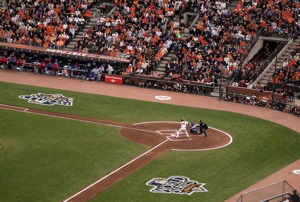
Eric Broder Van Dyke / Shutterstock.com
Major League Baseball is the professional baseball organization in the USA and is made up of two leagues, the American League and the National League. The World Series is the annual championship played between the winner of each league.
The American League
Before we go into any great detail about the origin of the title 'World Series', we’ll first look at the different baseball leagues within the United States to get a better understanding of how their system works. The American League is comprised of three divisions, each representing a different geographical area:
The American League West is made up of:
- Houston Astros
- Los Angeles Angels of Anaheim
- Oakland Athletics
- Texas Rangers
- Seattle Mariners
The American League Central is made up of:
- Chicago White Sox
- Kansas City Royals
- Detroit Tigers
- Minnesota Twins
- Cleveland Indians
The American League East is made up of:
- Baltimore Orioles
- Boston Red Sox
- New York Yankees
- Toronto Blue Jays
- Tampa Bay Rays
The National League
Like the American League, the National League comprises of three divisions, each representing a different geographical area:
The National League West is made up of:
- Arizona Diamondbacks
- Colorado Rockies
- San Francisco Giants
- San DIego Padres
- Los Angeles Dodgers
The National League Central is made up of:
- Cincinnati Reds
- St Louis Cardinals
- Pittsburgh Pirates
- Milwaukee Brewers
- Chicago Cubs
The National League East is made up of:
- Atlanta Braves
- Cincinnati Red Stockings
- Philadelphia Phillies
- Washington Nationals
- New York Mets
- Miami Marlins
As you can see, both teams contain only teams from the USA (and one from Canada), so why is it called the 'World' Series and where does this name come from?
The Origin of the Name 'the World Series'
For many years, it was believed that the name came from the fact that the original series was sponsored by the New York World Telegram newspaper, thus becoming known as the ‘World’s Series’. However, popular as this explanation may be, it’s not actually true and although the newspaper did report the results of the games, it had nothing to do with the naming of the competition.
The real reason behind the name is thanks to Barney Dreyfuss who was the owner of the Pittsburgh Pirates. In 1903, he wrote to the owner of the Boston Red Sox challenging them to a ‘World’s Championship Series’. The Pirates were the best team in the National League and the Red Sox were the best in the American League.
The games went ahead and Boston won the series five games to three. Over time, the 'World’s Championship Series' name has been shortened to the World Series and has been played every year apart from 1904 and 1994.
Are the Winners of the World Series the World Champions of Baseball?
Many Americans consider the World Series as being the world championship of baseball. They base this on the fact that generally the world’s best baseball players play in Major League baseball. This makes it the strongest league in the world consisting of players from over 20 countries.
However, the winners of the World Series aren’t in any way world champions as this title is reserved for the winners of the World Baseball Classic, which is an international tournament started in 2006. The winning teams of the competitions so far are as follows:
- 2006 - Japan
- 2009 - Japan
- 2013 - Dominican Republic
The World Series may only be a North American event but there is no doubt that it is the world’s premier baseball event. Whilst it may not feature teams from across the globe, it does feature many international players. For these reasons, we can justify the World Series as its name.
What Is the Difference Between Softball and Baseball?
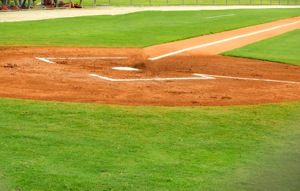
Unless you have played either softball or baseball, you may struggle to understand what the difference is. Overall, there isn’t actually much difference as the fundamental essentials of the games are the same.
However, softball is a variant of baseball that was first introduced as an indoor version of the sport but has since developed as an outdoor baseball style game that is played by adults (the majority female) and children.
For the latter, it is used as a safe and effective way of introducing baseball and the basic skills and attributes required. Despite the close relationship between baseball and softball, there are some important differences.
Bats
Although looking almost identical, bats used in baseball tend to be longer, have a greater diameter and are heavier than those used in softball. In softball and amateur baseball, players may use bats made out of wood, metal or various composites but in professional baseball, only wooden bats may be used.
Balls
Baseballs are white with red stitching and have a circumference of 9 inches. Softballs are much larger with a circumference of 12 inches, are yellow and are much softer (hence the name!). Younger softball players may play with a ball that is slightly smaller with a circumference of 10 inches that is easier for small hands to handle.
Pitching
Pitching is one of the most obvious differences between baseball and softball. Firstly, the pitching distance differs. This is not surprising when considering softball is played on a smaller field. In baseball, the ball is pitched from an elevated mound that is 60-feet away from the plate. In softball, the ball is pitched from a flat pitching circle that is no more than 43 feet away from the plate.
The actual physical act of pitching is the most noticeable difference. In softball, the ball has to be thrown underhand. In baseball, the pitch is almost always done overhand or sidearm. We say ‘almost always’ because there is nothing in the rules stopping a baseball pitcher throwing underhand. It is almost unheard of though because pitching overarm or sidearm enables the pitcher to throw with a lot more power and speed.
The Field of Play
One of the most obvious differences between baseball and softball is the field of play. Although the exact sizes can differ somewhat depending upon the player’s ages, softball fields are smaller than those used for baseball. This can be seen in the distances between the bases. Although they are laid out in the exact same format, the bases in softball are 60 feet apart whereas baseball bases are 90 feet apart. The distance from the home plate to the outfield fence differs too with softball fields usually being no more than 250 yards whilst baseball fields are usually over 300 feet.
Basketball Rules
Basketball dates back as far as 1891 and since then has evolved into a sport played around the world. Many countries have adopted the game such as Russia, Great Britain, Germany, Spain and parts of Asia, but it is America where the biggest and most lucrative league in the world lives: the NBA (National Basketball Association).
Object of the Game
The object of basketball is to throw the ball (basketball) into a hoop to score points. The game is played out on a rectangular court and depending on which section of court you successfully throw a ball into the basket will depend on how many points are scored. The ball can be moved around the by dribbling or passing the ball. At the end of the game the team with the most points is declared the winner.
Players & Equipment
Each team is made up of 12 players with only 5 allowed on the court at any time. The positions are broken up into Point Guard, Defensive Guard, Center, Offensive forward and Defensive Forward. Each player will then take up a position on the court but are allowed to move around as they please.
The court is a rectangular shaped and measures 91 feet long and 50 feet wide. There is a halfway line in which a small circle is found in the centre; this is where the game starts with a tip off (the ball is thrown in the air by the referee and a player from each team tries to win possession for their team). At each end of the court are two baskets both 10 feet in height. A three point arc is the outside ring, whilst in the middle of that is the key which includes a free throw line.
All that is needed to play is a court and basketball. Teams must wear matching strips with some players choosing to wear gum shields and face masks for protection.
The game is split up into 4 twelve minute quarters. In between the 2 nd and 3rd quarter is a 15 minute half time interval.
-
Basketball details
|
Size |
Circumference |
Weight |
Recommended For |
|
29.5” |
22 oz |
Men and boys ages 15 and up. This is official size for high school, college, and the pros. |
|
|
28.5” |
20 oz |
Boys ages 12-14. Girls and women ages 12 and up. This is the official size for women’s high school, college, and pro basketball. |
|
|
27.5” |
17 oz |
Boys and girls ages 9-11 years old. This is the standard youth basketball you find in most stores. |
|
|
25.5” |
14 oz |
Boys and girls ages 5-8 years old. |
|
|
22” |
10 oz |
Boys and girls ages 4-8 years old. Also known as "mini" basketball. |
|
|
Size 1 |
16” |
8 oz |
Boys and girls ages 2-4 year olds. Also known as "micro-mini" basketball. |
|
Nerf Toy |
9-20” |
1-5 oz |
Great for toddlers 0-4 years old. And fun for young hearted adults too! |
Did you notice the difference in the weight for each size?
It might not seem like a lot but it makes a huge difference when shooting the basketball.
-
Note about ball material. Rubber is heavier, more durable and costs less, and is used for outdoor play, but can also be used indoors. Leather is more expensive and used primarily indoors as it is lightweight and wears more quickly on outdoor courts. Choose what suits your requirements best.
Scoring
There are three scoring numbers for basketball players. Any basket scored from outside the three point arc will result in three points being scored. Baskets scored within the three point arc will result in two points being scored. Successful free throws will result in 1 point being scored per free throw. The number of free throws will depend on where the foul was committed.
Winning the Game
Winning a game of basketball is pretty simple; score more points than your opponents in the allotted game time. If the scores are tied at the end then an extra quarter will be played until a winner is found.
Rules of Basketball
- Each team can have a maximum of 5 players on the court at any one time. Substitutions can be made as many times as they wish within the game.
- The ball can only be moved by either dribbling (bouncing the ball) or passing the ball. Once a player puts two hands on the ball (not including catching the ball) they cannot then dribble or move with the ball and the ball must be passed or shot.
- After the ball goes into a team’s half and they win possession back the ball must then make it back over the half way line within 10 seconds. If the ball fails to do so then a foul will be called and the ball will be turned over.
- Each team has 24 seconds to at least shot at the basket. A shot constitutes either going in the basket or hitting the rim of the basket. If after the shot is taken and the ball fails to go in the basket then the shot clock is restarted for another 24 seconds.
- The team trying to score a basket is called the offence whilst the team trying to prevent them from scoring is called the defence. The defence must do all they can to stop the offence from scoring by either blocking a shot or preventing a shot from being fired.
- After each successful basket the ball is then turned over to the opposition.
- Fouls committed throughout the game will be accumulated and then when reached a certain number will be eventually be awarded as a free throw. A free throw involves one playerfrom the offensive team (the player fouled) to take a shot unopposed from the free throw line. Depending on where the foul was committed will depend on the number free throws a player gets.
- Violations in basketball include travelling (taking more than one step without bouncing the ball), double dribble (picking the ball up dribbling, stopping then dribbling again with two hands), goaltending (a defensive player interferes with the ball travelling downwards towards the basket) and back court violation (once the ball passes the half way line the offensive team cannot take the ball back over the half way line).
Beach Volleyball Rules
Beach Volleyball is an outdoor sand-based court sport played between two teams of two. The aim of the game is to hit an inflated ball over a net that hangs high at the centre of the court and make it land in the opposition's half.
Beach Volleyball originated in Hawaii around 1915, and began to surface in Europe in the 1930s. Competitions became commonplace over the subsequent decades, and the sport increased in popularity considerably during the eighties.
Beach Volleyball made its first appearance at the Olympics as recently as 1992. It was merely a demonstration event during these games, but was included as an official Olympic sport four years later. It has ever-present in the Olympics since then.
The United States of America and Brazil are the two most successful nations in Olympic volleyball. USA have secured 10 medals overall (6 gold, 2 silver, 2 bronze) whilst Brazil have picked up 13 (3 gold, 7 silver, 3 bronze)
Object of the Game
In Beach Volleyball, the main objective is to hit the ball in a tactical way so that the opposing team cannot return it in a “legal” fashion.
One team will begin the game by striking the ball over the net, which is known as a “serve”. Both teams will then compete in what is known as a “rally”, where the ball exchanges hands and flies above the net between both sides of the court. A rally finishes when one team cannot return the ball, and a point is marked for the team that forced the error.
The team that reaches 21 points (by two clear points) first is declared the winner of a set, and two set wins are required to emerge victorious in the overall match.
Players & Equipment
Court
Each Beach Volleyball team consists of two players, and the sport is performed on a sand-based court measuring 26.2 ft square. A net measuring 7 ft 11 inches high is placed at the centre of the court during male matches. In female matches, the net is set at a slightly lower height of 7 ft 4 inches. The posts used on either side of the net are placed an equal distance from each side-line to the post padding.
Ball
The inflated ball used in Beach Volleyball is often a bright colour (white, yellow, orange) and weighs around 9-10 ounces, with 2.5-3.2 lb/sq inches of pressure inside.
Technique
Professional players must practice their serve in order to maximise their chances of winning, learning how to strike the ball hard enough and in the right place so the opposing team cannot return it.
The second most important skill in Beach Volleyball after serving is attacking. Players can “attack” the ball in a variety of different ways, including using different parts of the hand to help the ball land in specific areas of the court (where the opposing team cannot return the ball). The knuckles and fingers are frequently used to help control the speed and direction of the ball.
Defending in Beach Volleyball is all about blocking the ball when it is travelling at distance towards ground in your half of the court. Special “block signals” are used by players as a way to tell their teammates what sort of block they are planning to utilise. These are usually made behind their back, so the other team cannot see what they are about to do. Different types of finger movements are used to indicate different types of blocks. These signals are planned and practiced in advance so communication between teammates is as effective as possible.
Clothing
Since the turn of the millennium, players have been required to wear specific uniforms when participating in a Beach Volleyball match. Females are permitted to wear long-sleeved tops and shorts or a one-piece swimsuit. There remains a high degree of controversy surrounding Beach Volleyball uniforms. Whilst many players prefer shorter, lighter clothing that covers less areas of skin, organisations are hesitant to allow it amid fears that it could be considered “too revealing” by viewers and audiences.
Scoring
In Beach Volleyball, points are scored when a team manages to hit the ball in a certain way so that the opposing team cannot return the ball legally. An illegal return involves hitting the net, hitting the ball too often during one rally (three touches are permitted), or failing to strike the ball at all.
After every 7 points during the first two sets, teams are required to swap ends and move to the other side of the court. They also required to switch to the other side after every 5 points during the third set.
A timeout is held when there is an accumulate total of 21 points scored, like when the score line reads 14-7, for instance.
Winning
In Beach Volleyball, the first team to win two sets is declared the winner. An individual set is won by scoring 21 points – or 15 points in the final set – by two clear points. So, for example, if the score reads 21-20, the set will continue until one team leads by two points (e.g. 24-22)
Rules of Beach Volley Ball
As a court sport, Beach Volleyball involves a number of strict rules, including:
- Players are allowed to touch the ball three times maximum before they return it across the court – blocks included.
- There are a number of moves and hits that are classed as illegal in Beach Volleyball, including “hand touches”, “tips” and “dinks”.
- Players are permitted to cross below the net in Beach Volleyball – but this will be classed as a foul if it tampers or interferes with the opposing team's play.
- There is no set position for players, meaning they can move to any part of the court they wish at any time – provided it is on their side.
Billiards Rules
Billiards (in this case referring to English Billiards) is a game that is popular not just in England but around the world thanks to its popularity during the time of the British Empire. Billiards is a cue sport that is played by two players and utilises one object ball (red) and two cue balls (yellow and white).
Each player uses a different color cue ball and attempts to score more points than their opponent and reach the previously agreed total required to win the match.
There are many forms of Billiards around the world, but it is English Billiards that is one of the most common and most popular. Originating in England, it is an amalgamation of a number of different games, including the ‘winning and losing carambole game’. The game is played across the world, especially in Commonwealth countries but over the last 30-years it has seen its popularity decline as snooker (a more straightforward and TV friendly game) has rocketed in the numbers both playing and watching on TV.
Object of the Game
The object of a game of Billiards is to score more points than your opponent, reaching the agreed amount that is needed to win the game. Like chess, it’s an immensely tactical game that requires players to think both attacking and defensively at the same time. Although not a physical game in any sense of the word, it is a game that requires a tremendous degree of mental dexterity and concentration.
Players & Equipment
English Billiards can be played one-vs-one or two-vs-two with the singles version of the game being the most popular. The game is played on a table that has exactly the same dimensions (3569 mm x 1778 mm) as a snooker table, and in many places both games are played on the same table. Three balls must also be used, one red, one yellow and one white, and each must be 52.5mm in size.
Players have a cue each which can be made from wood or fibreglass and this is used for striking the balls. The last essential piece of equipment is chalk. During the game, each player will chalk the end of their cue to ensure there is good contact between the cue and the ball.
Scoring
In English Billiards, scoring is as follows:
- A cannon: This is where the cue ball is struck so that it hits the red and other cue ball (in any order) on the same shot. This scores two points.
- A pot: This is when the red ball is struck by the player's cue ball so that the red ends up entering a pocket. This scores three points. If the player’s cue ball strikes the other cue ball resulting it going down the pocket, then this scores two points.
- In-off: This occurs when a player strikes their cue ball, hitting another ball and then entering a pocket. This scores three points if the red was the first ball hit and two points if it was the other player’s cue ball hit first.
Combinations of the above can be played in the same shot, with a maximum of ten points per shot possible.
Winning the Game
English Billiards is won when one player (or team) reaches the agreed amount of points needed to win the game (often 300). Despite their being only three balls on the table at any one time, it is a very tactical game which requires a tremendous degree of savvy gameplay as well as skill to ensure that you keep ahead of your opponent.
As well as thinking in terms of attack and scoring points, it is essential for anyone who wants to win a game of billiards to think defensively at the same time and make things as difficult as they can for their opponent.
Rules of Billiards
- All games of Billiards shall be played with three balls, consisting of a red, yellow and white.
- Each of the two players has their own cue ball, one having the white ball, the other the yellow ball.
- Both players must decide who is to break off first, and this is done by both players simultaneously hitting their cue ball the length of the table, hitting the cushion and returning back towards them. The player who gets their cue ball nearest to the baulk cushion at the end the shot was played gets to choose who breaks.
- The red is then placed on the Billiards sport and then the player going first places their cue ball in the D and then plays the ball.
- Players then take it in turn to attempt to score the most amount of points and eventually win the game. Players can score in three ways:
- In-off: When your cue ball hits one of more balls and then goes down a pocket (2 / 3 points).
- Pot: This is when any ball other than your cue ball goes into a pocket (2 / 3 points).
- Cannon: This happens when the cue ball hits both other balls (2 points).
- Players remain on the table until they fail to make a scoring shot.
- Following a foul, the opposing player has the option of having the balls all put on their spots or leaving the table as it is.
- The winner of the game is the first player to the points total that was declared the winning total before the game.
Bowls Rules
Bowls, also know as lawn bowls, is a game involving bowls – almost-spherical ball-like objects with flattened sides and a weight bias – and jacks (a smaller ball, this time spherical in shape), in which the former are rolled (bowled) towards the latter on the bowling green. It can be played indoors or outside on grass or artificial surfaces and on flat (flat-green bowls) or convex (crown-green bowls) pitches (greens). It has a long history that stretches back to at least the 13th century and possibly earlier, with the world’s oldest surviving bowling green – the Southampton Old Bowling Green – dating way back to 1299.
It has had something of a coloured history too as it was seen by British monarchs such as Edward III, Richard II and Henry VIII banned the early versions of the game for fear that it would interfere with the archery practice of their troops.
The first set of rules, the "Manual of Bowls Playing", was published in 1864 by a Glasgow cotton merchant named William Wallace Mitchell and formed the basis of the rules of the game as we know it today. Perhaps as a result of Mitchell’s rules, the home of the modern game is still in Scotland with the World Bowls Centre located in its capital Edinburgh.
Object of the Game
The object of the game is simple: to roll your bowls to as close a proximity to the jack as possible, and to ensure that one or more of your bowls are closer to the jack than any of those of your opponent.
Players & Equipment
The equipment required to get started with bowls is relatively simple too, starting with the level (or convex for crown-green) playing surface, foot mats and the jack. Players would also generally require shoes with flat soles and a set of bowls.
The bowls themselves come in a variety of sizes but are generally around 1.5kg in weight and possess a bias in weight so they roll in a curved path, the precise judgement of which is where much of the challenge of the game lies.
The bowling green is usually split into individual “rinks” in which games are played as singles (one player against one other), pairs (two against two), triples or fours. The rinks are 4.3 to 5.8 metres wide and 31 to 40 metres long. There is a ditch at either end of the green which must be wide enough for bowls to be able to fall into it if they reach it.
Scoring
A point is awarded to the player or team whose bowl is closest to the jack at the end of a round (or “end”). If a player or team has more than one bowl closer to the jack than their opponents, they will score the corresponding number of points
Winning the Game
The number of points required to win a game varies from competition to competition, but commonly the first player or team to reach 21 points or to have accumulated the greater number of points after 18 or 21 ends is declared the winner.
Alternatively players could play “sets” whereby the first to score – for instance – seven points wins a set and the overall winner is the first to five sets (or an agreed number).
Rules of Bowls
- Which player or team to bowl first is decided by the toss of a coin, after which the first bowler (the lead) places his/her mat and rolls the jack down the green.
- The jack must travel at least 23 metres to be “in play” and is moved to the centre of the rink once it comes to rest.
- The players then take turns to bowl, with points being scored by each bowl that is closer to the jack than the opponent’s closest bowl.
- Upon completion of an end play recommences in the opposite direction (i.e. from the end at which the jack previously rested).
- Bowls that fall into the ditch are disregarded, however close the jack may be to the ditch, unless they happen to touch the jack before going into the ditch. In that case they are still classified as in play.
- If the jack is knocked into the ditch though within the side boundaries of the rink it is still “alive” and in play. If it passes over the side boundary of the rink (whether in the ditch or not) a “ dead end” is declared and the end is replayed with no scores being counted.
- It is permissible – and often quite amusing! – to strike other players’ bowls with your own with the aim of gaining a strategic advantage.
Boxing Rules
In essence boxing may well be the world’s oldest sport. At its most basic it is fighting and since there has been man, there has been conflict. It is certainly at least as old as 688 BC when it was included in the ancient Olympic Games, although more regulated, codified versions of boxing date to about the 1500s. Having said that, carvings dating to the 3rd millennium BC show people fist-fighting in front of audiences so it is safe to say the art of pugilism is an ancient one indeed.
More modern rules have included Broughton’s rules from 1743, the London Prize Ring rules (1838) and the more well-known Marquess of Queensbury Rules which date to 1867. At its best boxing is graceful, elegant and explosive and a magnificent example of the human body’s abilities and few spectacles can match the sight of two top heavyweights going toe to toe.
Object Of The Game
Brutally enough the object of boxing could be stated as to concuss your fellow human being; a less barbaric sounding aphorism, to hit and not be hit, may be a preferred way to look at it, depending on your standpoint.
Players & Equipment
The exact specification of certain equipment varies according to the sanctioning body but the ring (ironically, of course, usually square) is generally around 16-25 feet (4.9-7.6m) along each side. The posts at the corner are 5ft above the level of the ring and the ring itself is usually about three or four feet off the ground on a raised platform.
Boxers wear gloves and although there has been a long history of bear-knuckle boxing, hand protection dates to Ancient Greece. Modern gloves are usually 12oz, 14oz or 16oz and are designed to protect the hand and the opponent, although there are arguments that they actually increase brain injuries by facilitating a boxer receiving more damaging blows.
Boxers are divided according to their weight with the different governing bodies having different weights and names for the groupings. Fighters only fight opponents of similar weights as physical size is so crucial to the contest.
Scoring
At professional level the bouts are scored by three ringside judges using a subjective method based on which boxer they felt won each individual round. If the match is undecided by knockout, retirement or disqualification then the judges’ scorecards are used. If all three judges agree the decision is unanimous, whilst if two think one fighter won it is a split decision. If two judges mark the fight level, or one does and the other two are divided, the fight is classed as a draw.
It is, however, more common for a fight, especially at the heavier weights, to be stopped before the 12 rounds are up. A boxer is knocked out if they are floored and cannot get up within 10 seconds, whilst the referee may disqualify a fighter for certain foul play. The other method of winning is by a technical knockout or TKO. If a boxer is unwilling to continue, or is deemed unable to do so by either the referee or his corner team or medical staff then it is a TKO. This can also be awarded if a fighter is knocked down a defined number of times in a round (usually three).
Winning The Game
The winner is either as scored by the judges if the fight goes the distance or is decided by knockout, technical knockout or disqualification, as detailed above.
In amateur bouts different methods are used, for example the referee may simply decide or ringside judges use electronic scoring to count the number of blows landed.
Rules of Boxing
- In professional boxing, bouts take place over 12 three minute rounds with one minute rest between rounds.
- The only method of attack is punching with a clenched fist and you may not strike below the belt, in the kidneys or the back of your opponents head or neck.
- You cannot use the ropes for leverage.
- You cannot hit an opponent when they are down.
- A boxer hit with a low blow can take five minutes to recover.
- If an unintentional foul (such as a clash of heads) ends the fight before four rounds are completed this is a “no contest”, from the fifth onwards the decision goes to the judge’s cards and is either a technical decision for either fighter or a technical draw.
Canoe Slalom Rules
Canoe Slalom – also known as 'Whitewater Slalom' – is a competitive water sport where athletes navigate boats through a series of gates on white water river rapids. Participants power their vehicles using paddles, and are forced to deal with turbulent conditions whilst attempting to complete the course in the fastest time possible.
Canoe Slalom involves differently designed boats to Canoe Sprint, with smaller dimensions that help to assist athletes navigate their way through the rapids with a greater degree of manoeuvrability and control. The two types of boats used in a Canoe Slalom race are canoe boats and kayak boats.
Canoe Slalom first appeared as a competitive sport back in the 1940’s, although unlike Canoe Sprint, it did not become a permanent fixture at the Olympics until 1992. France and Slovakia have experienced great success in Olympic Slalom events, whilst the Czech Republic, Spain and Germany have also picked up gold medals.
Object of the Game
The object of Canoe Slalom is to complete the course in the fastest possible time. There are four competitive events contested in Olympic Canoe Slalom. These include:
- Men's C-1: One male in a single canoe boat
- Men's C-2: Two males in a double canoe boat (set to be dropped for future Olympic events)
- Men's K-1: One male in a single kayak boat
- Women's K-1: One female in a single kayak boat
- Women’s C-1: One female in a single canoe boat (this is due to be added to the games program for the 2020 Olympics).
Players & Equipment
Most Canoe Slalom races are single events. There was a Men’s Doubles tournament in the past, but officials have recently decided to drop this event and introduce a new Women’s Singles competition instead. Races are contested in canoe boats or kayak boats, with participants using particular paddles to navigate their way through the course.
Canoe Boats
In canoe boats, athletes use single-bladed paddles. The types of canoes used in Canoe Slalom are known as “closed cockpit canoes”, with competitors taking a kneeling stance when driving.
Kayak Boats
In kayak boats, athletes use a paddle that has a blade at either end. Kayaks are available in a wide variety of different designs, are used in several types of water sports in addition to Canoe Slalom. Competitors sit inside a cockpit when driving kayak boats.
Courses
Every course in Canoe Slalom is fitted with 18 to 25 different gates, which have to be negotiated in a particular way. Green gates are downstream, whereas red gates are upstream. Canoe Slalom courses at the Olympic games are man-made concrete channels, and most teams train on their own artificial courses in the lead up to the games.
Scoring
Canoe Slalom involves completing the course in the fastest possible time, and whilst there is no points system as such, players can be given time penalties for failing to adhere to rules and regulations on the course. The fastest Canoe Slalom players often complete courses in less than two minutes, but this can vary depending on the complexity of the course and difficulty of the conditions.
Winning
In order to win a Canoe Slalom competition outright, players must progress through the qualification rounds first. These are known as “heats”, and are completed twice by all athletes. The fastest boats then proceed to the semi-finals, where every participant has one opportunity to tackle the course. The fastest boats in the semi-finals then progress to the final, where the top ranked boats are awarded the gold, silver and bronze medals.
Rules of Canoe Slalom
Tiebreaks
Athletes take two runs at the course during the heats. If any athletes are tied after both runs, they will all progress to the semi-finals. If any athletes are tied in the semi-finals, again, they will all move on to the final. If there are ties during the final, the gold medal will be shared by all the boats that tied for first place.
Penalties
Athletes can incur time penalties by failing to adhere to rules and regulations whilst competing on the course, and a certain number of seconds will be added to their finishing time as punishment. Penalties can be given for:
- Touching a gate pole with a paddle or the boat itself (2 second penalty)
- Taking a gate incorrectly – which includes missing the gate, displacing it by more than 45 degrees, or going through the gate upside-down (50 second penalty)
Boat Dimensions
All canoe and kayak boats are required to meet certain criteria in terms of their size, shape, weight and length. The measurement rules are as follows:
- K1 Boats: 3.50m minimum length, 0.6m minimum width, 8kg minimum weight
- C1 Boats: 3.50m minimum length, 0.6m minimum width, 8kg minimum weight
- C2 Boats: 4.10m minimum length, 0.75 minimum width, 13kg minimum weight
Canoe Sprint Rules
Canoe Sprint is a water sport where athletes race long boats (either canoes or kayaks) across calm water, attempting to reach the finish line in the fastest time possible.
Canoeing for recreational and sporting purposes is a relatively recent development, having grown popular in at the turn of the twentieth century. For many years, canoes were simply boats used for travelling, whereas kayaks were originally carved by Eskimos for hunting purposes.
Canoe Sprint has been an Olympic event ever since 1936. The sport originally began as a men’s only competition, but by 1948 women's Canoe Sprint events were introduced into the Olympic program.
German, Birgit Fischer, is considered to be the best Canoe Sprint athlete in history, having amassed an impressive 8 gold and 4 silver medals during a long and illustrious playing career. Europe as a whole has completely dominated Canoe Sprint events, with an astonishing 90% of all Olympic medals going to European countries since 1936
Object Of The Game
The objective of Canoe Sprint is a simple one: to reach the finish line in the fastest possible time. Canoe Sprint can be performed in either a canoe boat or a kayak boat with a number of different competitors inside and across varying degrees of distance.
There are currently twelve different events for Canoe Sprint at the Olympics, which are all listed below. The letter denotes the type of boat used (“C” for canoe, “K” for kayak) and the number signifies the amount of athletes competing in that boat:
- Men’s C-1 200 metres
- Men’s C-1 1000 metres
- Men’s K-2 1000 metres
- Men’s K-1 200 metres
- Men’s K-1 1000 metres
- Men’s K-2 200 metres
- Men’s K-2 1000 metres
- Men’s K-4 1000 metres
- Women’s K-1 200 metres
- Women’s K-1 500 metres
- Women’s K-2 500 metres
- Women’s K-4 500 metres
Players & Equipment
The specific equipment used in a Canoe Sprint event depends on the length of the race, the type of race and also the number of participants involved.
Canoes – Canoe Racing Events
Canoe boats are pushed and steered through the water using a paddle with a single blade, with athletes positioning themselves on one knee whilst placing the opposite leg in front of them for maximum stability and control. Most Canoe Sprint boat paddles are constructed with a wooden handle for strong grip, a carbon fibre shaft and a carbon fibre blade.
Kayak – Kayak Racing Events
Kayak boats are pushed through the water using a paddle with a double blade with athletes using their feet to steer the boat via a rudder. Paddles used for kayak sprint boats are typically constructed with carbon fibre material and/or fibreglass.
Lanes
Each boat in Canoe Sprint is assigned their own lane, which they must rigidly stick to throughout the race. Any boat that drifts outside of a 5-metre boundary will risk being disqualified.
Scoring
There is no scoring process in place in Canoe Sprint. It is simply a case of powering the boat to reach the finish line in the fastest possible time in order to win the race. Races can sometimes be neck-and-neck right up until the end and when this happens it may require a “photo finish” to determine which athlete/team won the race. Whichever boat’s bow (tip or end of the boat) crosses the line first is awarded the win.
Winning
The winner of a Canoe Sprint race is the athlete/team that reaches the finish line first. In the Olympics, there are initially a series of “heat” races held. The better the athlete/team performs in the heats, the greater chance they have of making it to the final race, where the boat that crosses the finish line before any other is awarded the gold medal.
Winners of a heat or semi-final will be assigned the central lanes in the subsequent races. If there is a tie between two boats, both will progress to the next race, with one of the boats competing in the spare lane known as the “0” lane. If there are not enough lanes to accommodate all boats, the boats that tied will compete in another race to determine who will go through. If there is a tie in the final, both athletes/teams will be awarded gold.
Rules of Canoe Sprint
- Canoe Sprint races take place over 200 metres, 500 metres and 1000 metres.
- Lanes are assigned depending on performances in the heats. The winners are awarded the centre lanes, which are deemed to be slightly advantageous.
- In team events, no members of the crew can be swapped at any time, regardless of injury, illness or any other mitigating factors. Any team or athlete who cannot perform for any reason will be disqualified.
- Committing any of the following fouls may result in a warning or complete disqualification:
- Arriving late for the race
- Missing a race
- Committing two false starts
- Breaking the 5-metre rule, which dictates that boats must remain inside a 5 metre boundary in their lane at all times
- All boats will also be subject to checks at the end of the race to ensure they have complied with pre-agreed rules and regulations. Any boat found to have failed to adhere to these rules (such as weighing in light) would be disqualified.
- An athlete or team is permitted to protest a caution or warning, but must do so immediately after the end of the race (20-minutes maximum) to the competition committee. The committee will make a prompt decision, and if the athlete/team doesnot agree with this ruling, they are allowed to then approach the jury within the next 20-minutes. Any ruling made by the jury is final.
Cricket Rules
Cricket is a sport that has been tracked back to the early 16th century and has been a popular ever since. The pinnacle of the international game comes in the form of the Cricket World Cup. Other major events include the T20 World Cup, Test Series and One Day series. Each country runs a host of domestic competitions all highly competitive.
Object of the Game
The object of cricket is to score more runs than your opponent. There are three variations of the game (Test, One Day and Twenty 20) and each give a certain timescale in which the game must be completed.
To score a run you need to hit the ball with a cricket bat made from wood (usually English willow or Kashmir). Whilst one team bats the other bowls and fields. The aim is to bowl the opposing team out for as few runs as possible or restrict them to as few runs in the allocated time. After a team has lost all their wickets or the allotted time has expired then the teams will switch roles.
Players & Equipment
Each team consists of 11 players. These eleven players will have varying roles in the team from batsmen, bowlers, fielders and wicket keepers. Whilst each player may have a specialist role they can take up any role should they wish.
Pitch sizes vary greatly in cricket but are usually played on a circular grass field with a circumference of around 200m. Around the edge of the field is what’s known as the boundary edge and is basically the line between being in play and out of play.
In the centre of the pitch will be the wicket. The wicket will have two sets of three stumps at either end and they must be 22 yards apart. At each end of the wicket is known as the crease and a line is drawn about 2 yards across the wicket from the stumps. The bowler will bowl the cricket ball from one end whilst the batsmen will try and hit the ball from the other end.
Batsmen can wear a host of padding including leg guards, gloves, thigh guards, inner thigh guards, a box, a helmet and a chest guard. All players will wear spiked shoes and will all be wearing white clothing (the only exception is in shorter games where the players may wear coloured clothing).
The cricket ball is made of cork and will be either red (test match) or white (one day games).
Cricket clothing and equipment is regulated by the Laws of Cricket. Cricket clothing, known as cricket whites, or flannels, is slightly loose fitting so as not to restrict players' movements. Use of protective equipment, such as helmets, gloves and pads, is also regulated.
Clothing and protective wear
-
Collared shirt with short or long sleeves depending on the climate or personal preference.
-
Long trousers (often white, but stained red in parts from polishing the ball)
-
Jumper (a woollen pullover, if necessary). This is usually a vest.
-
Jockstrap with cup pocket into which a "box", or protective cup, is inserted and held in place.
-
Abdominal guard or "box" or an L Guard for male batsmen and wicket-keepers (often referred to as a cup, box or abdo guard). It is usually constructed from high density plastic with a padded edge, shaped like a hollow half-pear, and inserted into the jockstrap with cup pocket underwear of the batsmen and wicket-keeper. This is used to protect the genitals against impact from the ball.
-
Sun hats, cricket cap or baseball cap
-
Spiked shoes to increase traction
-
Helmet (often with a visor), worn by batsmen and fielders close to the batsman on strike to protect their heads.
-
Leg pads, worn by the two batsmen and the wicket-keeper, used to protect the shin boneagainst impact from the ball. The wicket-keeping pads are slightly different from the batsmen's. Fielders that are fielding in close to the batsmen may wear shin guards (internal) as well.
-
Thigh guard, arm guards, chest guard, and elbow guards to protect the body of the batsmen.
-
Gloves for batsmen only, thickly padded above the fingers and on the thumb of the hand, to protect against impact from the ball as it is bowled
-
Wicket-keeper's gloves for the wicket-keeper. Usually includes webbing between the thumb and index fingers.
-
Safety glasses, for wicket-keepers, to prevent damage to the eyes from dislodged bails impacting between the grill and peak of the helmet.[1]
Batsmen are allowed to wear gloves while batting. The batsman can be also caught out if the ball touches the glove instead of the bat, provided the hand is in contact with the bat. This is because the glove is considered to be the extension of the bat. The batsman may also wear protective helmets usually with a visor to protect themselves. Helmets are usually employed when facing fast bowlers. While playing spinners, it might not be employed.
Fielders cannot use gloves to field the ball. If they wilfully use any part of their clothing to field the ball they may be penalised 5 penalty runs to the opposition. If the fielders are fielding close to the batsman, they are allowed to use helmets and leg guards worn under their clothing.[2]
As the wicket-keeper is positioned directly behind the batsman, and therefore has the ball bowled directly at him, he is the only fielder allowed to wear gloves and (external) leg guards.[3]
Equipment
-
Ball – A red, white or pink ball with a cork base, wrapped in twine covered with cork. The ball should have a circumference of 9.1 in (23 centimetres) unless it is a children's size.
-
Bat – A wooden bat is used. The wood used is from the Kashmir or English willow tree. The bat cannot be more than 38 inches (96.5 cm) long and 4.25 inches (10.8 cm) wide. Aluminium bats are not allowed. The bat has a long handle and one side has a smooth face.
-
Stumps – three upright wooden poles that, together with the bails, form the wicket.
-
Bails – two crosspieces made of wood, placed on top of the stumps.
-
Sight screen – A screen placed at the boundary known as the sight screen. This is aligned exactly parallel to the width of the pitch and behind both pairs of wickets.
Boundary – A rope demarcating the perimeter of the field known as the boundary.
Scoring
A run occurs when a batsmen hits the ball with their bat and the two batsmen at the wicket mange to successfully run to the other end. The batsmen can run as many times as they like before being given out. If the ball crosses the boundary rope after it has bounced at least once from leaving the bat then 4 runs are given. If the ball goes over the boundary rope without bouncing then 6 runs are awarded to the batting team.
Runs can also be scored when the bowler bowls a wide delivery (a ball that is too far away from the stumps), a no ball (where the bowler oversteps the front line on the wicket), a bye (where no one touches the ball but the two batsmen run anyway) and a leg bye (where the ball hits the batsmen’s leg or body and a run is taken).
Winning the Game
One team will bat first and one team will field first. The batting team will try and score as many runs as possible in the allotted time whilst the bowling team will try and contain them by fielding the ball. The teams then swap and the second team batting will try and outscore the runs their opponents scored first. If they fail they lose, if they succeed they win.
Rules of Cricket
- Each team is made up of 11 players.
- The bowler must bowl 6 legal deliveries to constitute an over.
- A game must have two umpires stood at either end of the wicket. The umpires then must count the number of balls in the over, make decisions on whether the batsmen is out after an appeal and also check that the bowler has bowled a legal delivery.
- A batsmen can be given out by either being bowled ( the ball hitting their stumps), caught (fielder catches the ball without it bouncing), Leg Before Wicket (the ball hits the batsmen’s pads impeding its line into the stumps), stumped (the wicket keeper strikes the stumps with their gloves whilst the batsmen is outside of their crease with ball in hand), hit wicket (the batsmen hits their own wicket), Handled ball ( the batsmen handles the cricket ball on purpose), timed out (the player fails to reach the crease within 30 seconds of the previous batsmen leaving the field), hit ball twice (batsmen hits the cricket ball twice with their bat) and obstruction ( the batsmen purposely prevents the fielder from getting the ball).
- Test cricket is played over 5 days where each team has two innings (or two chances to bat).
- The scores are then cumulative and the team with the most runs after each innings is the winner.
- One Day cricket in played with 50 overs. Each team has 50 overs to bat and bowl before swapping and doing the previous discipline. The team with the most runs at the end of the game wins.
- International games will have a further two umpires known as the third and fourth umpire. These are in place to review any decisions that the on field umpires are unable to make.
- The fielding team must have one designated wicket keeper who is the only person allow to wear pads and gloves on the field. The wicket keeper stands behind the opposite end to the bowler to catch the ball.
What Is the Difference Between a Tie and a Draw in Cricket?
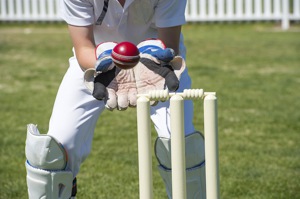
Cricket is a popular sport that is played by millions around the world. As well as having a complex set of rules and traditions it is also perhaps the only sport in the world that can be played for five days without a winner being declared. Such situations can be either a tie or a draw, but the distinction is not understood by many.
Tie
For a cricket match to end in a tie, it is highly unusual and has only ever happened twice in the history of Test cricket. It first happen when the West Indies played Australia in 1960 and then again when Australia played India in 1986.
A tie is when at the conclusion of play, both teams have completed their innings and their scores are equal. It can be illustrated by looking at the scores of the West Indies v Australia two matches mentioned above.
West Indies
- First innings score: 454
- Second innings score: 284
- Total: 737
Australia
- First innings score: 505
- Second innings score: 232
- Total: 737
In other forms of the sport, other than Test cricket (like the one-day competition, Twenty20), then ties can also occur but a tiebreaker is used to declare a winner. This can be a bowl-out, a super-over or other form of method for deciding a result.
Draw
In cricket, Law 21 defines a draw as the following:“A match which is concluded as defined Law 16.9 (Conclusion of match), without being determined in any of the ways stated in (a) above or in 1, 2, or 3, above, shall count as a Draw.”
What this means is that a draw occurs when a team does not complete its innings by the official end of play. That means in Test cricket, in which the number of overs is not limited, a team batting last can ‘play for a draw’ when they have no hope of beating their opponent’s score.
They do this by ensuring they are not bowled out by the scheduled end of play. Regardless of how many runs they have scored, the match in this situation is classified as a draw and is a reasonably common occurrence in cricket.
Other Unusual Ways a Cricket Match Can End
There are some other unusual ways in which a cricket match can end, including awarding, conceding, and abandoning the game. These are all pretty unlikely but are worth considering.
Awarded
Very rare, but the umpires in cricket have the authority to award a match to one side, declaring them a winner. This can occur when a side stops playing in the match, in which case the umpires have deemed that team to have forfeited the game.
Conceded
This is an extremely unusual way to end a match and occurs when a scoreboard displays an incorrect score (in good faith), which is, in turn, accepted by the ‘losing team’ as a winning score. In this highly unusual situation, the ‘losing’ team is not classed as being defeated, but as having conceded the match to their opponents.
Abandoned
Thanks to the weather, it is sometimes not possible for a game of cricket to even begin. In such situations, a match is 'abandoned' and is not included in any statistical records.
Croquet Rules
Whilst croquet is played internationally it is, perhaps the most quintessentially English game imaginable. A game of croquet, a glass of Pimm’s and a cucumber sandwich on a rare sunny day in England – what could be finer? Many things, perhaps, but let’s look at the rules anyway!
Croquet’s first rules were registered in 1856, although there are suggestions similar games were played as early as the 1600s. There are many different variants of the game and slightly altered versions popular in other parts of the world. In the simplest form, however, they all involve hitting balls across a prepared lawn through hoops using a wooden mallet. We will consider the Official Rules of Garden Croquet, here, as per the World Croquet Federation.
Object of the Game
The object of the game is to manoeuvre your balls over the lawn and through the six hoops in the right direction and correct order and then “peg out” by hitting the central peg.
Players & Equipment
The game can be played one against one (singles) or two against two (doubles) and the rules are the same in either version of croquet. One side uses a black ball and a blue one, with the other teams using red and yellow and these are 3? inches in diameter and weigh one pound.
In addition to the balls each player also needs a wooden mallet to strike them with. There are few regulations regarding the mallet and they are usually 2.5-3.5 pounds in weight, 24-40 inches long, with a head around nine to 12 inches long and a square face, although round faces are also used.
The lawn is normally 17.5m by 14m but for the casual player any decent sized, relatively smooth grass area will suffice. At croquet clubs where the grass is shorter and therefore faster a standard lawn may be as big as 32m x 25.6m. The important thing is that the proportions are kept roughly the same.
The hoops are made from metal for competition play and are 12 inches high and 3¾ inches wide, only slightly wider than the balls. The hoops are laid out in a set configuration, with, roughly speaking, numbers one and two on the left side at either end, three and four on the right side and five and six in the middle and slightly nearer the peg in the middle that is used for the start and end of the game.
Scoring
In association croquet, of which garden croquet is a derivative, you score a point for getting each ball through each hoop and then an additional point for hitting the peg with each ball, giving a maximum of 14 points.
Winning the Game
A side or player wins by scoring 14 points first, that is to say passing both balls through all six hoops and then pegging each ball out.
Rules of Croquet
- A coin toss determines who goes first with the loser of the toss picking which balls to use.
- Each player plays in turn, taking one shot unless extra shots are earned. Extra shots are gained by either “running a hoop” (passing through the correct hoop) or hitting one of the other three balls. These earn one and two extra shots respectively.
- The first four turns must be used to bring all four balls into play, after which you can choose to play either ball, although extra shots can be earned immediately.
- If you hit another ball (make a roquet) and earn two extra shots the first of those (the croquet shot) must be played in contact with the roquet ball. In order to do that you move your ball and place it anywhere in contact with the ball that was hit. The roqueted ball must move or shake with the next strike. The next shot is called the continuation shot and must be played from where the first, original ball lies.
- Extra shots are not cumulative and you can only earn extra shots once from each ball until the next hoop is scored.
- If a ball is struck off the lawn or lies within a metre of the edge it is moved to a metre inside the lawn. There is no penalty for this.
- To score a hoop no part of the ball must be visible on the original side of the hoop – that is to say, all of the ball must have passed at least some part of the hoop.
- The ball can only be struck with the face of the mallet and must be hit cleanly without moving the other balls, hoops or peg to make the shot.
- Once a ball hits the peg at the end of the game it is removed from play.
Curling Rules
Curling is not one of the world’s most popular sports, nor is it one likely to receive much television coverage or be something many people will ever play. It is though, a fascinating game, well deserving of its nickname of “chess on ice”. Invented in Scotland in the 16th century it is popular in the UK (mainly Scotland) as well as countries to which Scots have exported it, including Canada, the US, New Zealand, Sweden and Switzerland. In addition curling is now played in a number of other countries, including many other areas of Europe, China, Japan and Korea.
Object of the Game
Curling has similarities to bowls and shuffleboard (deck) and involves sliding granite stones, also called rocks, into a target area at the other end of a long, thin, strip of ice which constitutes the “pitch”. The team that propels their rocks closest to the centre of the target scores points accordingly, with the path of the stone influenced by team members who sweep and brush the ice ahead of the stone in order to alter its speed or curl.
Players & Equipment
Curling is played between two teams of four using eight granite stones each. The “pitch” is a flat, smooth area of ice measuring 45-46m long and 4.4-5m wide. There is a “house” at each end, a circular target made up of a blue outer circle with a 12ft diameter, a white circle inside that with a diameter of eight feet and a red circle with a diameter of four feet.
The stones themselves weight between 17 and 20kg, are at least 11cm high with a maximum circumference of 91cm and have a handle attached to the top. They are made of granite and the handles are usually red for one side and yellow for the other.
The two sweepers who follow the rock down the ice use brushes or brooms, usually made of fiberglass and fabric or horsehair but there are no real restrictions on the materials from which it is constructed. In addition the players wear curling shoes which are broadly similar to standard trainers except that one sole is smooth to enable sliding.
Players also usually use gloves, specific curling trousers and a stopwatch to better understand the pace of the ice and the need for sweeping.
Scoring
Scoring is done after each “end” (an end being a set where both teams have thrown all eight stones) with whichever team is closest to the centre of the house being awarded a point. Further points are awarded for each stone of theirs that is closer than the best of the opposition’s. In order to score any points at least one stone must be “in the house”, which is to say touching any of the circles or overhanging them (due to the shape of the stones)
Winning the Game
The game is won by the team that scores the most points after all the ends are complete. Most curling matches take place over ten or sometimes eight ends. If the scores are level after the allotted number of ends then an extra sudden-death end is played.
Rules of Curling
- Teams of four take it in turns to curl two rocks towards the target area with the scores being counted after all 16 rocks have been sent down the ice.
- International matches have a time limit of 73 minutes per side with two timeouts lasting a minute each. 10 minutes and one timeout are permitted per extra end in the event of a tie.
- The stone must be released its front edge crosses a line called the hog. Foul throws are removed from the ice before they have come to rest or in contact with other rocks.
- Sweeping may be done by two members of the team up to the tee line, whilst after that point only one player can brush. After the tee one player from the opposing side may also sweep
- A stone touched or moved when in play by a player or their broom will either be replaced or removed depending on the situation.
- The team to go first is decided by coin toss, “draw-to-the-button” contest or, in Olympic competition using win-loss records. Subsequently the team that failed to score in the previous end has the advantage of going last, called the hammer throw.
- A team may concede if they feel they cannot win, although depending on the event and stage of event they may have to wait until a certain number of ends have been completed.
- Fair play is of huge importance so there is a culture of self-refereeing with regards fouls and this is a big part of curling.
-

Cycling BMX
BMX (bicycle motorcross) Cycling involves racing bicycles on off-road tracks which often consist of rocky terrain that requires participants to lift their bikes off the ground in a “jumping” motion and tackle tight corners at high speeds. BMX racing was introduced into the Olympics as recently as 2008.

Cycling Mountain Bike
Mountain Biking or Mountain Cycling involves racing bicycles over bumpy terrain at high altitudes, tight angles and steep inclines. Participants ride specially designed mountain bikes (which were developed and popularised in the 1970’s) when competing in a race. Mountain biking made its first appearance at the Olympics in 1996, and has remained a part of the games ever since.
 Leonard Zhukovsky / Bigstockphoto.com
Cycling Road
Road cycling is the most common and popular form of bicycle racing in the world, and involves participants riding bicycles on paved roads, attempting to reach the finish line in the fastest possible time. Road cycling involves both individual and team events, and has been a regular part of the Olympics since the games first began.
 Leonard Zhukovsky / Bigstockphoto.com
Cycling Track
Track cycling involves racing bicycles on specially designed tracks – which are usually built on steep, circular banks. Participants ride bikes, which have been manufactured specifically for use on these types of racetracks, and compete in two main types of races: sprint (which involves reaching the finish line as fast as possible) and endurance (which involves competing at high speeds for long periods of time).
Darts Rules
Being a “sport” – many argue it is a game – mainly played in pubs and requiring little or no physical fitness, darts is one activity at which Britain excels! Darts is thought to have been created when soldiers began throwing short arrows at cut tree trunks or alternatively at the bottom of the cask. As the wood dried cracks appeared, creating sections which, steadily, over time became set scores, albeit with much regional and international variation.
Darts is now widely played in many parts of the world, but especially in former Commonwealth countries, the Netherlands and Belgium, the United States and Scandinavia. There are two main professional governing bodies, the PDC and BDO, the latter being the longer running of the two. Given the presence of the sport in pubs and bars it is probably one of the largest participatory sports in the world.
Object of the Game
501 is the standard version of the game in competition and the object is to “check out” by getting your score down to 50 or less before ending the game by reaching zero by either throwing a double or a bullseye with your final dart.
Players & Equipment
Darts only requires a board and the darts themselves, this limited list of equipment being one of the reasons for its success. The board that is now used as standard was created in 1896 by a Lancashire carpenter with the aim of penalising inaccurate throwing by keeping large numbers apart and bordering them with small numbers. Whilst mathematicians have long argued over the best board layout to minimise the reward for inaccurate efforts, the current design is actually pretty good.
The board itself is made from compressed sisal fibres and despite modern electronic versions is now the accepted norm. In the early days after the First World War darts was played using a heavy, solid wood board, normally made from elm and subsequently clay versions were trialled.
The standard board is 17¾ inches (451mm) in diameter and is divided into 20 radial sections by thin metal wire. The sections are numbered from 1-20 and contain a thin section at the outer edge (double) and slightly smaller area midway towards the centre (treble). The bullseye or “bull” is a small circle, usually red, at the very centre of the board and is surrounded by the larger, green, outer bull.
The darts are usually used using a combination of metal, nylon and plastic for the points, barrels, shafts and fletching. The exact style and make-up of the dart will vary according to the player’s style and ability (or what pub you’re in!) but they must weigh no more than 50g and be no longer than 300mm.Scoring
A player scores points by throwing the darts at the board. Each player throws three darts on their turn with the maximum score being 180, achieved by hitting three treble 20s. The bull is worth 50 points, the outer bull 25 points and the various numbers score their own value, unless they are doubled (the outer rim) or trebled.
Winning the Game
To win a player must reach zero by hitting a double or a bull, having first got their score down from the 501 starting point. If they do that they win the leg and the first to three legs wins the set. Most matches are normally played “best of” a defined (odd) number of sets, with the sport’s biggest prize, the PDC World Championship, involving a final that is best of 13 (therefore the winner is the first to seven sets).
Rules of Darts
The rules of darts are very simple and have basically been discussed in previous sections. Some key points to note are as follows:
- Which player takes the first turn in a game is decided by throwing a single dart each with the nearest to the bull taking the first throw.
- A throw consists of throwing three darts unless the game is won in fewer.
- Only darts in the board at the end of the throw are counted and ones that bounce or fall out cannot be thrown again.
- If a player scores more than their remaining points total their throw ends and is scored zero (for example if they have 16 remaining and accidentally hit a 20 with their first dart).
- The centre of the bull should be exactly 5ft 8in (1.73 metres) high.
- Darts are thrown from a clearly marked toe-line, often called the oche, at least 7ft 9 ¼ in from the board, measured horizontally.
What is the Difference Between the BDO and the PDC?
The BDO stands for the British Darts Organisation and the PDC is the Professional Darts Council and they are both professional darts organisations.
Unlike most professional sports where there is one international organisation that oversees the game, its rules, regulations and tournaments, the professional game of darts is split into two.
Some players play within the British Darts Organisation and some players play within the Professional Darts Council. Both have their own tournaments throughout the year, including a world championship. This means that every year there are two concurrent darts world champions.
Why are There Two Professional Darts Organisations, the PDC and BDO?
Originally, there was only one governing body for darts – the British Darts Organisation. Olly Croft founded the BDO in 1973 and the organisation continued being the leading world darts organisation until the early 1990s. It was the BDO that started a darts world championship competition in 1978 and was the culmination of the growing popularity of the sport.
The growing amounts TV coverage led to more and more players turning professional throughout the 1970s but in the early 1980s the game’s popularity began to decline. The game began to become a caricature of itself with players drinking and smoking on stage. It became the butt of jokes, particularly this famous sketch on Not the Nine O’Clock News.
The sport’s growing image problem gradually led to a significant reduction in both TV coverage and sponsorship, a fact that several of the professional players began to resent. In 1992, concern grew amongst the game’s top players over the BDO’s ability to rectify the situation and 16 of the world’s top players formed their own darts organisation called the World Darts Council (now known as the PDC).
The founding players were:
- Phil Taylor
- Eric Bristow
- Rod Harrington
- Peter Evison
- Jamie Harvey
- Richie Gardner
- Dennis Priestley
- Bob Anderson
- Chris Johns
- Jocky Wilson
- Mike Gregory
- Keith Deller
- Alan Warringer
- John Lowe
- Cliff Lazarenko
- Kevin Spiolek
The new PDC organisation signed a deal with Sky Sports, obtaining year-round coverage for tournaments, which also led to an increase in sponsorship and revenues in general. Several years of legal wranglings continued between the two organisations with players not being allowed to play in the other organisation’s tournaments.
Today, whilst the two organisations today are both successful in their own way, they are not by any means close. The two organisations and their players remain distinct from each other, although they do meet in the yearly Grand Slam of Darts Tournament held by the PDC, in which BDO players are invited.
The Differences Between the BDO and the PDC
Although both the BDO and PDC are professional darts organisations that have recognized tournaments and world championships, there are some significant differences between the two organisations:
Quality of Players
Ask most experienced darts commentators, viewers or fans and you’ll generally find an agreement that the quality of players in the PDC is somewhat better than those that play in the BDO. An analysis of averages from the 2015 world championships of the BDO and PDC by Brian Stokes support this fact.
Players in the PDC event all had 100+ averages from the quarter finals onwards. No player could manage a 100+ average in the BDO championship, however. The PDC tends to attract the higher quality players thanks to more prize money and sponsorship opportunities generally being offered.
Prestige of World Title
Thanks to the generally higher standard of the game in the PDC, the PDC World Championship title has gradually become the title that has the most prestige in the world of darts. However, a small number of people still think that the BDO version of the title carries more prestige, as the organisation was, of course, the first to be established.
TV Coverage
The only major tournament that gets significant TV coverage for the British Darts Organisation is their World Championships. The PDC, however, have a long-standing deal with Sky who televise numerous events throughout the year on their dedicated sports channels. Outside of the UK, both the BDO and PDC have televised events but the PDC tend to have more.
Women’s World Championships
The BDO have had a Women’s World Championship since 2001. The PDC, however, have only ever had one PDC World Women’s Championship event, which was back in 2009.
Diving Rules
Diving is a popular water sport that is practiced in different forms around the world. On the face of it, diving is one of the simplest sports in the world, requiring participants to simply dive off a platform or springboard into water, performing acrobatics to get the most points from judges. However, behind this apparent simplicity is a sport that is far more complex and difficult than it may first seem and one that requires complete dedication and commitment from anyone who wants to make it to the top.
There are various forms of diving practiced around the world, such as thrilling cliff diving competitions but by far the most popular form of diving is the one seen at the Olympics were competitors dive into a pool from springboards or platforms of varying heights. Outside of competitive diving, it is a sport that is practiced by a wide range of people across the planet sheerly for recreational purposes.
Object of the Sport
The object of the sport of diving is to score more points in a series of dives then the competition. After a series of dives, the person (or pair of divers if a pairs competition) with the most points are winners.
Players and Equipment
Apart from a diving board and swimming costumes, no special equipment is needed for diving apart from a diving board or a series of diving boards if competing.
Scoring
In most international competitions the judging panel consists of five or more judges. They each judge every dive and award it a score between 1 and 10.
- 0: Completely Failed
- ½ - 2: Unsatisfactory
- 2½ - 4½: Deficient
- 5 - 6½: Satisfactory
- 7 - 8: Good
- 8½ - 9½: Very good
- 10: Excellent
When judging each dive, they look at five different elements it:
- Starting Position: There are various starting positions for a dive and each diver will be judged on the execution of this starting position.
- The Approach: The diver should move to the end of the board in a smooth motion showing good form.
- Takeoff: Take offs should all show good balance and control and should initiate an acceptable distance from the platform or springboard.
- Flight: The diver should have the proper body form through the flight of the dive, as well as the proper amount of rotation and revolution, depending upon the elements of the dive.
- Entry: The angle of entry should be straight with the minimal amount of splash.
To reduce the subjectivity of diving scoring at major diving competitions, the highest and lowest scores are discarded and the middle three are then added together and then multiplied by the degree of difficulty of the dive which is determined by the complexity of the moves performed in the dive.
Winning the Competition
At the end of the competition, the competitor (or pair of competitors if a pairs competition) that have the highest scores are the winner of the competition.
Rules of Diving
The rule of diving a relatively straightforward, but differ slightly between the two main disciplines, springboard diving and platform diving.
Springboard Diving
- Six dives should be completed by men, five by women
- Dives can be performed of any difficulty level
- One dive during the contest must come from each of five different categories (forward, back, reverse, inward, twisting)
- Men may repeat one of the categories for their sixth dive, women may not
- Each dive must be different, meaning no dive can be repeated
Platform diving & Synchronized Springboard
- Men complete six dives, women complete five
- For both men and women, the first two dives must have a difficulty level of 2.0
- The remaining dives for both men and women can be of any difficulty level
- Both men and women must complete dives from at least four different categories with at least one of the dives being forward facing.
Dodgeball Rules
The origins of dodgeball are fairly sketchy but it has been a popular game for a considerable period of time. The game is a regular part of physical education classes in schools and the popularity of the sport reached new levels thanks to the motion picture ‘Dodgeball: A True Underdog Story’ featuring Vince Vaughn, Ben Stiller and Christine Taylor.
Object of the Game
The main objective in dodgeball is to eliminate all members of the opposing team by throwing the ball at them. Plays must dodge the ball to remain in the game and the team who manages to eliminate all of their opponent’s first are deemed the winners.
Players & Equipment
There is no fixed amount of players that are needed to have a dodgeball game, with games varying between small numbers to large players. A lot will depend on the space available to play the game and the overall pool of player available. School leagues or regulated games will have a set number of players, which again will differ from each league.
There is no fixed dimension and area for a dodgeball game with the game going ahead on the most appropriate surface and venue. Similarly, there is no universal agreement on the balls that are used in a dodgeball game. Players operating in a league format would be expected to all play with the same ball size or type but this can be agreed by each individual league.
Many consider it to be of benefit to play with an odd number of dodgeballs so there is always scope for a team to be on the offensive.
The game commences with the opening rush. All the dodgeballs are lined up in the centre of the court, with both teams rushing from their base line to the balls. Players have to simultaneously grab and throw a dodgeball or roll it back to a team-mate.
To play dodgeball, the minimum amount of equipment required is 5 balls and a court to play on. In a regulation game, uniforms can be worn.
Scoring
While there is no real point scoring in dodgeball, the aim of the game is to eliminate players of the opposing team, which can be done in a number of ways. The most obvious way is hitting an opponent with a ball, if a player is hit and the ball is not caught before becoming dead, that player is eliminated. However, if a player throws a ball that is caught by an opponent, the throwing player is eliminated from the game.
Some variations of the game allow for a reinstatement of players if their team catches the ball. This can ensure the game lasts for a longer time-period and provides an incentive for catching the ball, as opposed to just dodging the ball.
A player will eliminate themselves if they run out of the court of play.
Winning the Game
The game is over when all of the players on one team are eliminated, resulting in the other team winning the game. If both teams still have members at the end of an allotted amount of time, the winning team will be the one with most players. If this still results in deadlock, overtime can be played.
Rules of Dodgeball
- The number of players, number of balls, size of court and length of game can be determined by the organisers.
- Players must remain within the court at all times, unless collecting dead balls.
- Players are allowed to leave the court to collect balls but they are not allowed to throw the ball until they are back within the court. If a player leaves the court for any other purpose or they throw a ball from outside the court, they are eliminated.
- The rules regarding headshots can be decided upon personal preference or by order of an official body. Some games will see the throwing player eliminated if an opponent is stuck on the head, some games will see the player struck on the head eliminated.
- Players struck with a ball that is then caught before it becomes dead are eliminated.
- When a player catches a ball, the throwing player will be eliminated.
-

Equestrian Dressage
Equestrian/Dressage is the sport of riding a horse and showcasing the ability to control the animal whilst doing so. In order to score as many points as possible, competitors must demonstrate that they are “in tune” with the horse and show that the animal can follow instructions, perform jumps and display athleticism on command. The less physical effort the rider appears to put into handling the horse, the more points they are likely to score.

Equestrian Jumping
Equestrian Jumping (or “Show Jumping”) is a sport that involves riding a horse and encouraging the animal to leap over fences (set at predetermined heights) in front of a panel of judges. These judges then mark the rider on the smoothness and control exhibited during each jump. Equestrian Jumping has featured regularly at the Olympics since 1912, although it made its first appearance in 1900.
Fencing Rules
Fencing is a sport with a long history and is one of just five sports to have featured in every modern Olympic Games. In the UK it maintains something of an elitist reputation, in part due to its association with aristocratic duelling but there are moves to make it more inclusive.
The sport known as fencing normally refers to Olympic fencing, with classical fencing (which is more martial arts based) and historical fencing other variants of the sport. In this article we shall concern ourselves with the Olympic variety and its three branches, foil, sabre and epée, the sport also known as competitive fencing for a little added confusion!
Object of the Game
The object of the game is to use your weapon to strike your opponent whilst avoiding being hit yourself. Simple, ruthless and – if you get it wrong – painful.
Players & Equipment
Fencing is only ever contested one against one, although team events exist. The most important piece of equipment is of course the weapon itself of which, as mentioned, there are three kinds: the epée is the heaviest sword, the foil is a lighter thrusting weapon, and the sabre is a cutting and thrusting weapon derived from the cavalry sword.
In order to register the scores players’ swords are electronically sensitive, as are the scoring areas of the body, and are connected by a body cord to the scoring box. When a strike is registered there is an audible tone and a light illuminates.
Fencers must wear a variety of protective attire to minimise the chance of serious injury. This includes a mask and helmet that completely covers the head and has a tough mesh at the front through which fencers can see but which is strong enough to repel the weapons. A fencing jacket, pads and a glove on the weapon hand are also require, with other pads to protect various areas of the body.
Fencers compete on a “piste” that is 46 feet long and around six feet wide. There is a centre line with on-guard lines six feet to either side across the width of the piste and this is where the fencers start each round from.
Scoring
Scoring is done differently in the three variants of fencing. When using the the foil only strikes to the torso, neck, groin and back count and points can only be won using the tip of the weapon, not the side of the blade.
With the sabre strikes beneath the waist do not count, the rule originating in the cavalry days when striking an opponent’s horse was considered ungentlemanly. The hands do not register as a hit but the competitors may use both the tip and blade of the sabre to score. As with the foil, should players strike each other at the same time the referee will use the “right of way” rule, awarding the point to the competitor who began their attack first.
With the epée the right of way rule does not apply and both fencers may score simultaneously, unless it is the deciding point when neither strike counts. Only the tip of the weapon may be used and the entire body is a target in epée.
Winning the Game
At the Olympic Games matches are contested over three three-minute rounds, with the winner being either the first to 15 points or whoever has the most hits after the three rounds. Other scoring protocols exist and are usually based on the first fencer to a predetermined number of points, with a five point/three minute system quite common.
Rules of Fencing
- Fencers must salute one another and the referee at the beginning and end of the bout, with failure to do so can result in the loss of a point (the winner) or even suspension (the loser).
- Points are scored by hitting your opponent in accordance with the specific requirements for the type of weapon being used (as detailed above).
- In foil, strikes outside the target area stop the contest before resuming afresh, however strikes with the blade (whilst not counting) do not stop the action; the latter rule also applies to the epée.
- Barging the opponent, using your hand to cover the target zone or foot faults can lead to a points penalty at the referee’s discretion.
Field Hockey Rules
Hockey is a game that is played around the world by many countries. Some of the top hockey playing nations includes India, Pakistan, New Zealand, Netherlands and Great Britain. The pinnacle of the sport comes in the form of the Olympics where it has been one of the top attended sports since its reinstating in 1928.
Object of the Game
The object of hockey is to hit a ball with a stick into a goal. Every time the ball goes into the goal then a point is awarded to that team. The team with the most goals at the end of the game is awarded the winner. In the event of both teams scoring the same amount of goals then a draw is called.
Players & Equipment
Each team consist of 11 players. It’s split up into 1 goalkeeper and 10 outfield players. The outfield players will consist of defenders, midfielders and attackers. The amount of each position will vary deepening on the formation that the team adopts. It’s not massively uncommon for a team to have no goalkeeper at the end of game if they are trying to push for a win or a losing the match.
The pitch is 100 yards long and 60 yards wide. It has three lines running across the width of the pitch which are two 25 yard lines and a half way line to signify to players the certain sections of the pitch. At each end the pitch will include a goal which is 4 yards wide. Around the goal is a 16 yard line which is the only sections on the pitch that players are permitted to shoot from. A goal scored outside the 16 yard line will not be awarded and the ball turned over.
A hard ball is used in hockey along with each player having a wooden stick. Only the flat side of the stick can be sued and a foul will be called for any player using the back. The stick can be turned around in the players to hit the ball both ways. For protection players wear shin pads and gum shields. Goal keepers wear a lot more padding due to ball flying in their direction more often. A face mask, helmet, padded gloves, chest pad and leg guards are all part of the attire for a goalkeeper. Some players do wear eye and face masks as well
Scoring
A goal is scored when a player hits the ball in between the goal posts and over the line from within the 16 yard area. The ball must be struck with the players stick and any use of the body will be called as an infringement.
Goals can be scored from penalty corners which are awarded when a foul is committed in the 16 yard area. From a penalty corner the defending team all line up on their goal line. The attacking team must all be outside the 16 yard area when one player hits the ball to them from 10 yards either side of the goal line. As the ball is played back a team mate stops the ball before another strikes at goal.
Winning the Game
The game is decided by the team with the most goals at the end of the game. Each game lasts for two 35 minute halves with a 5 minute rest in between. In the event of the scores being the same at the end of the 70 minutes then the game will end in a draw.
Rules of Field Hockey
- Each team is made up of 11 players and 6 substitutes.
- Every player has a hockey stick of which they can only use one side of the stick to hit the ball.
- A gaol is scored when the ball is successfully hit into the opponent’s goal from within the 16 yard area.
- The ball must be passed or dribbled using the stick and no other body part is allowed to intentionally come into contact with the ball.
- A foul or infringement is called when a player:
- Purposely tries to hit the ball off another player with the intent of causing harm to that player.
- Intentionally uses a body part to assist in moving or stopping the ball.
- Hits the ball with the rounded side of their hockey stick.
- Raise their stick above waist height.
- Hit their stick off their opponents to interfere with play.
Figure Skating Rules
Figure Skating is a sport in which single athletes or teams of athletes conduct artistic performances on ice. Both men and women participate in their own singles events with pair skating events and ice dancing events open to both genders (usually one male and one female).
Athletes produce a wide variety of moves in order to impress a panel of judges, who score the athletes based on their grace, flair and control. Moves include jumps and spirals in the air, spins on the ice and a number of different step sequences.
Figure Skating has been a part of the Winter Olympics since the games first began in 1924, and also made appearances at 1908 and 1920 Summer Olympics before that.
The United States are the current world leaders in Olympic Figure Skating, holding a total of 49 medals overall. Russia and Austria are the closest rivals with 26 and 20 medals, respectively. The Soviet Union also picked up 24 medals during their time in the competition.
Object of the Game
The overall objective in Figure Skating is to score the highest marks possible from the judges, although there are different ways to score points depending on the nature of the event.
For all Figure Skating competitions, athletes are required to perform a number of different moves in order to obtain the highest possible score from the judges. During a typical performance, athletes will execute a selection of spins, jumps and steps.
In pair skating competitions, athletes perform actions with one another in order to score high points, such as throwing a partner in the air and spinning the partner around in various directions.
Ice dancing is somewhat similar to pair skating, although the focus here on is on footwork and coordination as partners dance together in time with music being played overhead.
Players & Equipment
Both men and women participate in Figure Skating, and there is little equipment involved other than specially made pairs of skates called “Figure Skates”.
Figure Skates
Figure Skates are specially designed skating shoes with thick steel blades at the base and jagged grooves at the front known as “toe picks” – which assist athletes with their footwork on the ice, as well as landing and spinning. The specific style of toe picks can vary.
The main blades are ordinarily around 4 millimetres thick, although they can vary depending on the shoe size of the athlete. They also curve round to one side in order to assist with turns on the ice.
Athletes will always attempt to skate on the very edges of the figure skate blades.
For ice dancing, athletes usually have slightly shorter blades on the base of their shoes, with slightly different design to accommodate step-work rather than jumping.
Costumes
Men and women are required to wear specific costumes in order to perform on the professional stage. Men are asked to wear trousers, whilst women are required to wear tights, trousers, or unitards, as well as skirts.
Scoring
Athletes in Figure Skating are scored according to the ISU Judging System by a panel of judges (usually nine judges including a technical inspector, and also a referee). This system functions by awarding athletes different amounts of points for different types of moves, as well as how efficiently and effectively these moves are executed. A Grade of Execution (GoE) is calculated, and then a Scale of Value Table is used to turn this grade into an overall mark.
The main aspects scored during a typical Figure Skating performance include skill, footwork, performance, interpretation, overall execution, choreography and timing. Often, the more complex manoeuvres will be scored highest provided they are executed correctly. For example, the more rotations in a jump will lead to a higher mark.
Winning
The winner of a Figure Skating event is the individual/team who achieves the highest overall score.
Rules of Figure Skating
- Athletes in Figure Skating must keep their performances varied. The Zayak Rule states that no participant can attempt triple or quadruple jumps on more than two occasions.
- Judges may also mark down participants or disqualify them completely if they fail to adhere to rules and regulations for music and costumes. Certain types of music are not permitted, and costumes cannot contain “excessive decoration” or be considered as too revealing.
- Athletes can also be disqualified for time violations.
Football (Soccer) Rules
Football (Soccer) is one of the oldest sports in the world and with that; it’s also one of the most recognised. The pinnacle of the international game comes in the form the Football World Cup. There are also tournament such as the Euro Championships, Copa America and the African Cup of Nations. Domestically the strongest leagues come from England (English Premier League), Spain (La Liga), Italy (Serie A) and Germany (Bundesliga). In parts of the world the sport is also known as Soccer.
Object of the Game
The aim of football is to score more goals then your opponent in a 90 minute playing time frame. The match is split up into two halves of 45 minutes. After the first 45 minutes players will take a 15 minute rest period called half time. The second 45 minutes will resume and any time deemed fit to be added on by the referee (injury time) will be accordingly.
Players & Equipment
Each team consists of 11 players. These are made up of one goalkeeper and ten outfield players. The pitch dimensions vary from each ground but are roughly 120 yards long and 75 yards wide. On each pitch you will have a 6 yard box next to the goal mouth, an 18 yard box surrounding the 6 yard box and a centre circle. Each half of the pitch must be a mirror image of the other in terms of dimensions.
Essentially the equipment that is needed for a soccer match is pitch and a football. Additionally players can be found wearing studded football boots, shin pads and matching strips. The goalkeepers will additionally wear padded gloves as they are the only players allowed to handle the ball. Each team will have a designated captain.
Scoring
To score the ball must go into your opponent’s goal. The whole ball needs to be over the line for it to be a legitimate goal. A goal can be scored with any part of the body apart from the hand or arm up to the shoulder. The goal itself consists of a frame measuring 8 feet high and 8 yards wide.
Winning the Game
To win you have to score more goals than that of your opponents. If the scores are level after 90 minutes then the game will end as a draw apart from in cup games where the game can go to extra time and even a penalty shootout to decide the winner. Players must use their feet to kick the ball and are prohibited to use their hands apart from goalkeepers who can use any part of their body within the 18 yard box (of which more can be found out in the next section).
Rules of Football (Soccer)
- A match consists of two 45 minutes halves with a 15 minute rest period in between.
- Each team can have a minimum off 11 players (including 1 goalkeeper who is the only player allowed to handle the ball within the 18 yard box) and a minimum of 7 players are needed to constitute a match.
- The field must be made of either artificial or natural grass. The size of pitches is allowed to vary but must be within 100-130 yards long and 50-100 yards wide. The pitch must also be marked with a rectangular shape around the outside showing out of bounds, two six yard boxes, two 18 yard boxes and a centre circle. A spot for a penalty placed 12 yards out of both goals and centre circle must also be visible.
- The ball must have a circumference of 58-61cm and be of a circular shape.
- Each team can name up to 7 substitute players. Substitutions can be made at any time of the match with each team being able to make a maximum of 3 substitutions per side. In the event of all three substitutes being made and a player having to leave the field for injury the team will be forced to play without a replacement for that player.
- Each game must include one referee and two assistant referee’s (linesmen). It’s the job of the referee to act as time keeper and make any decisions which may need to be made such as fouls, free kicks, throw ins, penalties and added on time at the end of each half. The referee may consult the assistant referees at any time in the match regarding a decision. It’s the assistant referee’s job to spot offside’s in the match (see below), throw ins for either team and also assist the referee in all decision making processes where appropriate.
- If the game needs to head to extra time as a result of both teams being level in a match then 30 minutes will be added in the form of two 15 minute halves after the allotted 90 minutes.
- If teams are still level after extra time then a penalty shootout must take place.
- The whole ball must cross the goal line for it to constitute as a goal.
- For fouls committed a player could receive either a yellow or red card depending on the severity of the foul; this comes down to the referee’s discretion. The yellow is a warning and a red card is a dismissal of that player. Two yellow cards will equal one red. Once a player is sent off then they cannot be replaced.
- If a ball goes out of play off an opponent in either of the side lines then it is given as a throw in. If it goes out of play off an attacking player on the base line then it is a goal kick. If it comes off a defending player it is a corner kick.
The Offside Rule in Football
Offside can be called when an attacking player is in front of the last defender when the pass is played through to them. The offside area is designed to discourage players from simply hanging around the opponent’s goal waiting for a pass. To be onside they must be placed behind the last defender when the ball is played to them. If the player is in front of that last defender then he is deemed to be offside and free kick to the defending team will be called.
A player cannot be caught offside in their own half. The goalkeeper does not count as a defender. If the ball is played backwards and the player is in front of the last defender then he is deemed to be not offside.
What Do Yellow and Red Cards Mean in Football?
There aren’t many football games that don’t feature at least one player receiving a red or yellow card at some point during the match. Issued by the referee to punish and warn against fouls and misconduct many people assume they have always been a feature of the game.
However, they are actually a much more recent phenomenon and to understand what they mean, it’s useful to know why they were brought in.
The Origins of Red and Yellow Cards
Red and yellow cards were invented in 1966 by Ken Aston who was responsible for overseeing the referees at that year’s World Cup. With the variety of languages spoken in the World Cup, Aston saw several instances where it was not always clear to both players and spectators what decision the referee was making during the game. It was then he came up with the colour coded card system that we know today. His system was first used in the 1970 World Cup and is now used throughout football and in many other sports.
What Does a Yellow Card in Football Mean?
In football a yellow card is a caution. It is issued to a player who has committed misconduct or some other serious offence. There are a total of six offences that can lead to a yellow card, including:
Unsporting Behaviour
This is can be a broad number of actions or types of conduct that are not deemed as being sportsmanlike. Examples can include attempting to deceive the referee by ‘diving’ or celebrating a goal in an over elaborate or extravagant manner.
Dissent by Action or Word
The referee has to have complete authority on the field of play so anything that challenges this can be classed as dissent. Examples can include comments that are excessively loud at an official or several players congregating around an official disagreeing with a decision.
Continuous Infringement of Laws
It’s understandable that some form of infringement of the rules will occur during a football match. However, if a player is deemed to be doing it on a persistent basis, the referee will issue them with a yellow card.
Delaying Play Restarting
Also known as time wasting. This can include a player taking an excessive amount of time to take a free kick or even deliberately taking it from an incorrect position knowing the referee will order it to be taken again.
Not Standing the Required Distance
Opposing players must stand 10 yards away from the ball at a free kick or corner. Failure to so after being warned can result in a free yellow card.
Entering or Re-entering the Field
Once the game is in progress, players cannot enter or re-enter the field or deliberately leave the field of play without the express permission of the referee. Failure to do so is an automatic yellow card.
What Does a Red Card in Football Mean?
A red card in football means two things when shown to a player. Firstly, they have committed a serious foul or have committed serious misconduct in another way. Secondly, they will have to leave the field of play immediately. There are five main reasons for a red card to be shown, including:
Serious Foul Play
What constitutes serious foul play is somewhat subjective and is ultimately up to the judgement of the referee. Examples can include actions such as two-footed tackles and any other activity that can endanger the safety of another player.
Spitting and Abusive Language
Spitting is almost always a straight red card and abusive language is dealt with harshly too. This can include insults or remarks that could be deemed racist or offensive in another way.
Violence
Anything violent such as kicking, punching, elbowing, kneeing or attacking an opponent in any way will almost certainly be dealt with by the issuing of a red card.
Deliberately Fouling
When an attacker has a clear goal scoring opportunity and deliberately fouls to prevent the goal, it is an automatic red card. This is also the case for intentionally using hands or arms to block an attempt on goal.
Receiving Two Yellow Cards
In football, two yellow cards equal a red card. Thus if a player commits two fouls that are worthy of being a yellow card for each one, then a red will automatically be issued and the player will have to leave the field of play.
What Is the Difference Between Soccer and Football?

The answer to this question depends upon whether you’re asking from an American viewpoint or one from elsewhere in the world. To an American, this question could also read ‘What's the difference between soccer and American football?’ The answer is quite clear as soccer and American football are two completely different games. Soccer is played with a round ball that can be kicked and headed. American football, however, is more of a rugby type game in which the oblong shaped ball is thrown and passed as well as kicked.
In the rest of the world, however, the word ‘football’ does not mean ‘American football’. It means Association Football, also known as soccer. That means when read this way, the original question doesn't actually make sense with football and soccer actually being the same thing. However, it does lead us on to another interesting question.
Why Do Some Countries Call Soccer "Football" and Vice Versa?
The majority of people in the world call what Americans know as soccer as football. To understand why the Americans call the sport soccer whilst the rest of the world calls it football, it is important to understand the origin of both terms.
- Football: The name ‘football’ is a shortened version of the official name of the game, association football. Association football was the term coined in 1863 when the Football Association codified the rules of the game. The word ‘association’ was added to distinguish it from other games such as rugby football.
- Soccer: The word ‘soccer’ is believed to be derived from the term association football. With rugby football softened being shortened to ‘rugger’, a similar thing occurred with association football.
Whilst in the rest of the world, the term soccer came into use alongside that of football, in America, the term soccer became the prevailing term for the game of association football. The reason for this is that it was necessary to distinguish it from the other form of football in the USA, American football.
The term soccer remained a popular but secondary term for football in the world but in Britain its use saw a dramatic decline in the 1980s. In his paper, It’s Football not Soccer, Stefan Szymanski of the University of Michigan states: "Since 1980 the usage of the word 'soccer' has declined in British publications, and where it is used, it usually refers to an American context. This decline seems to be a reaction against the increased usage in the US which seems to be associated with the highpoint of the NASL (North American Soccer League) around 1980".
Today, the term soccer is largely only used in the USA but the term is widely understood across the world as meaning football. However, in the UK especially, the term soccer can be problematic with some fans insisting that the term should never be used, believing the Americans are renaming ‘their’ sport to distinguish it from American football.
Freestyle Wrestling Rules
Freestyle Wrestling is a combat sport contested on an octagonal mat with a circle inside. It is one of two variants of wrestling that take place at the Olympic games, with the other being Greco-Roman Wrestling. In Freestyle Wrestling, athletes are permitted to grab opponents below the waist and use their legs for both attacking and defensive moves. The sport incorporates elements from a variety of other disciplines, including sambo, judo and traditional wrestling.
Unlike Greco-Roman Wrestling, both men and women compete in Freestyle Wrestling at the Olympics. The sport is also contested at a wide variety of different weight levels including light flyweight, flyweight, bantamweight, featherweight, lightweight, welterweight, middleweight, light heavyweight, heavyweight and super heavyweight.
Freestyle Wrestling has featured at the modern Olympics every year except for 1896 and 1912. The United States is by far the most successful nation – topping the medals table with a grand total of 110. The Soviet Union have amassed 56 medals, whilst Japan are in third position overall with 45
Object of the Game
In Freestyle Wrestling, the main aim is to tackle an opponent and place their shoulders firmly on the mat for a couple of seconds – which is known as a “pin” or “fall” and will result in a victory. However, an athlete can also win a fight in a variety of other ways, which are explored in greater detail in the “Winning” section below.
Players & Equipment
Two performers participate in a Freestyle Wrestling match, which is contested on top of a large mat with eight sides. A circle is marked inside this octagon, and this is known as the fight circle. Participants are required to wear a variety of clothing items during an Olympic match. These include:
Uniform
A Freestyle Wrestling uniform is known as a singlet, and is often made of Lycra or spandex so it will fit tightly to the skin – offering maximum flexibility for the athlete and minimal grip for the opponent.
Wrestling Shoes
Freestyle Wrestler athletes also wear specially designed shoes for contests, which provide them with grip and mobility when they are competing on top of the large spongy mat. These shoes are usually built with rubber soles.
Blood Rag
Freestyle Wrestling athletes will also carry a blood rag with them into every fight. This is essentially a handkerchief, and can be used to wipe away any blood or sweat that may be compromising a performance or endangering an opponent.
Helmet
Like with Greco-Roman Wrestling, a fight helmet is optional in Freestyle Wrestling. Some wrestlers receive recommendations from their medical team to wear headgear in order to protect themselves, although many prefer the freedom of not having a helmet during a fight.
Scoring
There is a very specific points system used in Freestyle Wrestling, with the more complex and difficult moves scoring higher values than the simpler ones. Wrestlers are also awarded points for adopting an offensive approach and taking the fight to their opponent.
Takedown (2 - 5 points)
Takedowns can score anywhere between two and five points. These are moves that involve at least three points of contact (e.g. two arms, one knee) and vary in value depending on execution and style. For example, a high scoring takedown will be one that involves a strong throw from a standing position that lifts an opponent’s legs above their head.
Reversal (1 point)
A “reversal” is when a wrestler manages to outfox their opponent and turn a defensive position into an attacking one. One point is awarded to the wrestler who manages to achieve a reversal during the fight.
Exposure (2-3 points):
Exposure or the “danger position” can score a wrestler two or three points. This is when a wrestler puts his/her opponent on their back for a few seconds. The number of points scored will depend on the effectiveness, execution and length of the exposure move.
Penalty (1-2 points)
In Freestyle Wrestling, an athlete may also be penalised if they flee a hold, back away over the mat, or take a timeout when they are not forced to because of bleeding. If a wrestler persistently offends they will be cautioned. Three cautions can lead to disqualification. A wrestler is entitled to challenge cautions, which will either be upheld or overturned by the judges.
Out of Bounds (1 point)
If a wrestler places one foot outside of the designated fight area, their opponent will be awarded an “Out of Bounds” point.
Winning
There are numerous ways to win a match in Olympic Freestyle Wrestling. These include victory by pin, technical pin, judge's’ decision, default or disqualification.
By Pin
Most wrestlers attempt to win a fight by pin or fall. This involves locking an opponent’s shoulders down on the mat with control for one to two seconds. Once a pin is made, the referee will check with the judges for their verdict. If they concur with the referee, the fight will end and the athlete who made the pin will be crowned the victor.
By Technical Pin
A technical pin/technical fall victory is awarded to a wrestler who achieves a ten point lead over their opponent at any stage during the fight.
By Decision
If no pin or technical pin is achieved during a fight, the judges will check their scorecards to see which wrestler scored the most points throughout the contest. The highest scorer is declared the winner.
By Default
If a wrestler can no longer continue a fight due to injury or does not take part in the contest for any reason at all, they will forfeit the match and their opponent is awarded the victory by default.
By Disqualification
If a wrestler repeatedly breaks the rules and/or receives three cautions during a fight, they will be disqualified and their opponent will be handed the win.
Rules of Freestyle Wrestling
- An athlete is forbidden from locking in a leg scissor move to the head, neck or body of their opponent. Scissor moves on the legs or arms are, however, permitted.
- If a wrestler is considered to be passive, they will be placed on a thirty-second shot clock. If neither athlete manages to score any points during those thirty seconds, the opponent is awarded a point. The passive athlete will also be given a caution.
- If a wrestler receives three cautions during a fight, they will be disqualified from the contest.
Futsal
l
Futsal is the only FIFA and NZ Football approved version of five-a-side football and the world’s fastest growing indoor sport. The name futsal is derived from the Portuguese words futebol (football) and sala (hall).
Futsal is a small-sided game played with a smaller (size 3 or 4) low bounce ball, on a basketball sized court without rebound walls or nets. It is a game which combines fun, creativity, speed, technique, teamwork and quick thinking.
With millions of players worldwide, futsal is a fantastic game in its own right, with professional leagues throughout Europe, South America and Asia and a FIFA Futsal World Cup every four years.
Futsal also produces technically excellent playersand as such is an invaluable tool for football development.
Futsal actively promotes:
– individual ball skills, close control and dribbling
– creativity and improvisation
– maintenance of ball possession
– one-touch passing (along the ground)
– accurate shooting
– teamwork and off the ball movement.
World superstars such as Pele, Zico, Ronaldinho, Cristiano Ronaldo, Cesc Fabregas and Lionel Messi have all acknowledged the role futsal has played in their football development.
-
EQUIPMENT: For futsal equipment,see Football equipment and adjust accordingly. Indoor nets and shoes are preferable.The main difference to order for is a specialist futsal ball and goalie gloves, and more padding clothing options for the goalie,to prevent injury from dives onto hardwood flooring.
-
Equipment for goalies can include futsal gloves,underpadding trousers, elbow and knee pads.
Golf Rules
The game of golf as we know it today originated in the 1400s in Scotland but the first relations of the game go back as far as the first century B.C. In 1457 King James II of Scotland outlawed the game as an unwelcome distraction and no doubt many golf widows and widowers wish it had remained so.
Regarded as the home of golf, the Old Course at St Andrews was established in 1552. Although Musselburgh Links is officially recognised as the world’s oldest course and dates from “just” 1672, there is no doubting golf is a sport with serious history and a seriously intimidating set of rules.
Object of the Game
The object of the game is simple enough: to get your ball from the tee (the starting point of any hole) to the green and ultimately into the hole in as few shots as possible. “The hole” refers both to the physical hole marked by a flag into which the ball must be sunk and also the entire area from the tee to the green. This may be considered one unit of the course, with a standard course consisting of 18 separate holes played in turn.
Players & Equipment
Golf is usually played individually, with a professional tournament generally consisting of around 80-160 players playing in groups of three or four, competing against each other. There are also team tournaments, the most notable being the Ryder Cup played between Europe and the USA. In this format 12 players from each side compete in a mixture of singles matches, played one against one, and doubles, two against two.
The equipment used in golf is highly regulated, with exact specifications for almost everything, from the exact make and model of clubs that are allowed, to the size and shape of the grooves on their face (the surface with which the ball is hit), to the precise weight and aerodynamic capabilities of the ball. Due to the fast pace at which technology is improving this has been a difficult area for the governing body, the R & A, to regulate.
Players are only allowed to carry and use 14 clubs during any one round and in addition to the clubs and ball the players normally wear a glove on their left hand (for right-handed players) and also use tees, small pegs, to elevate the ball for the first shot on any given hole.
Confusingly the part of the course the first shot is made from is also called the tee and golf is unusual among ball games in not having a standardised pitch or playing area. Although all courses will have the same features, such as tees, greens, fairway and hazards, the exact layout and size varies, making each course unique, which is very much part of the game’s allure.
Scoring
The most common scoring method in golf is called stroke play, where the total number of shots a player takes to get the ball into each hole is added together. At amateur level this is usually over one round (set of 18 holes) whilst professionals normally play four rounds, starting on a Thursday and finishing a tournament on the Sunday.
The score is expressed in terms of under or over par. Par is the number of shots a good golfer (someone playing off “scratch”, or a handicap of zero) would expect to complete a given hole in, with one always allowed for the tee shot and two putts (shots played on the smooth, prepared area around the hole called the green). Being under par is a good thing as you have completed the hole in fewer shots than expected.
Apart from stroke play the other main scoring method is match play. Under this system whoever completes each hole in the least number of shots wins that hole or if it is level the hole is “halved”. The overall victor is the one who wins the most holes, with results normally expressed as “3 & 2” for example, meaning one player was three holes in front with only two left to play.
In addition there are also Stableford, skins and other scoring methods but these are predominantly only used in amateur play.
Winning the Game
Most pro events, including all four of the game’s Majors (the biggest, most valuable, prestigious tournaments each year) use the stroke play system. Events are held over four days and the winner is the player who completes 72 holes (four rounds of 18, almost always on the same course) in the fewest number of shots (also called strokes).
Rules of Golf
- The ball must be hit using standard clubs from the start of each hole to the green and ultimately into the hole, which is marked by a flag.
- Players strike the ball in turn with the furthest away from the hole going first. At the start of a new hole whoever took the least shots on the preceding hole shall go first.
- The penalty for a lost ball is one stroke and this includes balls struck out of bounds (off that particular hole) or into water hazards. You have five minutes to search for your ball and the penalty is both stroke (one shot) if the ball is lost and additionally distance (you play again from your original starting point) if it goes out of bounds or into the water.
- Players can only use up to 14 clubs.
- Players cannot seek advice from anyone other than their partner or caddy.
- The ball should be played as it is found – you must not move, break or bend anything fixed or growing, other than to assume your normal stance, to improve the lie of the ball, your line of site or your area of swing.
- On the putting green a player can mark, lift and clean his ball so long as it is replaced exactly where it was. He or she may also repair ball marks or hole plugs but not spike marks that are on the putting line.
Greco-Roman Wrestling Rules
Greco-Roman Wrestling is a combat sport performed on a circular mat. Participants are required to use their upper bodies to execute a variety of different moves to pin their opponent and/or score points in order to win the fight.
Many believe that Greco-Roman Wrestling is the oldest sport on the planet, with ancient cave drawings suggesting that competitions may have been held way back in 3000 BC. When the modern Olympics was first launched in 1896, Greco-Roman Wrestling was a feature, and the sport has continued to appear in various formats at the games ever since (with the exception of a hiatus in 1900).
The Soviet Union top the overall medal table in Greco-Roman Olympic wrestling, although Finland, Sweden and Hungary have also experienced a huge amount of success. Cuba fared well at the most recent Summer Olympics by picking up two golds and a silver, whilst Russia, Armenia and Serbia also collected a variety of medals during the 2016 tournament.
Aleksandr Karelin of Russia is considered by many to be the greatest Greco-Roman wrestler of all time, grabbing gold medals in 1988, 1992 and 1996 and a silver in 2000.
Object of the Game
The objective of Greco-Roman Wrestling is to defeat the opponent over three rounds (all two minutes in length) using a variety of upper-body techniques. There are numerous ways to win a match, which are explored in greater detail in the “Winning” section below.
Players & Equipment
Greco-Roman Wrestling is contested exclusively by males at the Olympics, and is performed at a variety of different weight levels. Equipment for a typical fight includes the following.
Singlet
A Singlet is the term used to describe a Greco-Roman Wrestler’s uniform. These garments are light and tight to assist with flexibility, and are usually manufactured with materials like Lycra.
Wrestling Shoes
Given how Greco-Roman Wrestling is contested on a mat, athletes must wear special shoes that offer good grip, flexibility and balance when they are jostling for position against their opponent on a spongy surface.
Blood Rag
It is not uncommon for athletes to bleed whilst they are engaged in combat during a Greco-Roman Wrestling contest. If this should happen, a fighter can remove their “Blood Rag” (which they tuck inside their singlet) to stem the flow of blood.
Helmet
Helmets are optional in Greco-Roman Wrestling. Some athletes may require them due to their physical condition, whereas others may choose not to wear them out of personal preference.
Fight Mat
All Greco-Roman Wrestling contests take place on a circular fight mat. These are constructed with thick rubber material and are marked with zones that indicate the “Out of Bounds” area and also the “Passivity” area. If a wrestler spends a lot of time in the Passivity area, it indicates they are on the defensive and are not taking the fight to their opponent.
Scoring
Greco-Roman Wrestling involves a very specific scoring criteria with different points values attributed to different moves.
Takedown (2 - 5 points)
A “takedown” is when a wrestler hauls his opponent to the ground from a standing position. Takedowns can score anywhere between 2 and 5 points, depending on their technicality, cleanliness and control. For example, if a wrestler can lift an opponent high off the mat in an effective way that sends legs directly above the head, he will often score 5 points. A more opportunistic takedown with less control (from the side or stomach) will score 2 points.
Reversal (1 point)
If a wrestler is in a defensive position on the mat and can overcome this to gain an attacking advantage, they are awarded a point for a “reversal”.
Exposure (2-3 points)
2 to 3 points can also be awarded for “exposure”. This is when a wrestler exposes his opponent's back to the mat for several seconds. Again, technicality and execution will be considered in terms of the exact number of points scored.
Penalty (1-2 points)
If a wrestler takes a time-out that was not forced by bleeding, their opponent will be awarded a Penalty point. These types of points may also be awarded to opponents if a wrestler breaks the rules in any way, such as using illegal moves like striking or grabbing below the waist. Occasionally, the referee will caution a wrestler or disqualify them completely for repeat offenses.
Out of Bounds (1 point)
If a wrestler places one foot outside of the designated flight area, their opponent will be awarded an “Out of Bounds” point.
Winning
Like with many other combat sports, there are numerous ways to win a fight in Greco-Roman Wrestling. These include by pin/fall, technical pin/fall, judge's’ decision, default or disqualification.
By Pin/Fall
Most wrestlers will attempt to win a match by pin/fall. This is achieved by firmly grabbing the opponent’s shoulders and locking them onto the mat for a period of 1-2 seconds. The referee and judges will determine if a pin/fall is valid. If a fall is achieved, the match ends and the wrestler who executed the successful pinfall wins the fight.
By Technical Pin/Fall
If a wrestler is leading by eight points during any break in action, he will be crowned the victor by “Technical Pin/Fall”.
By Judges’ Decision
If neither wrestler manages to win a contest via pin/fall during the three rounds, the judges will check their scorecards to see who has achieved the most points. The highest scorer will be awarded the win. If the scorecards are tied, the wrestler who has incurred fewer penalties and executed a greater number of higher scoring moves will be crowned the victor.
By Default
Occasionally, a wrestler may not be able to perform due to injury, and in this case his opponent will be awarded the win by default.
By Disqualification
If a wrestler continues to break the rules repeatedly, the referee may disqualify them, which will result in their opponent winning the match.
Rules of Greco-Roman Wrestling
Greco-Roman Wrestling has a particular set of rules that sets it apart from other forms of wrestling.
- Holds below the waist area are forbidden. This includes grabbing opponent’s knees, thighs or legs.
- Leg trips, kicks and knee strikes are also forbidden.
- Each fight round is separated into three segments: one 60-second segment for neutral position combat (on their feet), and two 30-second sequences for ground combat (on the mat).
- The wrestler who scores the most points in the 60-second neutral position segment will be granted the on-top advantage for the ground combat period. If the wrestler on top cannot score any points, his opponent on the bottom is awarded a point for good defence. The wrestlers then switch positions to allow both athletes a chance to earn points on top.
- If neither wrestler scores any points during the first neutral position segment, the officials flip a coin to determine who begins the ground combat sequence on top.
- The aim is to accumulate as many points as possible during every segment, as this gives the wrestler the best possible chance of claiming a victory on points if a fall cannot be attained.
Is Wrestling Fake?

Pukhov Konstantin / Shutterstock.com
To answer the question whether wrestling is fake, it is first important to establish that there is not one type of wrestling but a multitude of styles. This is because wrestling is quite possibly the world’s oldest sport and is practiced in every corner of the globe. Below we take a look at the major types of wrestling both amateur and professional and discuss whether they are fake or real.
Amateur Wrestling
Amateur wrestling is the most widespread form of wrestling and includes Greco-Roman wrestling, freestyle wrestling, collegiate wrestling, and folk wrestling. Below we take a closer look at each one, discussing whether or not these disciplines are 'fake'.
Greco-Roman Wrestling
One of the two types of wrestling that is practiced in the Olympic Games, Greco-Roman wrestling is a dynamic form of wrestling that forbids holds below the waist. This gives this form of wrestling a bigger emphasis on throws when compared to freestyle wrestling, which is also in the Olympic Games. As you would suspect from an Olympic discipline, it is in no way fake.
Freestyle Wrestling
Like Greco-Roman wrestling, freestyle wrestling is competed at an Olympic level, as well as in competitions all across the globe. Originating in the traditional style of 'catch-as-catch-can' wrestling, the goal is to throw and pin your opponent to the mat. Like Greco-Roman wrestling, it is not a fake form of wrestling, which can be proven by its placement in the Olympic games.
Collegiate Wrestling
Collegiate wrestling is very closely related to freestyle wrestling and shares many of the same rules. It is competed in colleges across the USA and is most certainly not a fake form of wrestling given its prestige in colleges across North America. Many of its competitors go on to compete in Olympic freestyle wrestling, MMA, and professional wrestling.
Folk Wrestling
Folk wrestling is the catch-all term for all those local variations of wrestling that exist around the world. This can include Cumberland and Lancashire styles in the United Kingdom, Scottish Backhold wrestling, Mongolian wrestling, Turkish oil wrestling, and Schwingen in Switzerland. These types of events are contested with vigour and winning a local folk wrestling is a real honour. As a result, these styles of wrestling are in not in any way fake and are taken very seriously.
Professional Wrestling
Professional wrestling is what we all tend to watch on our TV screens. It can include Sumo wrestling, which is very common in Japan, and, of course, the famous WWE, but are they real or rehearsed? Read on!
Sumo Wrestling
Sumo wrestling is a very popular form of wrestling in Japan and one that most certainly isn't fake. Contested by large competitors who attempt to force each other out of the ring, it is one of the most explosive and dynamic forms of the sport of wrestling. To win a sumo wrestling match is an honour and one that must be rightfully earned and not faked.
‘Sports Entertainment’
‘Sports Entertainment’ is the phrase used to describe professional wrestling such as World Wrestling Entertainment and TNA Wrestling. This form of the sport can definitely be described as fake, as matches are not competitive and instead are both scripted and rehearsed. The athletes who compete in this form of wrestling, however, are extremely fit and whilst the match may not be a real competition, injuries are both genuine and common.
The entertainment value is always the first priority in 'Sports Entertainment' and it is for this reason that it is the most fake form of wrestling, and yet also the most popular.
-
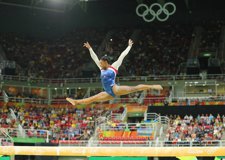 Leonard Zhukovsky / Bigstockphoto.com
Gymnastics Artistic
Artistic Gymnastics involves athletes conducting a performance across a set of gym apparatus, including vaults, floor mats, still rings and balance beams. Certain events are reserved for particular genders (e.g. balance beams is a women’s only event). Each participant attempts to score points (awarded by a panel of judges) by executing an individual move with control, strength, and skill. Artistic gymnastics has been performed at the Olympics since 1896.
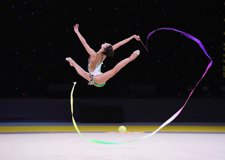 photosvit / Bigstockphoto.com
Gymnastics Rhythmic
Rhythmic Gymnastics is a sport that involves the use of one or two items of gym apparatus to produce particular athletic moves and shapes. Ropes, balls, hoops, ribbons and clubs are all examples of apparatus utilised in a Rhythmic Gymnastics performance, with participants scored by a panel of judges. This sport is most popular with female athletes, and was introduced into the Olympic games back in 1984.
Handball Rules
The origins of handball can be traced back to medieval times but it was in 1906 that the rules of modern handball were first created in Denmark. The game is hugely popular in Northern and Eastern Europe but is played around the world.
The governing body of the game is the International Handball Federation, who also organise the World Championships. It is believed that there are around 19 million handball players in the world today.
Handball is traditionally played indoors but there have been variations such as field handball and beach handball (sometimes referred to as sandball) that have been played outdoors.
Object of the Game
The object of handball is to score more points than your opponent.
A handball game lasts for a regulation 60 minutes. This is split into two periods of 30 minutes each with a 15 minute interval. For younger players, the period time can be reduced to 20 minutes.
Players & Equipment
The standard handball games features 7 players on each side, six outfield players and one goalkeeper. A team will also have 7 substitutes, which can be used on a rolling basis and with no need to notify the referee.
There is semi-circle area around each goal area, sometimes referred to as the crease or the zone. There is also a dashed semi-circle line which lies 9 metres from goal, which is the free throw line.
The ball must be made from leather or synthetic material and it must be of a size to fit in the hand of a player. This means that there are three regulation sizes of handball. One for over 8s where the ball has a circumference of 50-52 cm, a II for women and males aged 12 to 16 where the ball has a circumference of 54-56cm and a III for males aged 16 and over, with a circumference of 58-60cm.
A handball game can be played with a court, two goals and a ball. Official games will see teams where uniforms.
Scoring
A goal is scored in handball when the ball is thrown into the opponent’s goal.
Winning the Game
To win in handball you must score more than your opponent.
If the handball game is drawn then there must be a winner; then periods of overtime with a maximum of 2 5 minute periods are played. If the scores are still level, a shoot-out is used to determine the result of the game.
Rules of Handball
- A match consists of two periods of 30 minutes each.
- Each team consists of 7 players; a goalkeeper and 6 outfield players.
- Outfield players can touch the ball with any part of their body that is above the knee.
- Once a player receives possession, they can pass, hold possession or shoot.
- If a player holds possession, they can dribble or take three steps for up to three seconds without dribbling.
- Only the goalkeeper is allowed to come into contact with the floor of the goal area.
- Goalkeepers are allowed out of the goal area but must not retain possession if they are outside the goal area.
-
 David Herrmann (Source)
Ice Hockey
Ice Hockey is a variant of traditional hockey played on indoor courts layered with ice. Two teams (typically consisting of six players each) use sticks to strike a “puck” (the Ice Hockey game ball) into the opposition team’s net. Every player wears protective padding and helmets due to the intense, rough-and-tumble nature of the sport. Ice Hockey is extremely popular, and has been a permanent fixture at the Olympics since 1924.
Judo Rules
Judo is a relatively modern martial art that was developed in Japan by Professor Jigoro Kano, who was born in Kikage near Kobe in 28th October 1860. Adapting many of the traits and techniques of the much older martial art jujitsu (which came around years earlier in 1532), Kano studied under some of the greatest practitioners of the day before developing his own school and exercises that he named judo. He began to teach the new martial art in 1882 using a 12 foot by 18 foot mat in a hall, and had a total of nine students in his first year.
Since then judo – which translates as “gentle way” – has spread from its Japanese origins to become of the most popular martial arts around the globe, with even Vladimir Putin being a keen practitioner. As a competitive sport it took a while to make waves until the All-Japan Judo Championships were inaugurated in 1930. Two years later judo made an appearance as an exhibition sport at the Olympics in Los Angeles, but it was not until Tokyo hosted the Games in 1964 when judo became an official Olympic sport for men, and Barcelona in 1992 for women.
Object of Judo
While there is a deep tradition of Eastern philosophy underpinning the martial art, as a competitive sport the aim is simply to beat your opponent, albeit with honour and grace. To win a bout a player must score more points than their opponent, with points being awarded for throws or holds, and penalties being given for various infringements.
Players & Equipment
Judo is competed on a mat – or tatami – measuring 14m x 14m, with a smaller 10m x 10m contest area marked within.
Judokas must each wear a gi (traditional uniform originating from the kimono and other Japanese garments). The gi must be durable enough not to easily rip and the arms and legs must be no more than 5cm above the wrists and ankles respectively when the limbs are extended. A belt must be worn which is wrapped around the jacket and tied with the traditional knot.
Scoring
There are three types of score an athletes can achieve in a judo bout. Ippon is the best in that it results in immediate victory and can be achieved by throwing an opponent in such a way as to make then land on their back. Alternative methods of scoring ippon include trapping an opponent in an armhold or stranglehold to the extent that it forces them to submit or immobilising an opponent on the floor for at least 25 seconds.
The next best score is a waza-ari, which is a half point in that the award of two waza-ari in a bout is the same as ippon, and hence the winner is declared. Waza-ari is awarded for lesser throws than those scoring ippon, and for immobilising the opponent for less than the time required to score ippon.
The third, and holding least weight, is yuko. These are awarded for short immobilising holds and some less effective throws or locks. One score of waza-ari outscores any number of yuko, while even if an athlete has one score of waza-ari and many of yuko, one score of ippon by the other athlete would supersede them all.
There are two types of penalties awarded in judo, shido – for minor rule infringements – and hansoku make – for major rule breaches, or for the accumulation of four shidos. Shido penalties are awarded for stalling tactics, prolonged periods of non-aggression, with the first penalty being a warning, the second giving a score of yuko to the opponent, the third a waza-ari and the fourth, ippon – hence the match. An award of hansoku make to an athlete automatically gives the match to the opponent, and – if for a major rules infringement rather than for four shidos – also results in expulsion from the tournament itself.
Winning the Match
Athletes, or judokas, win a match by either achieving ippon, gaining two scores of waza-ari (and hence ippon) or having accumulated more points than the opponent by the end of a bout. If the scores are identical at the end of a bout, a period of Golden Score ensues. In this overtime period, the first score of any kind wins an athlete the match. If the scores are still level at the end of this period the result is decided by Hantei, that is the majority decision of the referee and the two corner judges.
Rules of Judo
- Judo matches take place on tatami (mats) measuring 14m x 14m, with a combat area of 10m x 10m marked out within it. Judokas (athletes) must bow before stepping onto the mat and must bow to each other before and after either practice or competition.
- Judokas must wear the appropriate gi (uniforms), that is one that is no more than 5cm above the ankles and wrists and is tied with the correct style of knotted belt.
- Bouts last five minutes (in international competition) and are won when one judoka is awarded ippon. If no ippon is awarded, the player with the highest score at the end of the bout is declared the winner. If the score are level the match is decided by a period of Golden Score then – if still not resolved – the decision of the referee and corner judges.
- Penalties are awarded for minor (shido) or major (hansoku make) infringements of the rules. Four shidos results in the award of ippon to the opponent, as does one hansoku make.
- Judokas must not employ any of the outlawed techniques, including attacking joints (other than the elbow), punching or kicking opponents, touching the opponent’s face, or intentionally injuring the opponent in any way.
Kabaddi Rules
Kabaddi is a popular contact sport in Southern Asia that first originated in Ancient India. It is played across the country and is the official game in the states of Punjab, Tamil Nadu, Bihar, Telangana and Maharashtra. Outside of India it is a popular activity in Iran, is the national game of Bangladesh and is also one of the national sports of Nepal where it is taught in all state schools. Kabaddi is also popular in other parts of the world where there are Indian and Pakistani communities such as in the United Kingdom where the sport is governed by the England Kabaddi Federation UK.
There are many regional variations of the game of Kabaddi in India, including Sanjeevani, Gaminee, Punjabi and Amar versions, all of which have slightly different interpretations of the game and its rules. There are also other games very similar to Kabaddi in both India and other countries that may not be pure Kabaddi, they are very closely related. These include the game of Hadudu that is played in Bangladesh, the Maldives’ Baibalaa and Maharashtra’s Hututu.
The governing body for Kabaddi is the International Kabaddi Federation and consists of over 30 national associations and oversees the game and its rules across the world.
Object of the Game
The overall object of the game is to simply score more points than the opposition team within the allotted time. To do this, each team must attempt to score points by both attacking and defending. When attacking, the offensive team sends across a raider into the opposition’s half who must touch one of more members of the opposition to score a point. When defending, the objective is to capture the raider by wrestling them to the ground or simply by preventing them returning to their own half by the time their breath is up.
Players & Equipment
Kabaddi is played by two teams that both consist of twelve players each. However, only seven players per team are allowed on the field of play at any one time. The Kabaddi playing surface measures 13m x 10m and is separated into two halves by a white line, one team occupying each half. It can be played on a wide range of surfaces from a dedicated clay court to spare ground where a playing surface has been chalked out.
Unlike so many other popular sports and games, Kabaddi is a game that genuinely needs no special equipment, clothing or accessories, ensuring it is a game that is open to everyone.
Scoring
Scoring in Kabaddi is relatively simple. Teams score one point for each opponent that they put out of the game. Putting an opponent out (and thus scoring a point) is done in different ways. When attacking, this is done by the raider touching opposition members, putting them out. When defending, it is done by preventing the raider returning to their own half.
Bonus points are also available in Kabaddi. The raider can earn an extra point by successfully touching the bonus line in the opposition’s half. Three bonus points are available to a team when all of their opponents are declared out and a point is also available if any part of an opposing team member’s body goes outside of the boundary.
Winning the Game
At the end of the match, the team with the most points is declared the winner. If at the end of the game both teams have the same amount of points, then the game is deemed to be a draw.
Rules of Kabaddi
- Each team shall consist of no more than 12 players with only 7 taking to the field at any one time.
- Because of the physical nature of Kabaddi, matches are categorized in age and weight categories.
- There are six officials looking after each Kabaddi match. The officials comprise of a referee, a scorer, two assistant scorers and two umpires.
- The duration of the match is two halves of 20 minutes with a half time break of 5 minutes.
- At the start of a Kabaddi match, there is a coin toss with the winner having the choice as to whether to have the first raid or not. In the second half of the match, the team that did not raid first shall begin the second half with a raid.
- To win a point when raiding, the raider must take a breath and run into the opposition’s half and tag one or more members of the opposing team and then return to their own half of the pitch before inhaling again.
- To prove that another breath hasn’t been taken, the rider must continue to repeatedly yell the word ‘Kabaddi’. Failure to do this, even for just a moment means that the rider must return to their own side of the court without points and the opposite team is awarded a point for a successful defense play.
- The team being raided is defending, and the players must prevent the raiders from tagging them and returning back over the halfway line. Whilst in defence, a team may score a point by successfully preventing the raider returning to their own half after tagging them. Raiders may only be grabbed by their limbs or torso, not by their hair, clothes or anywhere else, and defenders are not permitted to cross the centre line.
- Each team will take turns in raiding and defending. Following halftime, the two teams switch sides of the court and the team who defended first in the first half begin the second half by raiding.
- The game continues in this way until the time is up, the team with the most points at the end of the match is declared the winner.
Karate Rules
Karate is a martial art that originated in Okinawa with its history being able to be traced back to the 1300s. Brought to mainland Japan in the early 20th century, it has become one of the world’s most popular martial arts and has developed several different styles including Shotokan, Goju-Ryu, Kyokushinkai and Wado-Ryu.
Karate, unlike Japanese Judo is primarily a striking art and involves the use of punches, kicks, knee and elbow strikes and various other striking techniques. Some forms of karate may also include a small amount of throws, joint locks and grappling, though it is as an exciting striking art that Karate is known.
Karate is practiced all around the world by people young and old. Some famous people to have achieved Karate black belts include James Caan, Sean Connery, Forest Whitaker, Bear Grylls and Elvis Presley. Practitioners of Karate are known as Karateka and for those that want to compete, Karate has a big sporting element known as Kumite, with the World Karate Federation being the world’s largest organisation overseeing the sporting side of the martial art. The WKF hosts competitions across the world and is the only Karate governing body recognised by the International Olympic Committee.
Object of Karate
The object of Karate is to defeat your opponent by utilising punches, kicks and throws to score points. At the end of a Karate kumite, the competitor with the most points is declared the winner (or before the end if they reach and eight point lead over their opponent). As well as being a combative physical activity, Karate is highly skilled and tactical, and all competitors are required to have a high level of skill, experience, speed and dexterity to be successful in Karate competition.
Players & Equipment
Competitors are placed into categories according to their weight and maybe their age in the case of junior competitions. All competitors in Karate kumite competitions are required to wear a traditional Karate suit known as a gi and this should be plain and without stripes or embroidery. Instead of wearing the belt colour that signifies their rank, one contestant wears a red belt and the other a blue belt to help distinguish them. Other prescribed pieces of equipment are:
- A gum shield
- Body protection (and extra chest protection for females)
- Shin pads
- Foot protectors
Groin guards can be worn but are not mandatory.
Scoring
Scoring in Karate competitions is relatively simple. Scoring is limited to the following areas of the opponent's body:
- Head
- Face
- Neck
- Chest
- Abdomen
- Side
- Back
A score is awarded when one fighter performs a technique that conforms to the following criteria and the blow lands on a relevant scoring area of their opponent’s body:
- Good form
- Vigorous application
- Good timing
- Accurate distance
- Awareness
- Sporting attitude
Fighters can score one, two or three points for attacking techniques:
Ippon (three points) is awarded for:
- A jodan kick (kick to upper level)
- Any scoring technique performed on a fallen or thrown opponent
Waza-ari (two points) is awarded for:
- Chudan (mid level) kicks
Yuko (one point) is awarded for:
- Chudan or Jodan Tsuki (mid or upper level punch)
- Jodan or Chudan Uchi (mid or upper level punch).
Winning the Match
A Karate match can be won in a number of ways:
- By having more points than your opponent at the end of the fight.
- By extending a lead of eight points immediately ends the match
- If you render your opponent unable to carry on
- If your opponent is disqualified.
If the amount of points are equal at the end, then the referee and the three judges consult and decide a winner between them.
Rules of Karate
- Karate Kumite matches take place on a matted square of 8m x 8m with an additional 1m on all sides that is called the safety area.
- Once the referee and judges have taken their places, competitors should exchange bows.
- The fight starts when the referee shouts “SHOBU HAJIME!”
- Both fighters should attempt scoring techniques (punches, kicks and throws) on their opponent. These are classified as Yuko, Waza-ari and Ippon and are one, two and three points respectively.
- If the referee deems a scoring technique may have been used, the referee shouts YAME and the contestants, judges and referee all resume their original positions.
- The judges will then indicate their opinion by means of a signal and if a score is to be awarded, the referee identifies the contents and the area that they attacked and then awards them the relevant socire (Yuko, Waza-ari or Ippon) and then restarts the bout by shouting “TSUZUKETE HAJIME!”
- If one competitor establishes a clear lead of eight points during a match, then the referee calls a halt to the bout and declares them the winner.
- If no competitor establishes a clear lead of eight points during the fight, then the fighter who has the most points is declared the winner.
- In the event of the points being level, the referee and the judges will decide who is the winner of the bout.
- Fights can end earlier if one competitor is knocked down and is not in a position to carry on or if one fighter is disqualified.
Kickboxing Rules
Kickboxing is a relatively modern, full-contact sport and martial art that has its roots in several other martial disciplines. With the modern sport of kickboxing beginning in the USA in the 1970s, it was an amalgamation of several other striking arts put into a more familiar American concept, manly by holding competitions in a boxing ring.
Japanese karate, Muay Thai, western boxing, the French kicking art of Savate and Korean Taekwondo are all in part responsible for the modern sport of kickboxing, with the sport taking off rapidly and being popular around the world. However, it was in America and Japan that were (and still are) kickboxing strongholds.
The American kickboxing scene was dominated by its home-grown superstars, such as Joe Lewis, Benny Urquidez, Chuck Norris, and Bill ‘Superfoot’ Wallace whilst in Japan, their K1 Kickboxing promotions gradually became a big box office draw, from the 90s attracting top competitors from around the world.
Today, kickboxing has been overshadowed somewhat by the emergence of MMA (Mixed Martial Arts) but still remains popular around the world. Unlike some other sports, kickboxing has a multitude of different governing bodies and international and national associations. However, despite some slight discrepancies, the rules of full contact kickboxing remain the same regardless of association.
Object of Kickboxing
Like its close relative – boxing – the aim of kickboxing is to beat your opponent by using kicking and punching techniques to knock them out, force the referee to stop the fight or to display superior skills in both defence and attack to win on the judge’s points cards. Kickboxing is a full contact sport and, as well as being adept at striking with both their hands and feet, kickboxers need to be extremely fit and flexible, as some of the most effective techniques are kicks to the head.
Players & Equipment
Kickboxing requires relatively few pieces of equipment.
- Boxing ring: Kickboxing almost always takes place in a boxing ring. The exact size may vary depending upon the different associations and promotions.
- Boxing gloves: Kickboxers wear regulation boxing gloves and these may be in any colour. Underneath the gloves, kickboxers use hand wraps to help keep their fist in shape and prevent any injuries to the knuckles and wrist.
- Footpads: Because kickboxing utilises the feet as a striking weapon, pads are worn on the feet to protect them. This is a fundamental difference between kickboxing and its close relative, Thai boxing, in which boxers do not wear foot pads (and are also allowed to strike with the knee and elbow).
- Groin guards and mouth guards are also worn by all kickboxers.
Scoring
There may be different methods of scoring depending upon each different individual kickboxing organisation, but the vast majority use the type of scoring as used in boxing. Judges (or in some cases, just the referee) score each fighter in each round depending upon their performance.
The better fighter in each round is awarded ten points, whilst the other fighter is awarded nine points. If both fighters are deemed to have performed equally well, then both are awarded ten points, whilst if one has significantly outperformed the other or has knocked them down, the round is scored ten points to eight.
Winning the Match
Like boxing and Muay Thai, there are several ways in which a fight can be won:
- Knockout: This is where one fighter striker strikes their opponent rendering them incapable of carrying on. The striker is then declared the winner after a count of ten, which gives the other fighter a chance to get up and continue fighting.
- TKO: This is a technical knockout and is when the referee decides that one fighter is no longer able to defend themselves, immediately ending the fight and declaring the other fighter the winner.
- Points: If no knockout or TKO occurs during the fight, then the fight goes to points. The judge/referee’s points on a scorecard are added up and the fighter with the most points is declared the winner. If the points are equal at the end of the fight then the fight is declared a draw.
Rules of Kickboxing
- All kickboxing matches should take place in a boxing ring.
- Any competitor in full contact kickboxing must compete against a fighter in the same weight category as themselves to ensure a fair fight.
- After listening to the referee’s instructions, both fighters touch glove and the fight begins.
- Rounds usually last 3-minutes and the number of rounds depends upon the experience of the fighters involved. There is a 1-minute break between each round. Championship fights are usually over 12 x 3 minute rounds.
- Each fighter must attempt to defeat their opponent by using punches and kicks to the body and head in an attempt to knock their opponent out.
- If both fighters fail to knock their opponent out or force the referee to stop the fight, then the fight is judged on points. The fighter with the greater number of points is declared the winner.
- If both fighters have the same amount of points, the match is considered a draw.
Kin-Ball Rules

Kin-Ball is a recently invented game that comes from Quebec, Canada. Invented by Canadian university professor, Mario Demers, in 1986, it is a very distinctive game that is played by nearly 4 million people around the world.
Unlike almost any other game on the planet, the game is not played in the traditional one-versus-one team or individual format, but it is played with three teams, all competing against each other to win at the same time.
As a game, it is played across the world and is overseen by the International Kin-Ball Federation. Countries in which it is particularly popular are the USA, Canada, Malaysia, France, Denmark, Germany, Belgium, Spain, and Switzerland and is rising in popularity in other nations year-on-year. The game is regulated by the International Kin-Ball Sport Federation.
Object of the Game
The object of Kin-Ball is simple: to score more points than the two other opponents and win the game. Players do this by working as a team against the two other teams. Because of the nature of Kin-Ball, a great deal of teamwork is involved, as is a good level of fitness due to the fast paced nature of the game.
Players & Equipment
Kin-Ball is played in a gymnasium usually but it can also be played outdoors. The only required equipment to play the game is an official Kin-Ball, 48” in size with a weight of 2.2lbs. This can be in a range of colours such as grey, black, or pink. For an official game of Kin-Ball, an electric ball inflator is required too as is a scoreboard.
Scoring
Scoring in Kin-Ball is relatively simple. When a team faults, a point is awarded to the two other teams. A fault occurs when a team fails to catch and control the Kin-ball before it touches the ground.
Winning the Game
At the end of the game, the team with the most amount of points is declared the winner. If at the end of the game there are two or more teams on the same amount of points, a tie break situation comes into play, for which there are the following criteria:
- 1st Amount of First Places Won: If the teams have the same amount of first places.
- 2nd Amount of Second Places Won: If the teams have the same amount of second places.
- 3rd Amount of Fair-Play Ranking Points: If the teams have the same amount of points.
- 4th Amount of Ranking Points in the Game(s) where the Teams Played Against Each Other: If the teams have the same amount of ranking points in the games that they have played against each other.
- 5th Total Amount of Won Periods : If the teams have the same amount of won periods.
- 6th Amount of Periods Won by Each Team during the Games in which They Played One Against the Other: If teams have the same amount.
- 7th Total Amount of Lost Periods during Preliminaries: If the teams have the same amount of lost periods during preliminaries.
- 8th The IKBF will determine if it is appropriate to run a 5 points period or to play a complete game.
It is highly unusual for a tie break game to need to go beyond the 3rd or 4th criteria.
Rules of Kin-Ball
- Games of Kin-Ball have three periods, each lasting 15-minutes, although this can reduce to 7-minutes for younger players.
- The game shall be played by thee opposing teams each consisting of four players.
- Between each period players will have a 1-minute break.
- The objective of the game is for any team when their colour is called to catch the ball with any part of their bodies before the ball touches the ground and then hit it back to another team.
- Play continues like this until a fault is committed by one team who fail to prevent the ball touching the ground and a point is awarded to the two other teams.
- When playing the ball, a team should have three players holding the ball, whilst the fourth player runs and strikes the ball after clearly shouting “Omnikin” and the colour of the team which will be required to run and catch the ball.
- Points can also be awarded to the two other teams if the striker of the ball mistakenly yells the colour of his/her own team.
- There are eight other types of foul in Kin-Ball:
- Shouting another team’s colour whilst simultaneously striking the ball.
- Letting the ball touch the walls of the game room without the naked team touching it.
- Hitting the ball twice in a row.
- Hitting the ball in a downwards direction.
- Taking more than 5 seconds to hit the ball after 3 players make contact.
- Hitting the ball less than 6 feet in distance.
- Hitting the ball when there are less than 3 players in contact with it.
- Purposely blocking an opposition player.
- The team with the most amount of points at the end of the game is declared the winner.
-
Ki-o-rahi
 A traditional kī-o-rahi ball.
Kī-o-rahi is a ball sport played in New Zealand with a small round ball called a 'kī'. The game is widely known in Māori communities and in scattered mainstream locations throughout the country.[1] It is a fast-paced sport incorporating skills similar to Australian Rules, rugby union, netball and touch.[1] Two teams of seven players play on a circular field divided into zones, and score points by touching the 'pou' (boundary markers) and hitting a central 'tupu' or target.[1][2] The game is played with varying rules (e.g. number of people, size of field, tag ripping rules etc.) depending on the geographic area it is played in. A process called Tatu, before the game, determines which rules the two teams will use.
In 2005 kī-o-rahi was chosen to represent New Zealand by global fast-food chain McDonald's as part of its 'Passport to Play' programme to teach physical play activities in 31,000 American schools.[2][3] The programme will give instruction in 15 ethnic games to seven million primary school children.[2]
The New Zealand kī-o-rahi representative organisation, Kī-o-Rahi Akotanga Iho, formed with men's and women's national teams, completed a 14 match tour of Europe in September and October 2010. The men's team included 22-test All Black veteran Wayne Shelford who led the team to a 57-10 test win against Kī-o-Rahi Dieppe Organisation, the French Kī-o-Rahi federation. Shelford's kī-o-rahi test jersey made him the first kī-o-rahi/rugby double international for NZ. The women's team coached by Andrea Cameron (Head of PE at Tikipunga High School) also won by 33-0. These were the first historic test matches between NZ and France.[4]

GAME WHAKAPAPA/ATUATANGA
Based on the Purakau (legend) of Rahitutakahina and the rescue of his wife Tiarakurapakewai. The tākaro is a reflection of Tupuna story telling at its best, as well as provides an insight into the way in which they would explain and design Tākaro to reflect their unique "world view". The Papa Tākaro (field) layout of Ki o Rahi and the way the Tākaro is played is a perfect example of this.
GAME DESCRIPTION
A large team game played between 2 teams, kioma and taniwha on a large circular field. Played for 4 quarters or 2 halves of a set time, teams alternate roles of Kīoma and Taniwha at half or quarter time.
Kīoma score by touching Pou/s with the Kī (for potential points) then running the Kī through Te Roto and placing it down in Pawero to convert pou touches into points. Kīoma stop the other team, Taniwha.
Taniwha score by hitting the Tupu with the Kī. Kīoma will have Kaitiaki (guardians) around the Tupu to stop Taniwha from hitting the Tupu. Depending on which variation is being played, Taniwha must stop Kīoma from scoring by either touching, 2 handed touch, ripping the tag or tackling them in the appropriate area.
NUMBER OF PLAYERS REQUIRED
14 People minimum (7 a side)
SPACE REQUIRED
A good size field/area will be needed to play.
Ki o Rahi is played on a circular field with concentric circles.
The size of the field varies depending on the amount of players, level of fitness and the type of rules being played.
Team zones
Kioma can go into Te Marama, Te Ao, Pawero zones. Te Ara is for the Kaitiaki/guardians to get in and out of Pawero to help attack or defend the Tupu. Te Roto can only be used by Kīomawhen running through to covert Pou touches into points.
Taniwha can go into Te Roto and Te Ao zones only.
GAME BENEFITS
A wide range of skills will be learnt and improved while playing Kīo Rahi.
Running, sidestepping, being evasive with a Kī
One handed and two handed accurate passing and catching
Flag/tag ripping skills
Jump shots and accurate shooting/throwing
Blocking
Communication and team work
EQUIPMENT NEEDED
1 tupu (central target) approx 40 gallon drum or rubbish bin.
7 pou.
Ki, woven flax ball, normal ball, rocks, rolled up jersey or anything.
Field marking.
Team ID.
GUIDELINES
Play is started from te Marama, with Kioma throw or kick the ki to a team mate in Pawero area.
They attempt to pass the ki to team mate who touches a pou (for a potential point) then can touch more pou to accumulate more potential points or run it through te roto then place the ki on or over the Pawero line to convert all pou touches into points on the board. (this is the only time they can enter te roto).
Kioma can not go through or over te ara to score.
If a kioma player is “tagged” in te roto while trying to score it is a hand over, if they run into te roto and run or pass the ki back out with out being touch they retain possession but the pou touches are recounted.
Kioma scores and play restarts with a kick off from te marama.
Out of bounds, last team in possession hand over to other team.
Taniwha scores by hitting the tupu with the ki and play carries on.
Jump shots may be allowed if the taniwha player jumps from te roto and releases the ki before landing in Pawero, they must leave immediattely and not affect play or Kioma gain possession.
Players in possession must be moving or they have 3-5 seconds to pass or shot or hand it over.
Players can not enter te ara, unless they are kioma moving between pawero and te ao.
Players may get the ki from other zones as long as part of their body stays in their legal zone, Taniwha may take jump shots at the tupu as long as the ball is released before they touch the ground. (some Iwi play no entering other zones or penalties may occur) This is called the Turangawaewae rule.
We have attached a couple of variations of how it can be played. Keep an eye out on this site for video instructions!
VARIATIONS
Nonoke (tackle)
Full contact version, which is also the traditional method of play. Tatū (negotiation of rules and conduct) is an important part and necessary process of Nonoke. Teams negotiate what's acceptable in the way of contact i.e. no head high tackles, no shoulder charges, substitutions etc. Tatū also governs and negotiates how teams will conduct themselves on and off the Papa Tākaro (Field)
Ripper version If attacking player gets ripped they have 3-5 seconds to pass the ki.
Touch version Touched with the ki, 3-5 seconds to pass, some Iwi play handover if touched with the ki.
Tupu Tangata 2 or 3 players in the pawero are the tupu, so taniwha try to hit them to score, kioma / tupu try to karo / avoid being hit.

Korfball Rules

Korfball is a Dutch game that is rooted in both netball and basketball. A team game, it is played with eight players on each side, usually all female although it can be played with four females and four males. Scoring points (goals) is done by putting the ball through the opposition’s raised basket.
The sport’s history stretches back to 1902 which is when the game was invented by Dutch schoolteacher Nico Broekhuysen. His inspiration was a Swedish game and he decided to formulate his own version and introduce it to the Netherlands. It courted controversy at the time because the game can be played in mixed sex teams and many people were offended by this. However, its popularity began to increase and it was even included at the Olympic Games in 1920 and 1928 as a demonstration sport, though it sadly never made it to becoming a regular Olympic activity.
Now the game is played across the globe and is present in both South America, North America Asia, Africa and Europe. A regular event at the World Games for sports not part of the Olympics, the two most successful nations in Korfball are the Netherlands and Belgium.
Overseeing the game internationally is the IKF (The International Korfball Federation) who as well as overseeing the rules and regulations of the game is tasked with promoting the sport around the world. It’s a task that has been successful with the IKF having 66 countries as members.
Object of the Game
The object of Korfball is to score more goals than the opposition and win the game. Players do this by working as a team to move the ball upfield until they get into a position in which they can shoot the ball into their opposition's net.
Because it is a team game, a high degree of teamwork and communication is required for a team to be successful, as is a good level of physical fitness and ball skills.
Players & Equipment
There are eight players that make up a Korfball team, and this should consist of four females and four males or eight females. The court used should be 20m x 40m or if playing outdoors it should be 30m x 60m. Both nets should be mounted on top of a 3.5m pole.
In terms of equipment, the ball used must be a round number 5 type ball that has been approved by the IKF, should weigh between 445g and 475 and have a circumference of between 68cm and 70.5cm. No other equipment is essential although individual leagues will almost certainly require teams to wear a suitable strip and training shoes.
Scoring
The scoring system in Korfball is simple and contributes to the fast paced nature of the game. A goal is scored when the ball is thrown through the opposition's net. Both teams therefore are constantly trying to work the ball upfield to place themselves in an attacking position to shoot.
However, a player may not try and take a shot if they have been ‘defended’. This is when the opposition player positions themselves in between the attacker and the net and within an arm’s length from them.
Winning the Game
The game of Korfball is won by one team scoring more goals than their opposition. If at the end of the game the scores are level, then the game is declared a draw. In cup games of tournaments where a winner is required, then depending upon the individual requirements of the competition it may be decided by a shoot-out, with the team scoring the most amount of goals being declared the winner.
Rules of Korfball
- If playing indoors, the size of the Korfball court should be 20m x 40m or if playing outdoors it should be 30m x 60m.
- Teams shall consist of eight players and shall consist solely of female players or four female and four male.
- Korfball matches consist of two halves, each lasting for a total of 35 minutes, with a 10 minute halftime break.
- Each team has four players in each half and during the match they cannot switch zones. The game begins once a coin toss has decided who shall begin.
- In Korfball, the aim is to score by throwing the ball through the opposition’s basket.
- Once two goals have been scored, the teams change zones, with attackers becoming defenders and vice versa. Teams also swap ends at half time.
- On receiving the ball, a player may not dribble, walk or run with it but can move one foot with one remaining planted to the ground as in netball.
- Tackling, blocking and holding are not allowed in Korfball.
- The team with the most goals (points) at the end of the match are declared the winner.
- If both teams are on equal points at the end of the match, the game is declared a draw.
Lacrosse Rules

Lacrosse is a team game in which a ball is passed between teammates using a stick with a mesh or net at one end. It originates in Native American communities where it was used as a training ground for tribal warriors and dates back almost a thousand years. You might remember a friendly game of lacrosse taking place in the film ‘The Last of the Mohicans’ in which Daniel Day Lewis stars, and in its early form there were sometimes thousands of players on either side battling for victory.
Since early versions of the game were witnessed and documented by French Jesuit missionaries it gained popularity and was first codified in Canada in 1867. The modern game is a fast, frenetic contact sport that requires players to wear padding and helmets – a sight at which no doubt the Mohicans would have laughed heartily. Here we will focus on field lacrosse (as opposed to the less common variations of box lacrosse and intercrosse).
Object of the Game
The object of the game is similar to many team sports involving a ball, namely to shoot said ball into the opponent’s goal more times than they do to yours. The lacrosse stick (or “crosse”) can be used to catch, carry and pass the ball with the intention of stopping your opponents gaining possession.
When the opposing side have the ball the defending team can attempt to dispossess them using their sticks (against opponents’ sticks) or bodies.
Players & Equipment
Each team consists of ten players: one goalkeeper, three defenders, three midfielders and three attackers.
The lacrosse sticks are split between “short” and “long” sticks. The former must measure between 40 and 42 inches and the latter between 52 and 72 inches in length, the head of which must be no less than six inches and no more than 10 inches at its widest point. The goalkeeper’s stick may be anything between 40 and 72 inches in length and up to 15 inches in width. No more than four players are permitted to carry a long stick (excluding the goalkeeper).
The ball is made of solid rubber and measures around eight inches in diameter. Hence helmets are required to be worn, while mouthpieces, shoulder pads, arm pads and gloves are recommended.
Scoring
To score a goal a team must propel the ball from their lacrosse stick into the goal such that it fully crosses the goal line. Infringements – such as a player entering the “crease” before the ball has crossed the goal line – will result in the goal being disallowed.
Winning the Game
The winning team is simply the one that has scored the most goals within the timeframe of the game. If scores are level after the game time is up, an additional period of Sudden Victory Overtime may ensue in which the first team to score a goal becomes the overall winner.
Rules of Lacrosse
- Lacrosse is played on a field measuring 110 yards in length by 60 yards in width, with goals at either end measuring six feet by six feet. The goal is surrounded by a circular “crease” with a diameter of 18 feet. A player may not score from within said crease. The pitch is dissected by the midfield line.
- The game duration is split into four quarters, each of 20 minutes. Team time-outs may be called by either side, during which the game time will be paused.
- Each player carries a stick or “crosse”, with up to four carrying a long stick (52-72 inches) and the rest carrying a short stick (40-42 inches).
- Players who make infringements – such as being offside or holding an opponent – are punished by being sent to the penalty box for a period of time, usually 30 seconds or one minute.
- Games are started (and restarted after stoppages for goals and at the start of each quarter) with a face-off. During a face-off a player from each side lays their stick horizontally next to the ball until the official blows their whistle, at which point the players battle for possession of the ball.
- Once a team gains possession of the ball they must ensure the ball is progressed beyond the midfield line within 20 seconds to encourage a fast-flowing game.
MMA (Mixed Martial Arts) Rules

MMA (mixed martial arts) is one of the world's fastest growing sports and is one of the most dynamic and exciting full contact combat sports on the planet. Mixed martial arts is essentially a sport in which fighters of any martial discipline, such as boxing, karate, jiu jitsu, wrestling and judo compete under rules that allow kicking, punching and grappling techniques, both stand-up and on the ground.
It is usually fought in a cage which is a fighting area enclosed by metal fencing, a traditional boxing ring or in amateur competitions, sometimes a simple matted area is used.
Such fighting has gone on for many years and can be traced as far back as ancient Greece where a sport known as Pankration was popular which was a combat sport that featured range of grappling and striking techniques. Similar styles of combat have existed throughout the ages but none have ever attracted worldwide attention until the advent of the Ultimate Fighting Championship in the USA in 1993.
Pitting fighters of different martial arts styles against each other, it was a TV hit and began to popularise the sport of MMA across the world. Today the UFC is MMA’s largest promotion, has fight nights across the globe and is worth several billion dollars.
There is no one governing body for MMA and there is no uniform set of rules that are used the world over, and many of the hundreds of different federations, promotions and associations across the globe may all have slightly differing takes on MMA rules.
However, several state commissions across the United States of America came together to create the Unified Rules of Mixed Martial Arts and this set of rules has been adopted by fighting promotions all across the globe, including the Ultimate Fighting Championship. By far the most widely used MMA rulebooks, even those promotions that don’t subscribe to them will almost certainly use a close variation of them.
Object of MMA
The object of the sport is to defeat your opponent utilising striking, throwing and grappling techniques. Although in the early years of MMA and particularly the UFC fighters tended to concentrate on one martial art and tended to be solely strikers and grapplers, nowadays most fighters recognise the need to cross-train to be successful in MMA.
That means fighters will often have a base style such as Brazilian Jiu Jitsu but will also incorporate wrestling, thai boxing and western boxing training to give them an all round fight game. Such a mix of styles in which you take the strengths of each is essential to being successful in modern MMA and consistently winning matches.
Players & Equipment
MMA is contested by two people in a cage or a ring. It is generally thought of as an adult only sport but there are more and more juniors training in MMA and they compete in competitions. However, because MMA can be a dangerous sport, matches are generally not full contact, strikes to the face are not allowed and nor are any forms of joint locks that could be dangerous to growing bones. In adult competition, the following weight classes apply:
- Super Heavyweight over 265 pounds
- Heavyweight over 205 to 265 pounds
- Light Heavyweight over 185 to 205 pounds
- Middleweight over 170 to 185 pounds
- Welterweight over 155 to 170 pounds
- Lightweight over 145 to 155 pounds
- Featherweight over 135 to 145 pounds
- Women's Bantamweight over 125 to 135 pounds
- Bantamweight over 125 to 135 pounds
- Flyweight over 115 pounds to 125
- Strawweight up to 115 pounds
The ring/cage used in MMA must be between 20 square feet and 32 square feet.
Because mixed martial arts is the ultimate one-on-one combat sport, no other equipment is used apart from MMA gloves, lightweight padded gloves that allow movement of the fingers whilst also protecting the hands when punching.
Scoring
In mixed martial arts matches, scoring is done in the same way as many other combat sports such as boxing. Three judges sit around the ring and score each round, giving the winner of the round in their judgement 10 points and the loser 9 points. In rounds where there is a clear winner, the loser may only receive 8 points.
If the match lasts the whole duration then the judges scorecards are added up and the winner announced. If the judges scorecards indicate that both scores are equal, then the match is declared a draw
Winning the Match
MMA matches can be won in one of a number of ways:
- Knockout - When one fighter causes their opponent to lose consciousness due to striking
- Decision - If the fight lasts all of its rounds, then the outcome of the match is decided by judges, the winner being the fighter with the most points.
- Submission - This is when one fighter places their opponent into a hold and then the opponent ‘taps out’ or, if they refuse to and the hold continues, they may lose consciousness and the referee ends the fight immediately.
- Technical knockout (TKO) - This is when a fight is ended by the referrer, the fighter’s corner or a doctor. Reasons can include a fighter unable to defend themselves or if continuing the fight could put the fighter’s health at risk.
- Forfeit - A fighter can forfeit the match before the fight if they are injured and unable to fight.
- No contest - If both fighters continually break the rules of if one fighter is injured unintentionally by an illegal action, a no contest can be called
Rules of MMA (Mixed Martial Arts)
- Matches shall consist of three rounds, each of which should last no more than five minutes.
- Fights shall take place in a ring or cage that measures between 20 square feet and 32 square feet.
- To ensure a fair fight, competitors may only fight those fighters that are in the same weight category.
- When the contest begins, fighters should use legal strikes grappling and throwing techniques in an attempt to defeat their opponent.
Attacks that are not allowed in MMA include:
- Strikes to the groin
- Eye gouging
- Biting
- Grabbing or striking the throat
- Manipulating the fingers
- Hair pulling
- Head butts
- Striking the back of the head
- Intentionally throwing your opponent out of the cage
- Attacking orifices
- Fighters must listen to the referee at all times and comply immediately with his instructions.
Fights can be won in a number of ways:
- Knockout
- Submission
- Decision
- TKO
- Forfeit
- No contest
- If the contest goes the distance, the three judges shall combine the points they have awarded competitors for each round to determine the winner. If the scores are tied, then the match shall be declared a draw.
What's the Difference Between UFC and MMA?
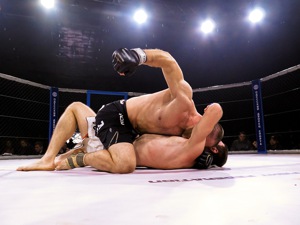
agusyonok / Shutterstock.com
If you are a sports fan (or even if you are not) then chances are you have heard about MMA and the UFC. Standing for Mixed Martial Arts and the Ultimate Fighting Championship respectively, sport martial arts are rapidly taking over boxing as the most watched combat sport in the world.
But, if you’re confused about just what MMA is, what the UFC is, and what the difference between them is, then it really is quite simple.
MMA Is the Sport. UFC Is the Major Organisation/Promotion Within That Sport
MMA stands for mixed martial arts. It is a sport that has only really come to prominence relevantly recently but it’s actually been about for hundreds, if not thousands of years. Essentially MMA is a full contact sport that allows the use of both striking and wrestling, both standing and on the ground.
Since ancient times, contests have been fought with these kinds of rules such as the ancient Olympic combat sport of Pankration, which was practiced in Ancient Greece and later by the Romans. However, it is only since the late 20th century that the sport of MMA has come into the consciousness of the masses, thanks mainly to the inception of the UFC - the Ultimate Fighting Championship.
The Foundations of Modern MMA
Before the UFC, there were various types of mixed martial arts organisations in existence. The two most popular were Vale Tudo in Brazil, which was dominated by the Gracie Jiu Jitsu clan and shoot wrestling shows in Japan. Although reasonably popular in their respective countries, neither ever really broke into the big US television market.
It was the creation of the UFC in 1993 that rocketed the sport of MMA into the public’s imagination. The first Ultimate Fighting Championship was supposed to be a one-off, a competition to identify which was the world’s most effective martial art, with representatives of different fighting styles such as Brazilian Jiu Jitsu, Wrestling, Muay Thai, Karate, and Taekwondo.
It was won by Royce Gracie, younger brother of one of the show’s founders and viewers were highly impressed at the Brazilian Jiu Jitsu that he used to defeat all of his opponents, often fighting men twice his size. Because of this popularity, further UFC promotions were organised with Royce Gracie winning three of the first five. It has gone from strength to strength and today is the premier MMA fighting organization that attracts the very best fighters from across the world.
UFC and the Development of MMA
In the early days of the UFC, MMA was essentially one style of fighter fighting against another. Therefore, you may have had a Judo player fighting someone skilled in Taekwondo or a wrestler fighting someone skilled in Karate. However, as the UFC developed over the years, it became clear that one style was not enough to be truly effective. This realisation was to change MMA forever.
No longer a mix of martial arts with one style being pitted against other, fighters in the UFC (and other mixed martial arts promotions) began to cross-train in different martial arts, grapplers becoming better strikers and vice versa.
That means mixed martial arts competitions were no longer a mixture of martial arts being pitted against each other but MMA itself became its own style – a mixture of the very best techniques of all martial arts mixed together.
Therefore these days as well as being a sport, MMA is a martial arts style in its own right with the UFC being the major promoter and organisation within the sport, attracting the very best fighters from all around the world.
Modern Pentathlon Rules
Modern Pentathlon is a multi-platform sporting event that includes five different stages: fencing, 200m swimming (freestyle), show jumping and a combined pistol shooting and 3200m cross-country race. All of the stages are completed over the course of a single day. The performance of an athlete in the first three events will dictate their starting position for the shooting/racing combination event at the end of the Modern Pentathlon. The athlete who crosses the finish line first in the final run is declared the overall winner of the entire competition.
Modern Pentathlon is believed to have originated in the 19th Century in Greece, although several individuals have claimed to have invented the sport and this continues to be a source of debate to this day.
The events performed in Modern Pentathlon have varied slightly over time, and up until the 1950s, only cavalry troops participated in the competition. Modern Pentathlon was designed specifically to simulate a soldier’s experience of escaping from behind enemy lines, and cavalry troops were considered to be the only individuals that possessed the diverse skillset required to complete each event. Modern Pentathlon was eventually opened to all men in 1952 and all women in 1981.
Hungary is the current world leader in Modern Pentathlon at the Summer Olympics with 22 medals overall. Sweden is close behind with 21 medals, whilst the Soviet Union claimed 15 and Russia have 5.
Object of the Game
Modern Pentathlon requires athletes to have a diverse and varied skillset in order to complete a series of different events. The object of the game is for participants to rank as highly possible in the first three events so that they are in the best possible position for the combined shooting/racing event at the end of the competition. The greater their starting position, the more likely an athlete will be to win the final race and be declared the overall winner.
Players & Equipment
Given how Modern Pentathlon consists of five separate events, there is a vast and varied amount of equipment involved. This includes:
Fencing Equipment
The fencing stage in a Modern Pentathlon involves competing against another athlete in a sword battle. Along with the sword (which is an “Epee” model in Modern Pentathlon), athletes must wear protective clothing from top to bottom. This includes a metal mesh mask for the face, a “Sous-Plastron” for under the arms, a kevlar jacket for the body, “breechers” for the thighs, legs and knees, special shoes for the feet and gloves for good hand grip.
Swimming Equipment
The equipment for the swimming stage in Modern Pentathlon is fairly basic. Along with light, aerodynamic swimsuits, athletes will often also wear goggles to protect their eyes and improve their vision whilst under water. Caps may also be worn to prevent hair from being caught in their eyes during the race and trunks offer an added layer of protection for the groin area.
Show Jumping Equipment
For the show jumping event, the athlete will need to effectively utilise different types of horse controlling equipment in order to dictate the movements of the animal. This equipment is known as “horse tack” and includes the saddle (the rider’s seat), the stirrups (footholds for the rider), the halters (headgear for the horse), the reins (leather strips the rider pulls on the change the horse’s direction) and the Martingale (a safety device that stops the horse from tossing its head and injuring the rider).
Pistol Shooting Equipment
Traditionally, Modern Pentathlon players were permitted to pick out a pistol of their preference for the shooting stage. However, the standard variants of pistols (multi-barrelled pistols, revolvers, semi-automatic pistols) have now been replaced with laser pistols instead.
Cross Country Run Equipment
The running event in Modern Pentathlon is the one that requires the least amount of equipment. Participants wear light clothing (vests and shorts) and airy cross-country shoes to help them cover lots of ground over the shortest possible period of time. These shoes tend to have tiny spikes at the base to help the athlete maintain their grip on the track.
Athletes/Players
Modern Pentathlon competitors are occasionally known as “Pentathletes”.
Scoring
Scoring for Modern Pentathlon is different for each event. Athletes earn points in the fencing, swimming and horse riding events, and the higher they score, the greater “head start” they’ll be given for the combined shooting/racing event at the end. From that point onwards, the winner is simply the athlete who crosses the finish line first.
Winning
The winner of a Modern Pentathlon competition is the athlete that crosses the finish line first in the final shooting/racing event. The amount of points they score in the earlier events simply determines where they begin on the track.
Rules of Modern Pentathlon
All five sports involved in Modern Pentathlon have different rules and regulations that athletes must follow.
Fencing Rules
In Modern Pentathlon fencing, athletes must use an Epee that has a curve of less than 1 cm, and must not strike an opponent before the command “Allez!” is shouted or after the command “Halte!” is announced. Doing so will lead to penalisation.
Swimming Rules
During the swimming stage, athletes are permitted to swim underwater for the first 15 metres, but after this point must keep some of their body above the surface. Athletes must touch the wall when they reach the end of the pool and turn back, and cannot obstruct an opponent in any way during a race.
Show Jumping Rules
Athletes must show respect, courtesy and professionalism during the show jumping stage of the Modern Pentathlon. The horse must follow directions, timing, and stay within the competition court, and if there is any evidence of poor treatment toward the animal, the athlete is promptly disqualified.
Shooting and Cross Country Racing Rules
During the combination event at the end of the Modern Pentathlon, athletes must wait until the minimum shooting time is over at the pistol stage before they can begin running again. Athletes found to be obstructing opponents in any way will risk being disqualified from the entire event.
Muay Thai Rules

Muay Thai, also known as Thai Boxing is a martial art/combat sport that originated in Thailand. Unlike kickboxing which just uses punches and kicks, Muay Thai is known as the ‘art of 8 limbs’ as it utilises fists, feet, elbows, knees and shins (as well as the head traditionally, though this has been removed from modern competition). With a history stretching back to the mid 16th century, it has over time risen to become a popular sport that is practiced around the world.
Unlike many martial arts that are also sports, Thai Boxing has lost none of its martial effectiveness. Muay Thai is a devastatingly efficient full contact sport and one that all competitors have to be at the height of fitness to compete in. As well as being a popular sport in its own right, it is one of the most popular styles that MMA (Mixed Martial Arts) competitors train in due to its effective striking techniques and tough training regimes.
Object of Muay Thai
Muay Thai pits two competitors against each other in a boxing ring and the object of the sport is for one fighter to win the contest by knocking their opponent out, the opponent being stopped by the referee as unfit to carry on (technical knock out) or winning on points. Fighters utilise their fists, feet, shins, elbows and knees to try and win the fight as well as occasional clinch and grapple techniques. Despite the extreme physical and combative nature of the Muay Thai, it takes a lot of skill to become a proficient fighter and win matches at the higher levels of competition.
Players & Equipment
Under the World Muay Thai Council rules, to compete in a professional Muay Thai fight, a fighter must be over the age of 15 and must weigh at least 100 pounds. Fighters are all classified into weight divisions and when competing, there must not be more than 5 pounds difference in weight. The weight divisions are as follows (in pounds):
- Super Heavyweight 209+
- Heavyweight 209
- Cruiserweight 190
- Super Light Heavyweight
- Light Heavyweight 175
- Super Middleweight 168
- Middleweight 160
- Junior Middleweight 154
- Welterweight 147
- Junior Welterweight 140
- Lightweight 135
- Junior Lightweight 130
- Featherweight 126
- Junior Featherweight 122
- Bantamweight 118
- Junior Bantamweight 115
- Flyweight 112
- Junior Flyweight 108
- Mini Flyweight 105
There is little equipment that is essential for Muay Thai competitors. All fighters must wear gloves sanctioned by the WMC and the correct weight for the respective weight classification must wear shorts at half-thigh length. A groin guard and mouth guard must also be worn and long hair is discouraged as are beards. All boxers must wear a Mongkol which is a sacred headband before the bout commences and each boxer may also wear a charm or inscribed cloth around their upper arm or their waist. No footwear is to be worn as fighters compete barefoot.
Scoring
Scoring in Muay Thai fights is relatively straightforward and is scored on a round er round basis. Basically, the fighter who is judged to have won the round is given 10 points and the loser is given 9, 8 or 7 judged on their performance in the round. When both boxers are deemed to have performed equally well in the round, then each fighter is awarded 10 points.
- A 10:9 round is where one fighter is deemed to have won the round.
- A 10:8 round is where one fighter is deemed to have won the round clearly.
- A 10:7 round is where one fighter is deemed to have won the round clearly and their opponent has been on the canvas and received a count from the referee.
Boxers who receive a warning in a round lose one point.
Winning the Fight
A Muay Thai fight can be won in one of three ways:
- Knockout: If one fighter knocks his opponent out, they are immediately declared the winner.
- Technical Knockout - Known as a TKO, this is the same as in boxing where the referee deems one fighter as not fit to carry on.
- Points: At the end of the match, if neither competitor has managed to stop their opponent, then it goes to the judges scorecards. The fighter with the highest amount of points is judged to be the winner. If both fighters are on the same amount of points then the match is declared a draw.
Rules of Muay Thai
- Muay Thai matches take place in a ring between 6.1m x 6.1m and 7.3m x 7.3m.
- Competitors competing in a professional match should be over the age of 15 and their weight should be in the same weight category and not more than 5 pounds difference in weight.
- Before every Thai Boxing match, each boxer is required to pay homage in accordance with the heritage of Muay Thai. This involves a ritual dance accompanied by music played by a Javanese tom-tom drum, a Javanese oboe and and a small pair of cymbals.
- Once homeage has been completed, the bout is ready to begin and both fighters must shake hands before the bout begins to agree that they will compete in accordance with the rules and in a sportsmanlike manner.
- Muay Thai bouts have 5 rounds each of 3 minutes each, with a two minute rest period between each.
- Once the bout begins, both fighters attempt to win the match by utilising their fists, feet, elbows, knees and shins in an attempt to defeat their opponent.
- The fight is won once one fighter knocks out their opponent, the referee stops the fight because they deem one fighter unfit to carry on or the fight goes the full distance and one fighter is declared the winner on points. Should the points totals be equal then the match is declared a draw.
Netball Rules

The origination of netball began in England in the 1890s when the game was derived from an early version of basketball. A set of standard rules for international play was devised by the 1960s and the International Federation of Netball Associations now has over 60 teams playing in five regions around the world.
Object of the Game
The object of netball is to score more points than your opponent.
A netball game lasts for a regulation 60 minutes. This is split into four quarters, with each quarter lasting 15 minutes. Between the first and second quarter, and the third and fourth quarter, there is an interval of three minutes. Between the second and third quarter -half-time - there is an interval of five minutes.
A referee or umpire is allowed to call time and when they do, the time keeper will stop the timer, which begins again when play starts again. There is a maximum of two minutes allowed for an injury.
Players & Equipment
The standard netball games features 7 players on each side although games can go ahead with a team having a minimum of 5 players.
There are set positions in a netball team and these positions will limit where the player can be on the court.
- Goal shooter
- Goal Attack
- Wing Attack
- Centre
- Wing Defence
- Goal Defence
- Goal Keeper
The netball court, which is just bigger than a basketball court, traditionally measures up at 30.5 metres (or 100ft) long and 15.25 metres (50 ft) wide.
The netball court is divided into three sections and this impacts on where players are allowed to move. The sections are referred to as the two goal thirds and the centre or middle-third.
A netball game can be played with a court, two goals and a ball. Regulation uniforms are part of the game in official matches but impromptu netball games can take place with a minimum amount of equipment.
Scoring
A goal is scored in netball when the ball is passed to a player in the goal third who shoots the ball through their opponent’s goal ring. Only the Goal Shooter or Goal Attack can score goals in netball and they must be within the semi-circle when they shoot.
Winning the Game
To win in netball you must score more points than your opponent. The netball ball must be moved around the court by passing and there are a number of different passes available to a player. The ball must be worked to the Goal Shooter and Goal Attack players, who attempt to shoot from inside the semi-circle.
Rules of Netball
- A match consists of four quarters lasting 15 minutes each.
- Each team can have a maximum of 7 players and a minimum of 5.
- The court must be divided unto 3 sections, with each player holding a specific position on the court.
- If a player moves into a position that they shouldn’t be in, they will be deemed to be offside.
- Players cannot hold the ball for more than three seconds.
- Players cannot take more than 1.5 steps when in possession of the ball.
- The ball must go through the ringed hoop for a goal to be given.
What Is the History of the Olympic Games?
lazyllama / Shutterstock.com
The Olympic Games is the world’s premier sports competition and currently features 306 events in 28 sports with thousands of athletes competing. Originating in ancient Greece around 3,000 years ago, the games were later revived in the late 1800s.
In ancient times, the games were held in Olympia, in the western Peloponnese region in Greece, and were completed every four years.
In their modern incarnation, the games are also held every four years but in different locations around the world. Since 1994, the summer and winter Olympics have been held separately, alternating every two years.
The Ancient Greek Olympics
The first records we have of the Olympic Games date from 776 BC when a competitor named Coroebus won the games’ only event called 'the stade' – a running race over 192m. However, it’s generally believed that the games had been going on for a long time before this. The ancient Olympics were always held in August/September time during a religious festival that honoured the ruler of the gods Zeus and occurred every four years.
Over time, more and more events became part of the Olympics, including various running races and the pentathlon, which consisted of a running race, discus, javelin, long jump, and a wrestling match. In ancient times, however, women were not allowed to compete and married women were even barred from watching the events.
Unfortunately, after Greece was conquered by the Roman Empire, despite the games continuing regularly, the quality greatly declined. Then, with the Roman adoption of Christianity, Emperor Theodosius I banned all ‘pagan’ events, which included the Olympics, and ended the tradition that had lasted over 11 centuries.
The Modern Olympic Games
The world was without an Olympics for 1500 years until a gentleman called Baron Pierre de Coubertin of France re-established them. He was inspired to bring them back to promote physical education and, after visiting the ancient site of the Olympics in Greece, he decided to go ahead with the idea. At a meeting of the Union des Sports Athletiques in France, he proposed his idea of reviving the Olympic games.
After two years of hard work and negotiation, he helped found the IOC (the International Olympic Committee), which continues to oversee the games to this day.
The first modern Olympic Games was held in 1896 in Athens Greece and was watched by a crowd of 60,000. A total number of 280 people competed from 13 different countries in 43 events. The competitors were all male, however this was to begin changing from the 1900 games onwards. The Olympics have been held every four years except for three occasions (1916, 1940 and 1944) when the world was at war.
Today the Olympic games remains the world’s leading sporting event in which nearly every nation is represented. Despite numerous controversies, boycotts, drug scandals, and even a terrorist attack, the Olympic brand is as strong as ever, reflecting its own motto Citius – Altius – Fortius, meaning Faster – Higher – Stronger.
Can Professional Athletes Compete in the Olympics?
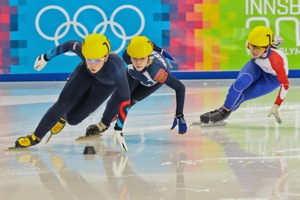
Herbert Kratky / Shutterstock.com
The Olympics, which occurs every four years, is one of the world’s greatest sporting events. Inspired by the ancient Olympics in Greece, the modern games began in 1896 and were long known as a bastion for amateurism with professionals being unable to compete in the games.
However, during the latter half of the 20th century, the IOC (International Olympic Committee) has had to adapt to a number of political and economic advancements and one of these was the growing issue of corporate endorsements and sponsorship which blurred the lines of amateurism and professionalism resulting in the rules being steadily relaxed for almost all sports in the Olympic movement, allowing professionals to compete in all sports, except boxing and wrestling.
Why Were Only Amateur Sportsmen and Women Allowed To Compete In The Olympic Games?
Pierre de Coubertin was the founder of the International Olympic Committee and was the driving force behind the first of the modern Olympic Games. Pierre de Coubertin was greatly influenced by the aristocratic ethos behind the English public school system that saw sport as a fundamental part of an all-round education, summed up by the Latin phrase mens sana in corpore sano (healthy body, healthy mind).
As part of this philosophy, young gentlemen were not expected to be specialists in one activity but to be an all-rounder. Fairness was also an overriding principle with training almost considered to be cheating. Those who played or practiced a sport professionally were considered to have an unfair advantage over their amateur counterparts.
Professional Athlete Controversies
The fact that professional sports people were long excluded from the Olympic Games has resulted in a number of controversies. In 1912, Jim Thorpe who won gold medals in both the pentathlon and decathlon was stripped of his medals after it was discovered he was a professional sportsman. However, he wasn’t a professional pentathlete or decathlete, it was the fact he had been paid for playing baseball in a semi-professional capacity. The IOC restored his medals posthumously in 1983 on compassionate grounds.
Other controversies include the 1936 Winter Olympics boycott by Austrian and Swiss skiers. This was in reaction to some of them being banned from competing for teaching the art of skiing and they were, therefore, considered “professional”, as they had earned money from their sport.
The Transition from Amateurism to Professionalism
As the 20th century moved on, so did the perception of sport. The idea of the gentleman amateur gradually became out-dated and the line between amateur and professional became blurred. One of the main reasons for this lay not in the capitalist west but in the communist Eastern Bloc countries, such as Russia and East Germany. They pioneered the idea of the state sponsored ‘full time amateur athlete’, which in turn, put those athletes who were forced to be self financing at a severe disadvantage. The IOC also gradually came to the realisation that allowing sponsorship, advertising, and other commercial interests could turn the Olympic Games into a goldmine that could attract the very best international professional athletes.
The most iconic moment that defines the leap from amateurism to professionalism in the Olympic Games was the United States Basketball team at the Barcelona Olympics in 1992. The team was made up of some of the most famous ever players to play in the NBA including Charles Barkley, Magic Johnson, Michael Jordan, Larry Bird, and Patrick Ewing and was described as the ‘Dream Team’, as well as the greatest sports team ever to be assembled. Unsurprisingly, the team easily progressed through the Olympic competition and won the gold medal, beating Croatia 117-85 in the final.
The Olympics Today
Today, professional athletes are allowed to compete in the Olympic Games alongside their amateur counterparts. However, two sports continued to resist the onset of professionalism in the Olympics. These are wrestling and boxing. However, the AIBA (Amateur International Boxing Association) has signalled that it will allow professionals to compete in the Olympics, beginning in 2016. Wrestling in its Olympic form remains an amateur sport but this could well change by the time it next makes an appearance in the 2020 games.
Padel Rules

Padel is a form of racquet sport and is a close relative of tennis. Although not as popular as tennis across the world, it is particularly popular in Spanish speaking countries such as Mexico, Spain and Argentina.
As a sport it is growing and the game is spreading into more and more countries across the globe year-on-year and its popularity in Spanish holiday resorts has exposed it to a lot of British visitors, making the UK one of the countries with the quickest uptake of the sport.
Popular too in the USA, it is known there as Paddle and is often thought of as a game played in exclusive country clubs by the more affluent members of society. However, more and more schools are beginning to form Paddle clubs.
As a game, it is very similar to tennis, however there are some slight differences. Played only in doubles, it is also played on an enclosed court that is significantly smaller than a tennis court and has walls that can be used during the game. However, the balls used are almost identical (although with slightly less pressure) and the scoring system is the same.
Padel is a relatively new sport invented in Mexico in 1969 by a gentleman known as Enrique Corcuera when he modified a plot of his land and paced walls all around it and began playing a form of tennis on it with a friend Mr Corcuera from Spain.
The first official court was installed in an exclusive Marbella club and was popular with Argentinian Polo players who then took the game back to South America where its popularity spread even more. Padel is overseen by the International Padel Federation.
Object of the Game
The object of Padel is to win two out of the three sets that constitute a match. In doing so, each pairing must work as a team to outplay the opposition paring. Because the court is much smaller than in tennis and is enclosed, players are close together so need to develop a good understanding if they are to be successful and it is also important to be fit too.
The pace of the game demands an awful lot from players which means that fitness should be at a premium to be a successful Padel pair.
Players & Equipment
Padel is played on an enclosed court that is just over a third of the size of a tennis court and has a playing surface of 20m x 10m. Like a tennis court it is divided in the middle by a net but unlike tennis the court is surrounded by walls, which can be utilised by players during the game of Padel.
The surface of the court can be made from a variety of materials, including cement, synthetic materials or artificial grass. The FIP also stipulates that the playing surface of a Padel court should be terracotta, blue or green.
The racquets used in Padel differ substantially from tennis rackets. Padel racquets are made from composite materials with a perforated surface that is ergonomically designed to allow for airflow. The face measures 26cm x 29cm and the overall length of the racquet is 45cm. Because the racquet is much shorter than a tennis racquet, it is much easier to control.
Scoring
Scoring in Padel is exactly the same as in tennis. That means the points go up as follows: 15, 30, 40 and game. Should there be a tie on 40 - 40 then this is called deuce and the winner is the first player to lead by two clear points. Games of Padel are played as the best of three sets, each of which consist of six games.
Winning the Game
To win a set, a pairing should win six games with two clear games. If the score gets to 6-6, a tiebreak is played in which the winner is the first side to get to seven points with two clear points. If the game continues to be tied, then another tiebreak is played in which the first side to have a two game lead is declared the winner. The first pair to win two sets is declared the winner.
Rules of Padel
- Padel matches should be played on a regulation Padel court that is 20m x 10m and is blue, green or terracotta.
- Padel games shall be played between two pairs of players using regulation Padel racquets.
- Before a match, a coin is tossed. The winner gets to choose whether to serve first or which end of the court to start on.
- Each match begins with a serve, which must be done underarm but like tennis must go diagonally into the opponent's court.
- Both teams must attempt to score more points than their opponents.
- The opposition wins a point when any of the following occurs:
- The ball bounces twice
- The ball strikes you or a teammate
- The ball hits the wire fencing or another fixture before going over the net or going into the opponent’s court (classed as out of bounds).
- Matches are made up of 3 sets, with each set made up of six games. The winners of two out of the three sets will be declared winners of the Padel match.
Parkour
Parkour is the act of running, jumping, swinging, climbing, etc. based on military obstacle course training techniques. It is often practiced in urban environments with the aim of getting from one point to another as quickly and as efficiently as possible without the use of specialised equipment.
Pickleball Rules

Pickleball is a popular sport that is played with racquets and combines elements and features of a number of other games and sports including badminton, tennis and table tennis. Using solid paddles of wood, players play on a court that is bisected by a net and try to hit a ball that is very similar to a Wiffle Ball over it to score points in a fashion similar to both badminton and tennis.
Pickleball is a relatively young game and was invented in the 1960s and was popularised as a children's pastime but over the years it's become more and more popular amongst adults as it is a fun and enjoyable sport that is suitable for anyone of any age to play. It is an unregulated sport and there is no international governing body.
Object of the Game
The object of a Pickleball match is to win the game by scoring more points than your opponent. Pickleball as a game itself though has a larger objective for many people and that is as a game that can informally introduce people to games such as tennis and badminton with greater ease. Pickleball is also a popular way of bringing racquet sports to the disabled as there are a growing number of wheelchair leagues and competitions starting across the world.
Players & Equipment
Pickleball is played on a badminton sized court with a raised net in the middle of the court. It is traditionally played with special Pickleball paddles that are made of wood (or other more hi-tech materials). The ball used is plastic and is very similar to a Wiffle Ball but is usually slightly smaller. Because the game is unregulated and not usually played in a highly competitive environment, there are no hard and fast rules concerning equipment and suitable alternatives may be used. In terms of players, the game of Pickleball is played one-on-one (known as singles) or two-on-two (doubles).
Scoring
Points can only be scored by the side that is serving. A point may be scored in a number of ways:
- Opponent fails to return the ball
- Opponent volleys in the non-volley zone
- Opponent hits the ball out of bounds
If a non-serving player’s opponent commits any of the above, no point is scored.
Winning the Game
The game is won when one side is first to reach a score of 11 and is leading by at least two points. If a side reaches 11 points but is not two points ahead, then the game continues until one team is two points ahead of their opponent. For this reason, it is impossible for a game of Pickleball to end in a draw. In some tournaments, a points score of 15 or 21 may be required, along with the 2 point rule.
Rules of Pickleball
- Pickleball is played on a badminton sized court that has a net in the middle.
- It can be played as singles or as doubles.
- The game begins after a coin toss to decide which side serves first.
- The ball should be served diagonally and should be done so underhand, with the paddle below the waist and both feet behind the back line.
- The serve must clear the net and land within the opposition’s playing area.
- The receiver of the ball just let the ball bounce before returning the serve, and then the server must also let the ball bounce before returning.
- If playing doubles, only the player served to can return the ball. If the ball is touched by their partner, then a point is scored by the serving side.
- If a serve strikes the net, this is called a let and other serve is performed. Unlike tennis, there is no limit to the number of times that this can occur.
- There is a non volley zone that is a 7 foot zone on each side of the net. No volleying can occur in this zone, preventing players playing a smash shot to their opponents. Volleys may be performed outside of this zone, and non-volleys can be hit within it.
- Points can only be scored by the serving side and are done so when the opponent faults by:
- not returning the ball
- hitting the ball out of bounds
- stepping into the non volley zone and volleying the ball
- Serves alternate until one side reaches a score of 11 (or 15 or 21 if agreed earlier) and has a clear two point lead. The side doing this is declared the winner.
Polo Rules

Polo is a dynamic and exciting team game that is played on horseback. One of the oldest known sports in the world, it is thought to have originated in Persia over 2000 years ago. The game as we know it today originates in India in the 1800s, where British soldiers who were stationed there saw the game being played locally and adapted it for their own uses, often using it as training for cavalry riders.
Brought to Britain soon after, rules were established and from then on the game spread, and is now played across the world where as well as the UK, it is particularly popular in Argentina and the USA. The sport is overseen by the Federation of International Polo
Object of the Game
The object of Polo is for a team to score more points than its opposition, thus winning the game. Each team attempts to move the ball into the opposition's half of the pitch with the aim of eventually hitting it through the goal to score. Each team of four is made up of attackers and defenders, but realistically all members of a polo team are expected to be flexible and make any play whether offensive or defensive and change position as necessary to benefit the team.
Players & Equipment
Each team is made up of four players, each one assigned a position which is displayed by the number worn on their kit.
- Position 1 is known as an attacking offensive player, similar to a striker in soccer or forward in hockey. Hard and accurate hitters of the ball, their prime aim is to score but when defending, they also have the responsibility of looking after the opposition’s position 3 player.
- Position 2 is an offensive player primarily, backing up the position 1 player in attack. However, they also have defensive responsibilities, often interchanging with the position 3 player when they attack.
- Position 3 is very similar to the quarterback position and is usually a position that is filled by the best player in the team. It is an attacking position and players in this position must be able to hit the ball accurately upfield to the position 1 and 2 players.
- Position 4 is a defensive position, tasked with defending the team’s goal. However, they do have offensive responsibilities and when successfully defending the goal, they are expected to move the ball forward accurately to the team’s offensive players.
In terms of equipment, the most obvious piece of equipment is a horse specifically bred for the game of Polo, known as Polo pony. Each player will need at least two to switch out between chukkas and these may be the player's own or they may be provided by their club. These horses will need a special saddle which will enable the player to be seated securely, control the horse and swing the mallet. Other essential pieces of equipment are a helmet, a polo stick, knee guards and a ball.
Scoring
Scoring is simple in Polo, and a point (known as a goal) is scored when the ball is hit into the goal. Unlike many other games that change halves at set periods such as halftime, in Polo, teams change field direction every time a goal is scored. It’s not known exactly why this is the case but it is thought that it stems from the past where pitches were traditionally on an East/West axis and teams would not want to spend extended periods of time with the sun or wind in their face.
Winning the Game
The team who have scored the most amount of goals and thus end up with the highest amount of points at the end of the game are deemed the winners. If the game is drawn, another chukka is played and the first to score wins. If nobody scores in this, another chukka is played in which the goalposts are widened and the first to score wins.
Rules of Polo
- Polo is played on a Polo field that is 300 yards long and 200 yards wide, although this may be just 160 yards wide if it is a boarded pitch.
- The goalposts have a width of 8 yards and are open at the top.
- Each Polo match shall consist of 4 chukkas (plays), each one lasting 7 minutes of actual play.
- The game shall start when the umpire throws the ball in between the two teams. This is how play is restarted after a goal is scored too.
- When a goal is scored, the teams change ends, which helps to equalise any ground or weather advantages.
- Players may challenge opposition team members by ‘riding them off’, which is where a payer rides their pony alongside their opponent’s and attempts to move them away from the ball or even take them out of play. Player may also ‘bump’ the opposition, which is a physical manoeuvre akin to the body check in hockey. Players may also hook an opponent’s stick when they are attempting to hit the ball.
- Polo is overseen by two mounted umpires who consult each other on decisions. Should they disagree, they can seek the opinion of the match referee also known as the ‘third man’.
- Following a foul, a free hit may be awarded towards goal.
- The team with the most amount of goals at the end of the match is declared the winner.
Pool Rules
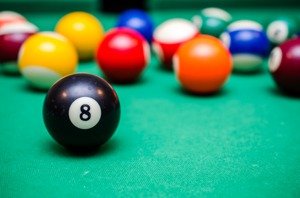
Pool is a popular game that is played all over the world by millions of people. However, there are many different varieties of the game, all with distinctly different rules and regulations. By far, the most popular forms of the game are the ones that originated in the USA, known as ‘eight-ball’ and ‘nine-ball’ pool.
Both are played on a normal sized pool table with the regulation six pockets and both have multiple championships around the world. However, it is eight-ball that is the more common game – the one you’ll most likely see being played at your local pool hall and the one that most people first think of when the word pool is mentioned.
Eight-ball pool can be played as a singles or doubles game and is played with cues and 16 balls, 15 object balls, and one cue ball (the ball the players strike to try and hit the other balls). Pool can be a relatively high-speed game compared to its close relatives snooker and billiards but that makes it no less skilful with players requiring a high degree of skill, concentration, and tactical thinking to play the game at a high level.
Object of the Game
The object of pool is to pot all of your designated balls (either stripes or solids) and then pot the 8 ball, thus winning the game. As pool matches often consist of several games in a ‘best out of’ format, players attempt to win as many games as needed to win the match. Players must use their skills in both attack and safety play, as well as tactical nous to help them win the match.
Players & Equipment
To play pool, the following pieces of equipment are required:
- Table: The table used in pool is approximately 9 feet by 4.5 feet although games can often be played on differing sized tables.
- Balls: 16 balls in total, comprising a white cue ball, seven striped balls, seven solid balls, and one black ball (8 ball).
- Cues: Players have a cue each which can be made from wood, carbon fibre, or fibreglass and this is used for striking the cue ball.
- Chalk: To ensure they have more control over their shots, each player tends to chalk the end of their cue to ensure there is good contact between the cue and the ball.
Scoring
There is no score as such in pool with both players simply attempting to pot all of their designated object balls and then potting the 8 ball into the pocket that they have chosen. However, pool matches are often played over a number of games, so for example, in a best of nine frame match, the first player to reach five frames would be declared the winner.
Winning the Game
8 Ball pool is won when one of the following occurs:
- A player pots all of their designated balls and then legally pockets the 8 ball into their nominated pocket.
- The opposing player illegally pots the 8 ball before clearing their own set of balls.
- The 8 ball is knocked of the table by the opposition.
Rules of Pool
The rules of pool are some of the most contested of any sport, with slightly differing variations being played in different countries, cities, areas, and even establishments. However, the World Pool Billiard Association (WPA) have produced a standardized set of rules for both amateur and professionals by which to abide.
- Before the game begins, the object balls should be placed in a triangular rack and positioned at the lower end of the table so that the apex ball of the rack lies on the foot spot. The order of the balls should be random apart from the black 8-ball, which should be placed in the middle of the third row. The white ball should be placed anywhere behind the service line on the table.
- If it is the first game in a match, a coin should be tossed to decide who gets to choose whether to break. After that, the break is taken in turns.
- To make a legal break, the player must hit the balls and ensure that four balls hit cushions and that the cue ball doesn’t go down a pocket. If the 8-ball is potted on the break, the player is entitled to ask for a re-rack.
- The first player to pot an object ball will then have to continue to pot the balls from that category (stripes or solids). The opposition player will have to pot the other group.
- A player will continue to make shots until they foul, or fail to pot an object ball. Then it is the turn of the opposing player. Play continues like this for the remainder of the game.
- If a player commits a foul, the opposition player is entitled to place the cue ball anywhere on the table. There are numerous fouls in pool, some of the most common being:
- Failing to hit your own object balls.
- Hitting the cue ball off the table.
- Potting one of the opposition's object balls.
- Hitting the cue ball twice.
- Pushing the cue ball rather than striking it.
- A player taking a shot when it is not their turn.
- Once all of a player’s balls have been potted, they must then sink the 8 ball. They must first designate which pocket they intend to pot the 8-ball in and then do as stated. Failure to do so will result in the opposition player returning to the table. If the player pots the 8 ball in any other pocket other than the nominated one, they forfeit the game.
Racquetball Rules
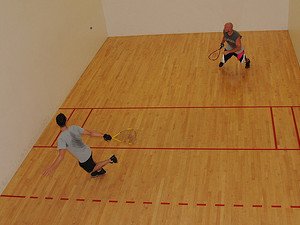
Racquetball was invented by Joe Sobek in 1950. Sobek, an American professional tennis and squash player wanted to invent a new game that combined elements of squash, handball and paddleball that was quick and easy to learn.
Originally called paddle rackets, the game’s rules were codified in 1952 and, through use of America’s 40,000 YMCA and JCC (Jewish Community Center) handball courts, the sport achieved rapid growth. In 1969 the International Racquetball Association (unfortunate acronym!) was founded and recognition by the US Olympic Committee followed. There are currently around six million racquetball players, as well as many more that play (confusingly) racketball, a less dynamic UK-invented variant of the sport.
Object of the Game
The object of racquetball is to win points by winning rallies, the exchanges of play between players where the ball must be hit against the front wall and returned with no more than one bounce. Matches are played as the best of two games, with a third, shorter tie-break game if the scores are level after two games.
Players & Equipment
As with other such sports, racquetball can be played as singles (one versus one), doubles (two against two) or two competing against one, the latter being for informal games. The rules are essentially the same with the main difference being the service and so here we will look solely at the singles game.
The only equipment really required is the ball and the racquets, although of course the court itself is needed too. The court is similar to a squash court, being fully enclosed and rectangular. It is both 20ft high and wide and 40ft in length with red lines to demarcate the service and reception zones.
The ball is hard, bouncy, made of rubber and 2.25 inches (57mm) in diameter, significantly bigger than a regulation squash ball. The racquets are no longer than 22 inches and the only other equipment is the eye-guards that are mandatory in competitions and recommended when playing less formally, if you value your sight!
Scoring
Points are scored only on your own serve, as in squash, volleyball and other sports. If you “win” a point on the opponents serve you win the serve but no actual point. You lose the point if and when:
- The ball hits the floor more than once before you play your return.
- The ball skips or does not hit the front wall without bouncing when you play your shot.
- The ball goes into the viewing gallery, wall opening or out-of-bounds from your shot.
- The ball hits the other player but was clearly not going to hit the front wall.
- The ball hits you (i.e. the player who hit it originally).
- You switch racquet hand during the point.
- You touch the ball with any part of your body or clothes.
- You carry or throw the ball with the racquet (double hit).
- The player serving makes two (or one, under the one serve rule sometimes used at the top level) illegal serves.
Winning the Game
To win the game the player (or team in doubles) has to win two games. Games are won by reaching 15 points or, in the deciding third game if needed, 11 points. It is not necessary to win by two clear points.
Rules of Racquetball
- The player who is to serve first is decided by lots in the first game, alternates for the second game and goes to the person with the most cumulative points for the decider (if needed).
- To serve, the ball is bounced before being hit against the front wall after which it may hit one side wall before hitting the floor again. The ball cannot hit the back wall on the full and must not touch the ceiling. The ball must hit the front wall first or the point (i.e. both serves) is automatically lost and the other player serves.
- Once the ball is in play, that is, has passed the receiving line or bounced beyond the short line, the receiver must hit it against the front wall.
- Apart from on serve, the ball can be hit against any combination of walls and ceiling as long as it hits the front wall without bouncing.
- A “hinder” is when an obstruction is caused by one player being in the way of the ball or their opponent’s view. This is normally called as a let and the point is replayed, although in the case of a penalty hinder, where one player has been deprived the chance of a point-winning shot, they receive the point (or win back serve).
What Is the Difference Between Squash and Racquetball?
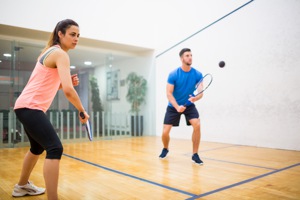
Racquetball and squash are sports that have a great deal of similarities. Both racket sports played with a ball on an enclosed court, they both require a high level of fitness and are exciting and dynamic to play.
However, as much as they might be similar, there are, in fact, more differences between them with some features more significant than others.
Administration
Racquetball and squash are administered by two different governing bodies. The International Racquetball Federation is the governing body for racquetball and oversees all internationally sanctioned events, as well as the various national bodies.
The Squash Federation is the international federation for squash and looks after the sport across the world and has 145 member federations. Because of the similarity of the sports, in some countries, one organisation oversees both games. An example of this is in England where both sports are governed by England Squash.
The Court
Both squash courts and racquetball courts are enclosed but there are differences between the two sports when it comes to the playing surface and the size. Racquetball courts are larger, measuring 20x40x20 feet. Squash courts are 21x32x15 feet. In racquetball, every surface is included as in-bound including the ceiling, whereas in squash, you’re not allowed to hit the ceiling.
The Racket
Squash rackets are larger and can measure up to 27 inches compared to 22 inches in racquetball. Whilst both used to feature a circular head similar to those used in badminton, they both now have more teardrop shaped heads. Those in racquetball, however, are wider and this is to cope with the larger ball that is used compared to squash.
The Ball
The balls used in squash are just 4cm in diameter and are made from rubber. The balls used in racquetball are 6cm in diameter, also made from rubber but tend to be a lot more bouncy than the ones used in squash.
Service
In squash, players are only allowed one service per point, however, in racquetball you are allowed two, which is similar to tennis. In squash, there is no bounce before hitting the ball before service whereas in racquetball the ball must bounce once before striking it. In squash, the server has to hit the ball into one of two service boxes whereas in racquetball the server can hit any part of the wall.
Scoring
Squash games go up to nine points in regular matches and eleven in championships and tournaments. Games must be won with two clear points. Like tennis, points can be won regardless of whether the player is serving or receiving.
In racquetball, games go up to fifteen points but points can only be scored when it is your serve. Like squash, games must also be won with two clear points.
Popularity
Racquetball is played by 5.6 million people worldwide, whereas squash is more popular and is played by an estimated 20 million across the globe. The popularity of both games is on the increase with both being played by an increasing number of players in an increasing number of countries.
Roller Derby Rules

Roller Derby is a popular team sport that is played in the United States of America and a range of other countries across the world. It is a full contact sport that is action packed and exciting for both competitors and spectators. The sport has a number of governing bodies, but by far the largest is the Women’s Flat Track Derby Association, that looks after over 400 leagues, reflecting the fact that it is a game that is predominantly played by teams of women.
However, there are more and more men taking up the game, and another governing body, the The Mens Roller Derby Association has been formed to look after this side of the game. Many different countries also have their own national governing bodies.
Object of the Game
The object of Roller Derby is simple. Each team is trying to score more points than the opposition. Points are awarded when the offensive player from one team, known as the jammer, laps a member of the opposing team. As a full contact sport, the defensive players of the opposing team, known as blockers, can use physical force to stop the jammer passing them, as well as helping to clear the way for their own jammer.
Players & Equipment
Each rollerball team consists of up to 14 members but fields five players at a time, four of which are known as blockers, and one being a jammer. The single jammer on each team is the only member who is allowed to score, and they are signified by the star that they wear on their helmet. Of the four blockers, one of these is known as the Pivot. The Pivot acts like a captain or pack leader, and makes the defensive play calls.
All players skate on quad roller skates rather than inline skates. This is because quad skates have a smaller wheelbase which means there is less chance of skaters tripping on each other’s skates. They are also generally more stable and easier to control, which makes things easier for players considering the combative nature of the sport.
Other equipment that players are required to wear include mouth guards, knee and elbow pads, wrist guards and a helmet. Gender specific protective gear may also be worn, such as protective sports bras for women and a groin guard for men.
Scoring
Scoring in Roller Derby can only occur during periods of time known as jams. These occur throughout each half and last for up to two minutes, though the lead jammer can call them off earlier. Points are scored during the jam when a team’s jammer laps members of the opposing team. To try and prevent this, the opposing team will use a whole host of tactics such as blocking and body contact to try and prevent this happening. The jammer scores a point for each member of the opposite team that they lap.
Winning the Game
The team that has the most points at the end of the match is deemed the winner. Because Roller Derby matches are not allowed to end in a tie, an overtime jam occurs to determine the winner. The overtime jam has no lead jammer and the team with the most points at the end of the jam is declared the winner. If the match is still tied, then successive jams will occur until a winner has been found.
Rules of Roller Derby
- Roller derby teams may consist of up to 14 players, but only 5 may be on the track at any one time. These shall consist of:
- 1 jammer: The jammer is the only member of the team who can score points
- 4 blockers: These are defensive positions whose aim is to block the opposition jammer lapping them and therefore scoring. One of the blockers is known as a pivot, and it is they who are in effect the team captain, calling the shots.
- Roller Derby matches are played in two periods lasting 30 minutes each.
- Roller Derby is played on a track that is oval. At the start of a Roller Derby match, the blockers from each opposing team skate as one single pack around the track. Once the pack passes the starting line and the last member of the track is 30 feet from it, a whistle is blown and the two jammers (one from each team) begin to skate.
- Each jammer must then skate as fast as they can and then fight their way through the pack. Once this has been done, the jammers are then in a position to score.
- Each jammer can then score by racing round the Roller Derby track and overtaking (lapping) members of the opposite team. For each member of the opposition team that the jammer passes, they score one point.
- Blockers can use physical force to prevent the opposition jammer passing them and scoring.
- Each jam lasts for up to two minutes.
- Penalties can be issued for a variety of reasons. These can include:
- tripping
- blocking above the shoulder
- blocking a player when out of bounds
- blocking with the arm below the elbow
- charging from the rear
- At the end of the match, the team with the highest number of points is declared the winner.
- If the match is tied, an overtime jam occurs, and jams keep occurring until one team has a greater number of points at the end of the jam and is declared the winner.
Rounders Rules
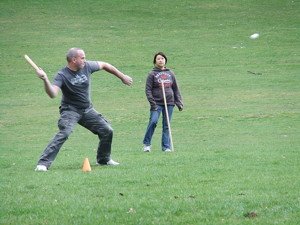
The game of rounders dates back as far as 1744 where people literally started to hit a ball with a stick. Since then the game has evolved somewhat of which you can read more of in this article. For those of you familiar with Baseball then you will likely pick up the rules of rounders pretty comfortably and notice many similarities.
Object of the Game
The object of the game is to hit a ball (roughly the size of a tennis, but much harder) with a bat. Once the ball is hit you then need to run around 4 bases to score a run. The team with the most runs at the end of the game is deemed the winner.
Players & Equipment
The dimensions of a rounders pitch can vary dramatically in size depending whether you are playing professionally or just recreationally. Any open space will do as long as the required markings can are apparent. Professional pitches include 4 posts, a pitching square and a batters square. The posts run in an anti-clockwise direction – if you were looking from the batters square. The first post is 12m away from the batting square, the second 12 metres away from that, the third 12m metres from there and the 4th 8.5m away from the last. The first three posts are the start of diamond formation whilst the 4th post is found on the baseline and runs straight down from the third.
For each game the batters will use either wooden, aluminium or plastic bats which should all be of a smooth surface and with a handle at the bottom for grip. The balls can be white or coloured, but will more commonly be white – baseballs can be used for rounders. Players may wear studded footwear in wet conditions such as football boots, but spiked footwear such as running shoes are prohibited at all time.
Each team is made up of 9 players. This can vary depending on the level of match but all teams must have an equal amount. If one team has more than the other then the same numbers of batters and fielders must be used for both teams. Where applicable substitutes can be used but can only bat in the order of the player they are replacing. Where teams are mixed with male and female members each team cannot contain more than 5 male players.
Scoring
To score a point a player must hit the ball and make it round to the 4th post before the next ball is bowled. If a player manages to get to the 4th post without hitting a ball then half a rounder is scored. A half rounder is also awarded if a penalty for obstruction is caused by the fielding team, 2 consecutive no balls from the pitcher and 2nd or 3rd post is hit by the original batter before the next ball is bowled.
Winning the Game
The team with the most points at the end of the game will be declared the winner. If the game is a tie then it goes to the team with the most full rounders.
Rules of Rounders
- Each game is officiated by a bowling and batting umpire. These umpires are to adjudge the integrity of the game and also pick on any infractions whilst the game is taking place. It’s also up the umpires to try and keep all players safe as well as keeping equipment in the best possible order.
- Whilst waiting to go into bat, the batting team must all wait in the batting area found 10m behind the playing line. Two areas should be constructed, one with the waiting batters and the other with the out batters.
- Each batter will face just one delivery. It’s up to them to try and get to first post before being given out. If a player reaches the first post but then breaches one of the out laws, then they will be given out.
- A no ball will be called if a bowler fails to bowl the ball underarm, the ball is above shoulder or blow knee height, ball bounces before reaching the batter, is too wide of the batter for them to hit the ball or the bowler’s foot is outside the pitching square.
- Players can be given out by being caught, foot outside the batting square, running inside any of the posts, stumped at a post before they reach it (must be running to that post), overtaking a fellow batsmen whilst running, throw the bat or lose contact with the post before the ball is bowled.
Rowing Rules
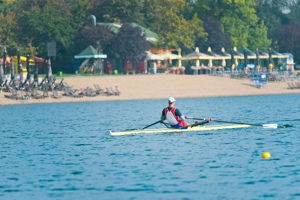
Rowing is a sport that involves using a wooden paddle, known as an oar, to propel a long boat through water at high speeds in order to win a race.
Rowing is one of the oldest and most prestigious sports on the planet, with evidence suggesting the first rowing races may have occurred as long ago as the Egyptian era. Oxford and Cambridge University organised a competitive rowing race in 1828, and the two education facilities still compete against one another to this day.
Rowing has featured at almost every edition of the Summer Olympics since the games first began. Only the 1896 tournament did not include any rowing competitions, with extreme weather conditions forcing organisers to pull water sports from the schedule. Male rowing events have been in place since 1900, and female rowing competitions were introduced much later in 1976.
The United States of America are by far the most successful overall nation in Olympic rowing, having amassed a whopping 89 medals so far. However, East Germany were excellent challengers during their time (managing to secure 33 golds, a record which the USA have only matched very recently) and Great Britain have performed terrifically during the past decade, topping the Olympic games rowing medal table on three successive occasions.
The greatest male rower of all time is widely considered to be Britain’s Sir Steve Redgrave, with Elisabeta Lipa of Romania often regarded as the best female rower. Both have picked up five gold medals each.Latter years have seen New Zealand's teams and individuals excel.
Object of the Game
The objective of rowing is simple: the boat that reaches the finish line first is declared the winner of the race. Reaching the finish line in the quickest possible time requires an astonishing amount of physical and mental strength, high levels of stamina and seamless synchronisation when competing in team events.
Players & Equipment
All participating athletes in rowing competitions have a different role to play, and the number of players and piece of equipment can vary depending on the type of rowing of event in question.
Boats & Players
Rowing races adopt different names depending on the number of people participating and the type of boat being used. The main events held at the Olympics include:
- Single Scull: One athlete in a “scull” boat with two oars (one in each hand)
- Double Scull: Two athletes in a “scull” boat with two oars each (one in each hand)
- Quadruple Scull: Four athletes in a “scull” boat – all with two oars each (one in each hand)
- Coxless Pairs: Two athletes in a boat that has no “coxswain” (a person who sits in the stern to facilitate steering); Each athlete has one sweep oar each
- Coxed Pairs: Two athletes in a boat that has a coxswain present. Both athletes have one sweep oar each
- Coxless Fours: Like Coxless Pairs, only with four athletes instead of two
- Coxed Fours: Like Coxed Pairs, only with four athletes instead of two
- Eights: Eight rowers who all have one sweep oar each with the boat steered by a coxswain
Oars
Different types of oars are used for different races. Despite the varying designs, the vast majority of rowing oars have a long, thin body with a thick paddle-like moulding at the end. Larger, thicker “sweep oars” are used for coxless and coxed rowing events.
Steering
In sculling races, athletes are required to use their oars to steer the boat in a particular direction. In coxed races, the coxswains control the steering through rudder. When there is no coxswain present, the crew will control the boat with a rudder cable attached to the toes.
Rowing Tank
A lot of rowing athletes will train for Olympic races by practicing their rowing in a Rowing Tank. These artificial chambers contain water that can be completely controlled in terms of tempo and aggressiveness, enabling athletes to practice in a wide variety of different conditions. Rowing Tanks also prove extremely useful when bad weather makes training impossible, allowing rowers to work on their technique and build their physique regardless of the poor outdoor conditions.
Scoring
There is no point scoring involved in rowing. It is merely a case of working alongside teammates to function as a unit and propel the boat through the water at the highest speed possible in order to reach the finish line in the quickest time.
Winning
The winner of a rowing race is the individual or team that reaches the finish line first. In the modern Olympics, all races are held over 2000 metres, including men’s and women’s events.
In order to win a rowing competition outright, an athlete/team must advance through a series of “heats” in order to progress through the tournament. The first three boats to cross the finish line in the final will receive the gold, silver and bronze medals.
Rules of Rowing
Competitive rowing involves a number of rules that athletes must adhere to in order to avoid being disqualified. These include:
- Lane Changing: There are six separate lanes in an Olympic rowing event, with one lane assigned to each boat. Athletes and teams are actually allowed to move across from one lane to another if they desire – provided they do not impede or obstruct another boat whilst doing so.
- False Starts: Boats must not leave the starting line until the firing gun goes off. Athletes/teams are allowed one “false” start (i.e. setting off before they are permitted to do so). If they do this twice, however, they will be disqualified from the race.
- Olympic Medal Winners: The gold, silver and bronze Olympic games medals are awarded to the boats that finish in the top three of the final race, which has six teams/athletes competing.
Rugby Rules
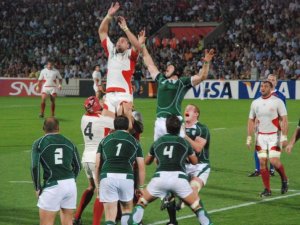
Rugby is one of the most physical of sports. Internationally the pinnacle of the sport lies in the Rugby World Cup. Other tournaments such as the Tri Nations (including South Africa, New Zealand and Australia), Six Nations (including England, Ireland, Scotland, Wales, Italy and France) and the Heineken Cup are other tournaments which are held in high esteem throughout.
Object of the Game
The object of the game is score more points than your opponents in the 80 minute time frame allotted for each rugby match. The team with the greater number of points at full time is announced as the winner. Games may end as a draw.
The team with the ball must move the ball up the field in ‘phases of play’. The ball can never be passed forwards but players can run forwards with the ball or kick the ball forward to chase it down. The opposing team needs to stop the attacking team by tackling and trying to retain the ball.
Players & Equipment
Each rugby team will consist of 15 players. The team is split into two groups known as forwards and backs. There are 8 forwards (positions include Hooker, Prop, Second Row, Flanker and Number Eight) and 7 backs (positions include Scrum Half, Fly Half, Inside Centre, Outside Centre, Wingers and a Full Back).
The pitch is split up into three sections; one main playing area which must not exceed 100 metres and two dead goal areas which can range from 10 to 20 m. The pitch must then be equal to 70 metres wide. The goal posts are in an ‘H’ shape and are roughly 5 to 6 meters apart with no restrictions on height.
Studded boots can be worn along with gum shields, head guards, shoulder pads and shin pads. Each team must wear the same coloured jerseys with matching shorts and socks.
Rugby Ball guidelines :Rugby balls come in three sizes, many different qualities and are have many different brands. The ball is oval or egg shaped. The ball originally was constructed using a pig's bladder and because they had a tendency to be oval shaped, that is how the design developed. It was William Webb Ellis that first caught and ran with a ball, whilst at Rugby School, against the rules at that time, was thought to be the first resemblance to the modern game. At that time, the three football codes had not been split (Football, Union and League).
Blowing the ball up was not a pleasant task, as the ball was still in its early stage and was starting to smell quite badly. The early balls had no set size as it was governed by how big the pig's bladder was.
The rugby ball comes in 4 sizes and is suitable for use by the following age groups:-
-
Size 3 Mini rugby age groups - under 7, u8 and u9.
-
Size 4 – Junior rugby – age groups – Under 10, u11, u12, u13 and u14.
-
Size 4.5 – Women's rugby – age groups – Under 15 and above, into senior rugby.
-
Size 5 – Full sized rugby – age groups – Under 15 and above, into senior rugby.
-
The list is endless but, I am sure you get the picture.
The types of ball are categorised as recreational, training and match balls. There are also all weather variations of each ball. The variations in design in most cases are cosmetic but, the type of material used defines the use as a match or training ball. Every ball has bumps or raised dimples, this gives the player a better feel and improves the grip on the ball. The configuration varies greatly from each manufacturer.
The laws of Rugby Union state the balls must be oval in shape and made from 4 panels. For a size 5 Rugby ball, the length should be between 280mm to 300mm, the length circumference 740mm to 770mm and the width circumference is 580mm to 620mm. It may be treated to make it water resistant, making it easier to grip. The weight of the ball when new should range between 410g to 460g with an optimum ball pressure of 9.5 to 10 PSI.
The laws of Rugby League state the balls shall be an oval air inflated ball. the outer cover to be leather or another material approved by the International Board. The dimensions of the ball shall be those approved by the International Board which are length 280mm to 300mm, width circumference of 610mm and a weight of 383g to 440g. Rugby League Officials suggest the balls are slightly flatter and more pointed than Rugby Union Balls
Scoring
Points can be scored by one of four ways:
- A try is awarded when a player places the ball down in their opponent’s dead ball area behind the goal. 5 points are awarded.
- A conversion is a free kick that the team is awarded after a try to earn 2 bonus points. A successful kick needs to pass between the upper posts and top bar on the goal.
- A penalty kick will gain a team 3 points and is awarded to a team when the opposing team causes an infringement.
- A drop goal can be kicked out of the hand as long as the ball bounces first and can earn a team 3 points.
Winning the Game
To win the game you must score more points than your opponent within 80 minutes. Points can be scored via any of the methods mentioned above.
Rules of Rugby
- The game is broken down into two 40 minute halves with a 10 minute rest period in between. The game carries no stoppage time and will end exactly on 80 minutes.
- Each team can start with 15 players and up to 7 substitutes. Players that have left the field are only allowed to return if they have been treated for an injury.
- The field must be roughly 100 metres long and 70 metres wide with a minimum of a 10 metre dead ball area. The H shaped goal needs to be 6 metres wide with no restrictions on height.
- The field consist of the following markings; half way line, 5 metre line, 22 metre line, 10 metre line and dead ball line. Also included is a centre spot for restarting the game after a try, penalty or drop goal has been scored.
- The game must have one referee and two touch judges. It’s the referee’s job to time keep, make decisions throughout the game and keep order on the field. The two touch judges can assist the referee with decisions and also notify the referee when players are in touch (out of playing boundaries).
- The game will stop if a player is fouled, the ball goes out of play or a try or drop goal is scored.
- The defending team must tackle a player by grabbing a hold and pulling them to the floor. A tackle cannot be made above shoulder height and doing so will cause the referee to award a foul.
- Once the ball goes into touch a line out is called. Up to 7 players can enter a line out and any of these players can be lifted in order to catch the ball being thrown in. Both teams can compete to win the ball.
- A successful conversion, penalty or kick at goal only occurs when the player manages to kick the ball through the top section of the goal. If a player is unsuccessful the ball is still in play until it crosses one of the playing fields boundaries.
- Attacking players must remain behind the ball whilst active or run the risk of being called offside. Players not interfering with play can be in front of ball but must get back behind the ball before then again interfering wit
What Is the Difference Between Rugby League and Rugby Union?
Rugby Union and Rugby League are both very popular games that are played all over the world. Originating in the UK, Rugby Union is the older of the two codes with the RFU (Rugby Football Union) formed in 1871.
However, the game of rugby split into two in 1895 when Lancashire and Yorkshire clubs wanted their players to be compensated for missing work. The RFU was against any form of professionalism and, therefore, the northern clubs formed the Northern Union and the amateur game of the RFU was known as rugby union and the Northern Union game was called rugby league. Over the years, both games developed separately with various rule and regulation changes. Finally, the Rugby Football Union embraced professionalism in 1995.
When discussing what the difference is between rugby league and rugby union, it’s important to point out that the two forms of rugby share a huge amount of similarities.
Similarities
- Aim of the Game: In both games, the aim for both teams is to win the game by scoring more points than their opponents through more tries, conversions, drop goals, and penalty goals.
- Scoring: In both forms, a try is scored when a player touches the ball down beyond the defending team’s goal line. Teams are then allowed to attempt to gain two more points by kicking a conversion.
- The Ball: The ovoid ball used in both codes is exactly the same and in both forms of rugby, it can be taken forward in three ways. By running with it, by kicking it or as the result of a set piece. It can also be passed in a sideways or backwards direction but not forward.
- Tackling: In both rugby league and rugby union, only the player carrying the ball is allowed to be tackled and, in both codes, play restarts with the ball being transferred to another member of the team albeit in slightly different ways.
Differences
- Pitch: Rugby union pitches are a maximum of 144 m x 70m, whereas rugby league pitches can have be a maximum size of 122 x 68m. Despite these slight differences, both league and union can generally be played on the same pitches with some league and union teams sharing stadiums. An example is Headingley Stadium in Leeds, which is shared by rugby league, Leeds Rhinos, and union’s, Leeds Carnegie.
- Players: In rugby union, each team has 15 players on the pitch, whereas in rugby league, each team has just 13. In both codes, these players are divided between forwards and backs.
- Possession: In rugby union, a team can hold on to the ball for as long as they want and are able to, whilst the other team attempt to take it from them. However, in rugby league, each team is only allowed to be tackled six times before handing possession over.
- Tackling: Tackling is generally very similar in both codes but in rugby league players are allowed to use their legs to bring their opponent down too when they have both hands on them. Once a tackle has been made in league, a play the ball occurs, the play stopping for a moment to enable the tackled player to roll the ball back to a teammate. In union, however, the game flows and play does not stop with a ruck often forming to contest the ball.
- Scoring: Although both rugby league and rugby union have the same ways of scoring, there are subtle differences in the points on offer.
- Try: In rugby union, a try is worth five-points, whereas in league it is worth four
- Conversion: Both codes are two points
- Drop Goal: In rugby league, it is worth one-point, whereas in union it is worth three
- Penalty Goal: Worth three points in union, yet just one in league
- Demographic: Generally rugby union is seen as a more middle class game, whereas rugby league is seen more as a working class sport.
-

Sailing
Sailing (also known as Yachting) is a sport which involves controlling a boat and racing across different types of waters. Most commonly, competitive sailing adopts a “fleet racing” format, which involves two sailboats racing against one another over a course, which is assembled by the organisers. Sailing has been present at the Olympics since 1904, and has been competed in by both men and women since the very beginning of the games.
 Celso Pupo / Bigstockphoto.com
Shooting
Shooting involves the use of various types of firearms to hit a target. Every participant will aim for the highest points areas marked out on the target board in an attempt to accumulate enough points to win the competition. Shooting sports have been performed at most Olympic games since they first began, and include air pistol, air rifle, double trap, pistol, rapid fire pistol, rifle, skeet and trap shooting events.
Ski Jumping Rules
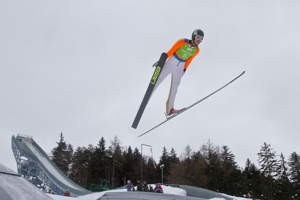
Ski jumping is one of the most famous and iconic winter sports that sees competitors attempt to jump off a large ramp and land successfully scoring the most points. As part of the Winter Olympics since it began in 1924 for men and, since 2014 for women, it has provided some of the Winter Olympics some of its most dramatic moments. Ski jumping is actually a form of Nordic skiing although unlike most other forms of skiing it is not done on a piste, rather on a specially constructed ramp known as an in-run.
A popular winter sport around the world, it came to wider world attention in 1988 when the UK’s Eddie the Eagle became an unlikely world star when he came last out of 73 competitors in the 1988 Winter Games. In 2016, a critically acclaimed film was made about his exploits at the games.
Unsurprisingly, thanks to their geographic locations, Norway, Finland and Austria are by far the most successful ski jumping nations.
Object of the Game
The object of ski jumping is very simple. It is to score more points from the judges than the other competitors. Each competitor must descend down a specially constructed ramp, known as an in-run, until they eventually reach the end ramp from which they ski off. From here, each competitor attempts to ‘fly’ as far as they can through the air and then successfully land on the steeply sloped hill that lies below as close to the ‘K Line’ as possible.
Players & Equipment
Ski jumping is an individual event and one that has relatively few pieces of equipment.
- Jumping Skis: These are specially designed skis that are made specifically for ski jumping. They are longer than normal skis at about 252cm long and are heavier too, as they have to be more substantial to cope with the impact of landings. All ski jumping skis have free heel bindings.
- Ski Boots: Once again, specialist equipment is needed. In ski jumping, a jumper needs boots that let them lean forward during a flight. They also need to be flexible and with a high back but low cut front.
- Ski Suit: Ski suits are required to be manufactured by with the same material throughout and are sleek, streamlined and stretchable.
- Helmet: Helmets are mandatory in ski jumping competitions thanks to the potential dangers of the sport.
Scoring
Each hill has a line calculated and marked on it known as the K Line. Jumpers must try to land as close to this as possible. Deductions of points are made for each metre over or under the ski jumper lands. There are other considerations that judges make too. They also consider:
- Style: The better the form of the ski jumper, the more points they will receive.
- Bodyweight: Ski jumpers whose weight is very low are penalized with a shorter maximum ski length, reducing the aerodynamic lift they can achieve. This is because lighter jumpers can often jump further.
- Gate Factor: This is where certain compensation is given for variable outdoor conditions. This is to ensure that if weather conditions change during a competition, all competitors are treated equally.
- Wind Conditions: Another factor to provide fairness as jumpers with a strong wind behind them will be at a big advantage. Therefore, their jumps may be factored to take this into account.
Winning
The winner of a ski jumping competition is the one who has the most points at the end of the competition.
Rules of Ski Jumping
- Most major ski jumping competitions are made up of two rounds.
- The first round consists of 50 jumpers who each get two jumps.
- Only valid jumps in which the jumper successfully lands without touching the ground with their hands are counted.
- All jumps are assessed by five judges.
- Landings are videotaped to ensure exact measuring.
- The overall scores of each jumpers jumps are added and the top 30 competitors progress to the next round.
- The 30 competitors each make two more jumps with the scores of each added up. The jumper with the highest number of points is declared the winner.
Snooker Rules

Snooker is one of the world’s most popular games due to its growth in India and China but, for now, it remains largely dominated by British players at the highest level. The Snooker World Championship is – for many – one of the biggest sporting events of the year but the sport is also played in clubs, and sometimes pubs, all over the UK by amateurs of all levels.
It developed from another cue sport, billiards, which began in the 16th century, with snooker coming along in the late 19th century. The first official snooker tournament was in 1916 with the first World Championship appearing in 1927 and since then the popularity of the game has ebbed and flowed, with the 1970s and 1980s probably the game’s finest era.
Object of the Game
The object of the game is to use the white cue ball to pot the other balls in the correct sequence and ultimately score more points than your opponent in order to win the frame, a frame being the individual game unit.
Players & Equipment
Snooker is played one against one and the size of the balls and table are regulated. The table is rectangular, measuring 12ft x 6ft and just under 3ft in height, and usually made of wood with a slate top covered in green baize. The table has six pockets into which the balls are potted, one in each corner and two in the middle of the long sides, or cushions. The end from which the game starts is called the baulk end and has a line across the width of the table 29 inches from the baulk cushion. In the centre of this is the D, an 11.5 inch-radius semi-circle with the baulk line as its diameter.
The hard balls, made from phenolic resin, are approximately 2.7 inches in diameter (they are given in metric units of 52.5mm). There are 15 red balls and one each of black, pink, blue, brown, green and yellow, as well as a white cue ball which is the only one struck by the players. The colours go on their spots, the green, brown and yellow from left to right on the baulk line across the semi-circle. The blue goes in the middle of the table, the pink midway between there and the top cushion (the opposite end to the baulk cushion) with the black in the centre, 12¾ inches off the top cushion. The 15 reds are placed in a triangle with one red at the point behind the pink.
The players use a cue, usually made of wood, to strike the white ball and this must be “not less than 3ft in length and shall show no substantial departure from the traditionally and generally accepted shape and form”.
Scoring
Players score one point for potting a red, after which they must nominate a colour for their next shot. The black is worth seven and is the most valuable going down through pink (six), blue (five), brown (four), green (three) and yellow (two). After each colour (the six colours are re-spotted but the reds are not) the player reverts to a red and alternates red, then colour until all the reds are potted. The remaining six colours are then potted in ascending points order, thus finishing with the black.
A player continues until he misses a ball or commits a foul, the players alternating turns. The maximum standard break (the term given to a consecutive run of pots) is 147 (15 reds taken with 15 blacks and then all the colours).
If a player commits a foul their opponent is awarded four points, unless the foul occurred whilst playing the blue, pink or black or hit one of those higher values first, in which case the foul is worth the value of the ball in question.
Winning the Game
The winner is the person who scores the most points in a frame. Once a player has a lead of more points than remain on the table the opponent is said to “need snookers”. A snooker is where the balls are so placed so that the player cannot directly hit the next legal ball. The hope is to force a foul and earn four points. If a player thinks they cannot win, even by forcing snookers, they concede the frame, usually when around four or more snookers (fouls) would be required in addition to all the remaining balls, depending on how many balls are left.
A match is normally played “best of” a set number of frames, ranging from three right up to 35 for modern World Championship finals, such that the winner would be the first player to reach an unassailable lead.
Rules of Snooker
- Players take it in turns to break (start the frame) with a coin toss deciding who starts the first frame. The break is made with the cue-ball in the D and a red must be struck.
- If both players agree a frame can be restarted, if, for example, both players agree the balls are so placed that the frame could lead to a stalemate.
- A push shot, which is a foul, is when the tip of the cue remains in contact with the cue-ball as it in turn touches the target ball. The cue ball must only be played with one clean strike of the cue.
- The referee may call a miss if the player does not strike the correct ball and is adjudged not to have made a serious attempt to. The other player is awarded the foul (four or more) and has the option to make the player replay the shot.
- All balls must be stationary before the next shot is played.
- The cue ball must hit the nominated ball first, or if it is a red, any red. Failure to do so is a foul, as is not hitting any ball or potting a non-nominated ball.
- If the player touches any ball with any part of their body or any ball other than the white with their cue it is a foul.
- Hitting a ball off the table is a foul. Reds are not replaced but colours will be re-spotted.
- If the spot on which a colour would usually be replaced is covered by another ball the colour is placed on the next highest available spot. If all spots are occupied the colour is placed as close to its spot as possible, between that spot and the top cushion. The ball must not be touching any other ball.
- When the cue-ball is touching another ball the referee shall state “touching ball” and the player must play away from that ball. If that ball moves it is a foul. If the player nominated that ball then they can play away and it is classed as already having made contact with that ball.
- If a player fouls and the other player cannot hit the whole of the next legal ball then a free ball is declared. The player may then hit any ball of their choice (they must nominate) and this will score and act as per the next legal ball, meaning, for example, that the black may be nominated as a red and if potted, followed by a colour.
- The player must have at least some part of one foot on the ground whilst playing a shot.
- Potting the white is a foul, as is a jump shot, where one ball leaves the table and clears another ball.

Snowboarding
Snowboarding is a winter sport whereby athletes stand on boards and slide down snow-covered inclines. Snowboarding made its debut at the Olympic games in 1998 and has continued to feature ever since. There are as many as ten different types of Snowboarding events contested at the games, and all involve participators tackling tracks with alternate terrain, including pipe races and time-trial competitions.
Softball Rules
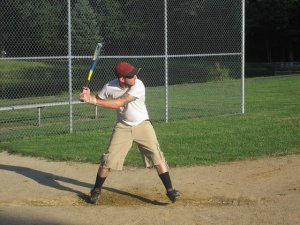
Softball is a variation of the sport baseball. It’s more commonly played at a recreational level and played on a pitch smaller than that of baseball. Whilst the rules are very similar there are some that differ. The sport is widely played throughout North America but there are also professional leagues played in Asia, Europe and South America.
Object of the Game
The object of softball is to hit the ball with a bat before the player tries to run around an infield with four bases. Once a player manages to get right round without being given out a run is scored. The team with the most runs at the end of the game is deemed the winner.
Players & Equipment
Each softball team has 9 players. The game takes place over 7 innings and within each innings the team will bat then field. An innings is split into two sections called the top and the bottom of the innings. The away team bats first at the top of the innings whilst the home team field, then teams switch so the home team bats at the bottom of the innings.
Pitch sizes vary in softball and are often just whatever size can be found or used at the time. The in- filed has four bases in a diamond shape. The bases are home base (where the batter stands), first base, second base and third base. Home plate can be found in the centre of the field where the pitcher must stand to throw the ball. The pitcher must throw the ball underarm and must have at least one foot on the plate at the point of delivery.
Once a batting order is set at the start of the game it cannot be changed throughout. A batsman can be given out by being caught by a fielder without the ball bouncing, missing the ball three times in which a strike is called or by being tagged by a fielder holding the ball whilst running between bases. A batsman can be walked to first base if the pitcher fails to get the ball within the strike zone 4 times without a stroke being made. The strike zone in softball is larger than that of baseball.
Teams can be mixed with men and women or with just a single sex on each team. Once a team have completed their innings then the teams switch to do the opposite role. An innings is complete when the fielding team manage to get three players out from the bating team.
Scoring
To score a run the batsman must successfully first hit the ball and make it around the bases without being given out. One run is scored for every batsmen they manage to get round. A run can be scored even if the batsmen who hit the ball doesn’t make it round to home plate but manages to get a player that’s already on one of the bases home.
Winning the Game
The winners of the game will be decided after the 7 innings have all been completed. The team with most runs after 7 innings will be declared the winner. If after 7 innings the game is tied, then an extra innings will be played until a winner is found.
Rules of Softball
- Each team consists of 9 players and teams can be of mixed gender
- A game lasts for 7 innings and is split into two sections; the top and bottom of the innings.
- Each team bats once in each innings before the sides switch.
- The fielding team has a pitcher, catcher, a player on first base, second base, third base, three deep fielders and short stop.
- A batter must successfully strike the ball and run around as many bases as possible. Once they get all the way around and back to home plate without being given out a run is scored.
- The fielding team can prevent the batsmen by making them miss the ball, catching the ball, tagging one of the bases before they reach it or tagging the batsmen whilst they are running with the ball in hand.
- Down the first and third base line is a foul area. Once the ball crosses this line before it bounces the ball is deemed ‘dead’ and play restarts with a new pitch.
- A home run can be scored by hitting the ball over the outfield and into a dead ball area. The batsmen can then stroll around the bases to score along with any additional batsmen on base.
Speed Skating Rules
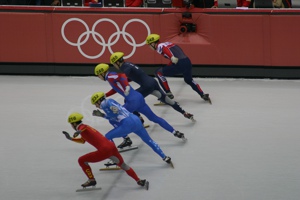
Speed Skating is a winter racing sport where athletes compete against one another on an ice-based circuit, using skates to navigate their way around the track. There are three main variants of speed skating – Long Track Speed Skating, Short Track Speed Skating, and Marathon Speed Skating. In the Olympics, “Speed Skating” is the term used to describe the Long Track category, whereas Short Track Speed Skating is abbreviated to “Short Track”.
Speed Skating was developed at some point during the 19th Century, and whilst its precise origins are routinely debated, the first competitive events can be traced back to Norway in 1863.
Speedskating has been a part of the Winter Olympics from the very beginning with four separate men’s events held in 1924. Since 1960, a number of women’s events have been introduced, as well as Team Pursuit events in recent years.
The Netherlands have collected the most Olympic Speed Skating medals overall, with the USA and Norway also experiencing success. Eric Heiden of America and Clas Thunberg of Finland are the most individually decorated Speed Skaters at the Olympics with five gold medals each.
Object of the Game
Speed Skating is a racing sport, so the primary aim is to complete each circuit in the fastest time possible. Athletes compete in races two at a time, with a lane reserved for each. During the race, athletes reach a specific point where they swap lanes to ensure they cover the same amount of distance as one another overall. If a race is neck and neck and both competitors meet on a corner, the athlete occupying the inner lane must offer right of way to the rival on the outside. The athlete that reaches the finish line first is declared the winner.
Players & Equipment
In a Speed Skating race, players ordinarily race around the circuit two at a time. Every participant is required to wear specific equipment, including the following.
Suits
Athletes require specially made suits that offer protection on the ice but also enable them to skate around the track at high speeds. For low air resistance, these suits are usually skin-tight in design and are tailored to each individual athlete’s specific body shape. They also contain Kevlar for added protection.
Footwear
Boots are tailor made for professional Speed Skaters, with the blades at the base varying in length from 14 to 18 inches. These blades are also designed with a curve in order to assist turning when racing around the circuit.
Safety
Athletes also wear helmets, neck guards, goggles, and ankle shields during racing as well as their suits, which offer added layers of protection in the event of a fall.
The specific equipment used in Long Track and Short Track differs slightly, with most of the main protective items not required in Long Track.
Scoring
In order to improve their chances of reaching the finish line first, Speed Skaters must adopt a particular set of techniques. These include:
Balance
Athletes must keep a low centre of gravity by bending their knees in order to skate at the highest possible speeds and take corners effectively. The lower to the ground, the better.
Positioning
Speed Skaters must take the circuit into account whenever they are competing. As a rule, the skater on the inner lane will have the upper-hand, so athletes must continue to make ground when they’re in the outer lane and recognise how to position themselves correctly.
Winning
The winner of a Speed Skating race is the athlete that reaches the finish line first. There are often no heats or finals in Speed Skating like there are in other racing sports.
Rules of Speed Skating
- In Olympic Speed Skating, races are participated on a 400-meter oval track. In Short Track, they are contested on a 111-meter circuit.
- Races begin from a standing start, signalled by firing a gun. If an athlete moves too soon, this is known as a “false start” and they are given a warning. More than one false start places an athlete at serious risk of being disqualified.
- If two athletes meet on a corner, the racer in the inner lane must give right of way to the rival on the outer lane. Failing to oblige to this regulation or impeding an opponent in any way will result in disqualification.
- Depending on the nature of the race, an athlete that falls down may have the option to run the race again.
- Skaters are not permitted to move lanes when approaching the finish line.
- In certain races, a skater may call a “relay player”, who is essentially a replacement. Before a relay player can be called, the athlete who began the race must have completed a minimum of one lap.
Squash Rules
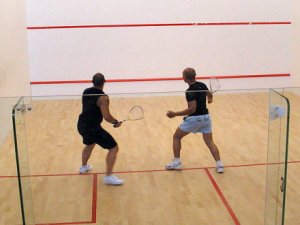
Squash is a game played around the world and has as big a following professionally as it does in amateur ranks. The game dates back to 19th century with variations of the game (then called racquets) evolving into the modern game as we now know it. Whilst squash isn’t currently an Olympic sport, its pinnacle comes in the form of the Squash World Championships where the best players from around the world compete to be the ultimate squash champion.
Object of the Game
The object of the game is hit the ball off the back wall until you manage to make your opponent fail in returning the ball. Every time you do so you will receive a point. Points make up sets, which in turn determine the winner of the match.
Players & Equipment
Squash is played between two people in a box like room. All that is needed is a squash racket (similar to a tennis racket but smaller head size) and a squash ball. The squash ball is around 2 and a half inches in diameter and made from rubber. There are 5 different speeds of squash ball ranging from super slow (competition standard) to fast (more beginner standard). The ball is generally pretty low bouncing, especially the super slow balls, which make it tough to return the ball.
There are many lines on a squash court. The first line is out line that runs across the top of the back wall and down the sides of the side wall. Any ball hitting outside this area is deemed out and a point is awarded to your opponent. A board runs along the bottom of the back wall which is technically the ‘net’. If the ball hits into the board then it is deemed a foul. 3 feet above the board is the service line. All serves must hit above this line for it to be a legitimate serve. The back of the court is split into two rectangular sections where a player must start from before each point. A service box is in each section and a player is required to have at least one foot in whilst they serve or are waiting to receive the serve.
Scoring
Scoring a point can come one of 4 ways: the ball bounces twice before your opponent hits the ball, the ball hits the back board (or net), the ball goes outside the outline or a player causes interference purposely to prevent their opponents from getting the ball.
There are two methods of scoring Squash. The first is called ‘PAR’ where you play first to 11 points and you can score a point from either yours or your opponents serve. The second is a more traditional style where you play first to 9 points but can only score points off your own serve.
The 11 point PAR scoring system is now the official scoring system in professional ranks and the majority of amateur games.
Winning the Game
In order to win the game you need to reach the required amounts of sets determined before the start of the match. Most sets are best of 5 games, so the first to that number wins.
Rules of Squash
- Games can be played by either two (singles) or four (doubles) players at one time.
- You must hit the ball with your racket within the boundaries on the back wall.
- The ball can hit the side wall at any time as long as at some point it hits the back wall.
- A let is called when a player accidently gets in their opponents way and is unable to get out the way.
- A foul is called if the player purposely tries to get in the way of their opponent.
- If a game gets to 10-10 then a player must win by two clear points to win that game.
- You cannot hit the ball twice and you cannot carry the ball.
- When serving one foot must be within the service box; the same goes for your opponent.
- Upon returning a serve you may hit the ball on the volley or after it bounces.
- The speed of balls are determined by number and colours of small spots on the ball:
- Double Yellow = Extra Super slow for competitions
- Yellow = Super slow
- Green or White = Slow
- Red = Medium
- Blue = Fast
-
What Is the Difference Between Squash and Racquetball?
Racquetball and squash are sports that have a great deal of similarities. Both racket sports played with a ball on an enclosed court, they both require a high level of fitness and are exciting and dynamic to play.
However, as much as they might be similar, there are, in fact, more differences between them with some features more significant than others.
Administration
Racquetball and squash are administered by two different governing bodies. The International Racquetball Federation is the governing body for racquetball and oversees all internationally sanctioned events, as well as the various national bodies.
The Squash Federation is the international federation for squash and looks after the sport across the world and has 145 member federations. Because of the similarity of the sports, in some countries, one organisation oversees both games. An example of this is in England where both sports are governed by England Squash.
The Court
Both squash courts and racquetball courts are enclosed but there are differences between the two sports when it comes to the playing surface and the size. Racquetball courts are larger, measuring 20x40x20 feet. Squash courts are 21x32x15 feet. In racquetball, every surface is included as in-bound including the ceiling, whereas in squash, you’re not allowed to hit the ceiling.
The Racket
Squash rackets are larger and can measure up to 27 inches compared to 22 inches in racquetball. Whilst both used to feature a circular head similar to those used in badminton, they both now have more teardrop shaped heads. Those in racquetball, however, are wider and this is to cope with the larger ball that is used compared to squash.
The Ball
The balls used in squash are just 4cm in diameter and are made from rubber. The balls used in racquetball are 6cm in diameter, also made from rubber but tend to be a lot more bouncy than the ones used in squash.
Service
In squash, players are only allowed one service per point, however, in racquetball you are allowed two, which is similar to tennis. In squash, there is no bounce before hitting the ball before service whereas in racquetball the ball must bounce once before striking it. In squash, the server has to hit the ball into one of two service boxes whereas in racquetball the server can hit any part of the wall.
Scoring
Squash games go up to nine points in regular matches and eleven in championships and tournaments. Games must be won with two clear points. Like tennis, points can be won regardless of whether the player is serving or receiving.
In racquetball, games go up to fifteen points but points can only be scored when it is your serve. Like squash, games must also be won with two clear points.
Popularity
Racquetball is played by 5.6 million people worldwide, whereas squash is more popular and is played by an estimated 20 million across the globe. The popularity of both games is on the increase with both being played by an increasing number of players in an increasing number of countries.
Sumo Wrestling Rules

Sumo Wrestling is one of the world’s most distinctive forms of wrestling. Originating in Japan, Sumo can trace its roots back to the Edo period of Japan’s history (circa 1603) and was a popular form of entertainment. The original wrestlers were almost certainly ronin, samurais who had no lord or master and they would have competed as Sumo would provide them with a source of income.
Sumo is considered a martial art in Japan but is more accurately described as a sport, but one which still retains many of the ancient traditions of the Shinto religion as can be seen from the rituals at the beginning of every Sumo bout.
Object of Sumo Wrestling
The object of Sumo is simple. To force your opponent out of the ring or force your opponent to the canvas. However, behind this deceptively simple objective lies a complex and fascinating sport in which there are plethora of techniques and practices that wrestlers can use to win their match which elevates it far above a simple test of strength.
As well as the sporting aspect of Sumo Wrestling however is the fact that as a sport, it is very closely associated with the Shinto religion and this can be seen at the beginning of every Sumo bout where wrestlers perform a certain set of moves that include leg raises and claps.
The claps are traditionally meant to show their opponent that they are not hiding any weapons and that they wish to meet in a fair fight. As well as this, salt is also thrown by both fighters into the ring. Salt is important in Japan’s Shinto religion and is used to purify, and each wrestler throws it to help drive away evil spirits.
Players & Equipment
The first thing that anyone notices about Sumo is the size of the competitors. Unlike nearly every other sport in the world, in Sumo, being as big as possible is not just advantageous, it is a requirement if a competitor is to be successful. Despite being so fat, Sumo wrestlers are surprisingly light on their feet but despite the fitness required to be a Sumo wrestler, the fact that they carry so much weight does catch up with many competitors, with many developing high blood pressure and Type 2 Diabetes later in life.
The only equipment requirements in Sumo are that all wrestlers wear a mawashi which is the loincloth that is made from tough, heavyweight fabric. Wrestlers are also expected to grow their hair long and wear it in a chonmage (topknot).
Scoring
No points are scored in Sumo, as Sumo is a simple win/lose format in which there can be no tied bouts. However, there are various levels of Sumo Wrestler dependent upon ability, and they exist effectively in six divisions in which promotion and relegation is possible every year. Wrestlers are awarded points depending upon their performance at the main Sumo tournaments which then affects their ranking within their division.
Winning the Match
A Sumo match can be won in a number of of ways. Firstly, you can push your competitor out of the ring. Secondly, you can grab your opponent's belt and force them out of the ring by pushing them or throwing them. Thirdly, you can force your opponent to the canvas.
These are the three main ways (and there are multiple variations of each one), although a match can be won by disqualification or if one competitor is not deemed fit to continue. It is not possible to draw a Sumo bout and matches very rarely last more than a minute.
Rules of Sumo Wrestling
- Sumo bouts take place in a ring that is approximately 15 feet in diameter and is raised on a block of clay that is known as a dohyo approximately 2.5 feet above the ground.
- Each Sumo bout must begin with an elaborate ceremonial ritual in which the wrestlers both perform certain actions and throw salt into the ring. Once the ritual is over, the two wrestlers face each other and wait for the referee to begin the action.
- Both wrestlers are to crouch with fists on the floor until the referee signifies the start of the match.
- Both fighters then engage with each other in an attempt to win the bout.
- There are essentially three ways that Rikishi can attempt to win the match:
- Pushing their opponent out of the ring
- Grabbing their opponent’s belt and forcing them out of the ring
- Forcing their opponent to the floor
- A Rikishi is permitted to use any technique to try and win the match apart from:
- hair pulling
- punching
- striking the ears
- choking
- attacking the groin area
- As soon as one competitor has been forced out of the ring or to the floor, the match is over and the referee announces the winner as well as the technique (kimarite) that was used to win the fight.
- Contestants can also lose a Sumo fight by using an illegal technique (known as kinjite) or if their belt become undone.
Swimming
Swimming is a sport which involves racing through water by adopting a certain type of technique. There are numerous swimming races contested at the Olympic games, including backstroke, butterfly, breaststroke and freestyle (where a participant is free to utilise a variety of techniques). Swimming is contested on an individual and team basis in the form relays, with events held at every Olympic games since the competition first began.
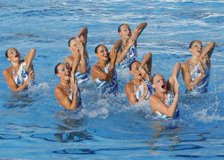
Synchronised Swimming
Synchronised Swimming is a combined sport that incorporates elements of swimming, gymnastics and dance. Synchronised Swimming competitors conduct coordinated performances alongside music, creating patterns and shapes at specific intervals. Teams are awarded points by a panel of judges who score sides for grace, timing and artistic ability. Synchronised Swimming has been held at the Olympics since 1984.
Table Tennis (Ping Pong) Rules
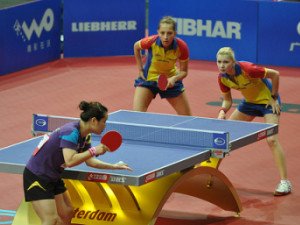
Table tennis has been an Olympic sport since 1988 and is hugely popular in Asia, although it is played all over the world from the dusty streets of Ethiopia to the public schools of rural England. The game did indeed begin in England at the end of the 19th century, first as a postprandial parlour game for upper classes. The sound of the ball on early bats gave it the name “ping pong” but as this became a trademarked term in some countries table tennis soon became the more common name.
Object of the Game
As of 2001 the aim of the game is to score 11 points (it was previously 21) by outmanoeuvring your opponent into either hitting the ball into the net, hitting it off the table or missing it completely. Matches are normally contested as best of five, seven or nine games: that is to say, the first person to reach 11 points in three, four or five games respectively.
Players & Equipment
In singles play it is a game of one against one, whilst doubles pits two against two, although it is also possible to play two against one in informal situations (family holidays for instance!). Here we shall focus on singles rules.
Little equipment is needed to play ping pong, which is unsurprising given it was originally an improvised game played on a table using books for both the net and the bats! Officially the game is played using a 40mm diameter, white (or sometimes orange) table tennis ball weighing 2.7g; rackets (official term) that are normally called bats (UK) or paddles (USA) and are red on one side and black on the other; and a table measuring 2.74m (9ft) long, 76cm (30 inches) high and 1.52m (5ft) wide. The table is usually blue or green and has a 15.25cm (6 inch) net across its width, bisecting its length.
Scoring
Scoring is done by forcing your opponent into hitting the ball long or wide of the table or otherwise into the net or by playing a shot which they are unable to hit at all. When serving, your opponent wins the point if you fail to make a valid serve – one that bounces on your side of the table, then clears the net (if it hits the net it is a let and the player reserves) and bounces on their side.
Volleying the ball is not allowed, nor is obstructing it, whilst a double hit will also result in the awarding of the point to your opponent. Note that in table tennis the edges of the table (the lines) are “in” but the side is not.
Winning the Game
The winner of the match is the first to reach the allotted number of games, normally three, four or five. To win a game you must reach 11 points, although if the scores become level at 10-10 it is then the first player to lead by two points that is awarded the game.
Rules of Table Tennis (Ping Pong)
- Ping pong is played over a pre-agreed number of games and the first to 11 points wins each game.
- The toss of a coin or another form of lot-drawing determines which of the players shall serve first.
- Each table tennis player serves twice in turn and serves must be made from an open palm, the ball tossed six inches then struck so it bounces on the service side, clears the net, then bounces on the receiver’s side.
- Points are decided as described above and games must be won by two clear points. At 10-10 each player serves once only, in turn, until one player established a two point lead and wins the game.
- After each game the players rotate both the end of the table from which they are playing as well as who serves and receives the ball first.
- In the deciding game of a match the players swap ends after either player reaches five points.
What Is the Difference Between Ping Pong and Table Tennis?
Table tennis and ping-pong are essentially the same game and there are no major differences between them. The real difference, however, is one of perception. Table tennis is the serious, competitive side of the sport in which people compete in leagues and cup competitions across the world, as well as in international championships.
Ping-pong is an almost identical game (although there are several variations, including the well-known game of beer pong, of course) that is played in a much more informal and social way. Whilst not all might agree with these differences, those who prefer to play the more social game of 'ping pong' may make some slight adjustments.
The Differences
In the early days of the sport, the terms ping pong and table tennis were both used and were reasonably interchangeable. However, because of fears about trademark disputes over the name ping-pong, when writing up the standardised rules of the sport the ITTF (International Table Tennis Federation) chose to use the words table tennis.
Today, many of the more serious players of table tennis do not like their game being referred to as ping pong. They believe the onomatopoeic nature of the word gives the wrong impression of the game making it sound frivolous and childlike.
However, the ping pong community have embraced the looser and less formal name. Focussing not on competition but on the social and fun side of the game, they tend to play a stripped down version of the game free from some of the more intricate rules of table tennis.
Service
In table tennis, the ball is required to be thrown more than six inches upwards from an open hand and then hit from behind the table’s baseline. However, in less formal ping pong games, serves may be hit straight out of the hand or following a bounce on the table.
Scoring
In modern table tennis, games go up to 11 points, players having two serves at a time. In many ping pong matches though, the traditional 21 point format is used with each player having five serves alternately.
Rundlauf
As well as the usual singles and doubles matches, ping pong has several variations around the world. One of these is Rundlauf (round the table). Originating in Germany, it is a fantastic way for larger groups of players all to enjoy ping pong at the same time. Basically, two teams of players form two queues leading anti clockwise around the table tennis table.
The ball is served the first member of one team and then each player takes their turn at the end of the table to hit the ball before moving on and going to the back of the queue. Losing a point can mean elimination from the game of the loss of a life depending on the particular rules being played.
Although it originates in Germany, Rundlauf is becoming a more and more popular version of ping pong and can be played by between 10 and 16 players. No such group form of the game exists in table tennis.
For some additional interesting information check out https://www.thegamesguy.com/how-to-improve-at-ping-pong/
Taekwondo Rules

Taekwondo is a Korean martial art and Olympic sport that was developed in post World War 2 Korea by various martial artists but is usually attributed to military general and martial artist Choi Hong Hi. Taekwondo is based on the native Korean martial arts of Taekkyeon, Subak and Gwonbeop but also has significant elements of other martial arts such as Japanese Karate and to a lesser extent Chinese Kung Fu.
As a martial art, it is known as a style that focuses particularly on kicking, and experienced practitioners can be seen performing various spectacular head height and jumping kicks. There are various Taekwondo administration bodies but the main two are the ITF (International Taekwondo Federation) and the WTF (World Taekwondo Federation) but it is the latter that is the best known as it the WTF form of Taekwondo that has been a major part of the Olympic Games since 1988.
Object of Taekwondo
In Taekwondo competition, the object is to land kicks and punches upon the scoring zones of your opponent. These are the the torso and the head and both kicks and punches must be accurate and powerful, as light tapping kicks are not counted by scorers (or electronic scoring systems in major competitions). At the end of the three rounds of the match, the player with the most points is declared the winner, but the match can end early by one player knocking the other player out.
All Taekwondo practitioners, whether competitors or not are at all times expected to uphold the five tenets of Taekwondo. These are courtesy, integrity, perseverance, self-control and indomitable spirit.
Players & Equipment
In Taekwondo competition, fighters compete against other fighters of the same sex. They are also placed into weight categories to ensure that fights are as evenly matched as possible. In junior competitions, there may also be age categories too.
The white taekwondo uniform that competitors wear is often called a gi, but technically that is the Japanese name for a martial arts uniform and the proper Korean term is a dobok. A coloured belt is tied round the middle of the dobok and the colour signifies the grade of the practitioner. The belt system goes from white for beginners through to yellow, green, blue, red and then black for more experienced practitioners. Black belts then receive their ‘dan’ grades as they progress further in their experience and expertise. In a Taekwondo match, each competitor wears several pieces of protective equipment and these are:
- Head guard
- Chest (trunk) protector
- Groin guard
- Forearm guards
- Hand protectors
- Shin guards
- Mouth guard
Scoring
Scoring in a Taekwondo match is simple. A player gets:
- One point for a basic attack to the opponent’s torso
- Two points for a spinning kick to the opponent’s torso
- Three points for a kick to the head
In major competitions, electronic scoring systems are used that are placed within each player’s chest protector and are adjusted to take into account of the weight category of the fight. For head kicks (and fights where electronic scoring is not used), a panel of 4 judges push a button when they see a scoring point. When at least 3 judges agree, then a point is awarded.
Winning the Match
Once a Taekwondo match is over (at the end of the 3 x 2 minute rounds), the winner is the fighter that has the most points. If both fighters have the same amount of points, then an extra round is fought called the golden point round. In this round, the first fighter to score a point is declared the winner. Taekwondo matches can be won earlier if one fighter knocks the other out or if one fighter is disqualified for a rule breach.
Rules of Taekwondo
- Taekwondo matches should be contested by competitors of the same sex and in the same classified weight category.
- The competition area is a mat that measures 8 metres squared.
- Taekwondo matches are contested over 3 x 2 minute rounds with a rest of 1 minute between rounds.
- Each fighter attempts to knockout their opponent or score points by landing blows on their opponent’s torso or head. Kicks are allowed to both to the torso and head, whilst punches are only allowed to the body. Below the waist is not a permitted target.
- If a fighter and their coach think that a point has been missed or that a mistake has been made, they can make a protest. A video replay is then looked at by judges and a decision is made.
- Fighters can lose points by the way of penalties. These can be incurred by actions such as:
- Punching to the face
- Attacking with the knee
- Attacking below the waist
- Stepping out of the ring with both feet
- Turning your back on your opponent
- Pushing, holding or grabbing your opponent
- Feigning injury
- The match is won by the fighter who knocks their opponent out or who has the greater number of points at the end of the three rounds.
- If the match is a draw, a golden point round is fought, with the fighter landing the first scoring point being declared the winner.
Tee-Ball Rules
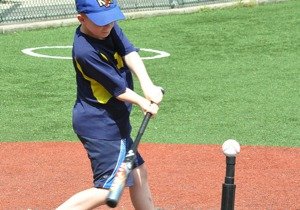
Tee-Ball is a team sport that is very similar to the game of baseball and is a game that is used to introduce young children to the game through its simplified rules. As well as this, it is also used as a way of helping children to develop hand/eye coordination and ball skills.
The main difference between Tee-Ball and baseball is that, whereas in baseball a pitcher pitches the ball towards the hitter, this does not happen in Tee-Ball. Instead, the hitter hits the ball off a tee which is stationary, thus allowing young children an easier way of hitting the ball and engaging with the game and developing skills. Although in Tee-Ball the ball is softer, the lack of the ball being pitched also makes it safer for children.
Object of the Game
The object of the game is for one team to defeat another by scoring more runs. They do this by attempting to score as many runs as they can during their innings and attempting to prevent their opposition's scoring runs whilst fielding.
However, there is a greater objective to Tee-Ball and that is to introduce children to baseball and to sport in general, so as well as helping introduce them to the rules of baseball, it gets them active, helps develop hand/eye coordination as well as ball skills.
Players & Equipment
One of the reasons behind Tee-Ball’s popularity is its simplicity and the fact that it needs relatively little equipment to play. Teams are made up of between 5 and 7 players, although more can be played by agreement and all players should wear suitable training shoes. When batting, each player is required to wear a suitable safety helmet and wear gloves.
The bats used should be between 25 and 26 inches long and the balls are special Tee-Ball ones, very similar to regulation baseballs but made to be softer to help minimize the risk of injuries.
Scoring
Scoring is like in baseball, with each member of the batting team who makes it round all bases scoring a point for their team. In games featuring particular younger children, often these games are not scored and are played solely for fun and to help develop hand/eye coordination, ball skills and have experience of playing in a team.
Winning the Game
At the end of the match, the runs that have been scored by each team are added together and the team with the most is declared the winner. If the scores are the same at the end then a tiebreaker could be played with another innings for each team although due to the friendly nature of the sport it may be decided to draw the game. In games for younger members that aren’t scored, there is no winner of the game.
Rules of Tee-Ball
- Tee-Ball is played by two teams of between five and seven players, but can be played with more if the team sizes are equal.
- A coin is tossed at the start of the game with the representative from the winning side choosing whether to bat or field first.
- The number of innings shall be exactly the same as the number of players on each team, with the hitting order rotating each innings enabling each player to have the chance to lead off an innings.
Batting
- When batting, the ball shall not be pitched but shall be placed on a tee from which the batter shall hit it.
- The batter (aka hitter) is entitled to have as many swings as they need to hit the ball.
- A player is declared as being out when:
- The ball is hit and then caught without hitting the ground.
- A player who has the ball stands on the base before the runner makes it to the base.
- A fielder with the glove or hand that is holding the ball tags a runner between the bases.
- An innings is complete when each player on the team that is batting has had a turn to bat.
- Once the first team to bat’s innings are all complete, it is the turn of the opposition to have their innings.
Fielding
- Fielding positions are as follows:
- The Pitcher: The pitcher does not pitch the ball but is tasked with fielding the diamond area in which most balls are hit
- The Catcher: This role, unlike their baseball equivalent is to place the ball on the tee, catch the ball and to tag runners running for home base.
- Bases: First Base, Second Base and Third Base positions field in and around their base area and attempt to run out players running for their base.
- Others: If playing with larger numbers, other fielders are placed around the playing area and are tasked with fielding the ball, catching and trying to run players out.
Running Bases
- Unlike baseball and in an attempt to encourage fielders to throw, once a throw is made, a runner may only advance to the base they were going for.
- If runners turn back towards a previous base, they must return to that base.
The game is won by the team with the greater number of points at the end of the game.
Tennis Rules

Tennis is a sport that originated in England around the 19th century and is now played in a host of countries around the world. There are four major tournaments known as the ‘majors’ that include Wimbledon, US Open, French Open and Australian tournament.
Object of the Game
The game of tennis played on a rectangular court with a net running across the centre. The aim is to hit the ball over the net landing the ball within the margins of the court and in a way that results in your opponent being unable to return the ball. You win a point every time your opponent is unable to return the ball within the court.
Players & Equipment
A tennis match can be played by either one player on each side – a singles match – or two players on each side – a doubles match. The rectangular shaped court has a base line (at the back), service areas (two spaces just over the net in which a successful serve must land in) and two tram lines down either side. A singles match will mean you use the inner side tram line and a doubles match will mean you use the outer tram line.
A court can be played on four main surfaces including grass, clay, hard surface and carpet. Each tournament will choose one surface type and stick without throughout. All that is required in terms of equipment is a stringed racket each and a tennis ball.
Scoring
You need to score four points to win a game of tennis. The points are known as 15 (1 point), 30 (two points), 40 (three points) and the fourth would result in the winning point and the end of that game. If the scores went to 40-40 this would be known as deuce. When a game reaches deuce the player must then win by two clear points.
Winning the Game
To win the game you must win a certain amount of sets (best of three for women’s matches and best of 5 sets for men’s matches). Winning a set is simply the first player to reach 6 games but have to be clear by at least 2 games. If your opponent wins 5 games you must win the set 7-5. If the set goes to 6-6 then a tie break is played and it’s simply the first player to 7 points.
Rules of Tennis
- The game starts with a coin toss to determine which player must serve first and which side they want to serve from.
- The server must then serve each point from alternative sides on the base line. At no point must the server’s feet move in front of the baseline on the court prior to hitting their serve.
- If the server fails to get their first serve in they may take advantage of a second serve. If they again fail to get their second serve in then a double fault will be called and the point lost.
- If the server clips the net but the ball goes in the service area still then let is called and they get to take that serve again without penalty. If the ball hits the net and fails to go in the service area then out is called and they lose that serve.
- The receiver may stand where they wish upon receipt of the serve. If the ball is struck without the serve bouncing then the server will receive the point.
- Once a serve has been made the amount of shots between the players can be unlimited. The point is won by hitting the ball so the opponent fails to return it in the scoring areas.
- Points are awarded in scores of 15, 30 and 40. 15 represent 1 point, 30 = 2 and 40 = 3. You
- need 4 points to win a game. If a game lands on 40-40 it’s known as deuce. From deuce a player needs to win 2 consecutive points to win the game. After winning one point from deuce they player is on advantage. If the player wins the next point they win the game, if they lose it goes back to deuce.
- To win the set a player must win 6 games by 2 or more. The opening sets will go to a tie break if its ends up 6-6 where players play first to 7 points. The final set will not have a tie break and requires players to win by two games with no limits.
- If a player touches the net, distracts his opponent or impedes in anyway then they automatically lose the point.
- The ball can hit any part of the line for the point to be called in, outside the line and the ball is out.
- The balls in a tennis match are changed for new balls every 6 games
- A player loses a point if they fail to return the ball in either the correct areas on the court, hits the net and doesn’t go into opponent’s area or fails to return the ball before it bounces twice in their half.
-
 yurikr / Bigstockphoto.com
Triathlon
Triathlons are multi-stage events that incorporate three separate sports into one large-scale competition. Ordinarily, a Triathlon will consist of a swimming stage, cycling stage, and running stage. The aim is to complete the entire competition in the fastest possible time. Triathlon events were introduced to the Olympic games in 2000 and have remained a permanent fixture ever since.
Tug of War Rules
Tug of War is one of the most ancient games known to man and there is evidence that it was played across the ancient world including ancient Greece, Egypt and China. Also known as rope pulling, tugging war and war of tug, it remains today a popular sport that pits the strengths of two teams against each other and is practiced in some form in almost every country in the world.
Many of these countries have their own national governing bodies and there is an international body too known as the Tug of War International Federation which has over 50 countries affiliated with it.
The sport is played by both men and women, and historically was part of the Olympic Games between 1900 and 1920, but has not been included since this dates despite attempts to bring it back. There are many variations of Tug of War around the world including Sokatira in Spain’s Basque Country, Japan’s Tsunahiki, Indonesia’s Tarik Tambang and Korea’s Jul Parigi.
Object of the Game
Most Tug of War matches are completed in a best of three format, and the objective is to beat the competition and win the match by winning at least two of the three pulls in the match. Within each pull, the objective is to win by pulling the opposition and the opposition’s 4m marker towards the centre so that the mark passes the centre line, resulting in a win. It is not possible to tie a Tug of War match.
Players & Equipment
Each Tug of War team consists of 8 members, all of whom cooperate to pull the rope. Despite looking like quite a simple sport, there is some technicality to it, with team members utilising a rhythm to help pull the rope in an effective way. This is done with the help of a ‘driver’, who is not a member of the team but is in effect like a coach and they give orders of when to pull and when to rest from the sidelines.
The rope is the most important piece of equipment and this should be approximately 11 cm in circumference and should be at least 33.5m long with plain, whipped ends. Other pieces of equipment that participants may use include specialist boots, back, elbow and knee supports as well as belts to support the back.
Scoring
In Tug of War, there is no scoring as such like you may see in other team games such as American Football or Soccer. However, because teams are pitted against each other usually in a best of three match, there is a form of scoring, in that the winner of the match must win two out the three pulls to win the match.
Winning the Game
Each team has a mark on their end of the rope 4m from the centre. The team who is pulled by the opposition towards the centre whose mark goes over the centre line is declared the loser. With matches often being the best of three, it is the that successfully wins two out of three pulls that is declared the winner.
Rules of Tug of War
- Each team in a Tug of War competition consists of eight people.
- There are various weight classifications in Tug of War, and the mass of the eight people combined must not weigh more than that determined by the category that they are placed in.
- The rope used should be of a circumference of approximately 11 cm and should be marked in the middle with a centre line as well as two marks that should be placed 4m from the centre line.
- At the start of the pull, the centre line of the rope should be immediately above line marked on the ground.
- Both teams pull the rope, the winner being the team who manage to pull the mark on the rope closest to their opponents over the centre line.
- The rope must be pulled underarm and nobody’s elbow must go below the knee, otherwise a foul will be called.
- Matches are often a best of three pull, the winner winning two out of the three pulls.
Ultimate Frisbee Rules
Ultimate Frisbee is now known in many countries simply as the less-catchy “Ultimate” due to the fact that Frisbee is a registered trademark. It is a fast-paced sport with similarities to netball, football (soccer) and American Football. Played by around five million people in the US and with leagues in the UK and other European countries, Ultimate is a far cry from the humble origins of the Frisbee.
As with many inventions there are multiple reported variations on how Frisbees came to be, but the commonly agreed version is that it comes from the Frisbie Baking Company, whose empty metal pie tins were thrown by college students in the 1920s. Subsequently, in 1948, Walter Morrison invented a plastic version with improved aero-dynamics, and then followed the Pluto Platter.
Ultimate was created in 1967 by students at Columbia High School and in 1979 the Ultimate Players Association, now USA Ultimate, was formed. The sport has grown from its early years as a relaxed sport played for fun and increasingly attracts better athletes and is played more competitively.
Object of the Game
The object of Ultimate is to pass the flying disc to a player in the endzone of the pitch and in so doing a goal is scored. As in rugby and American Football the ends – the last 18m in this case – of the pitch are the scoring zones. The winner is usually decided by whichever team is first to score a specified number of goals or whichever team scores the most goals in a given timeframe.
Players & Equipment
One of the beauties of the sport is that very little equipment is needed, with an inexpensive disc and an open space sufficient for a rudimentary game. Ultimate is contested between two sides of seven players with substitutions permitted and so with a disc, seven bibs and a field you’re away!
The pitch is 100m long with the endzones, as said, 18m deep at either end. It is 37m across and a regulation disc is 10.75 inches in diameter and weighs 175g.
Scoring
Points are scored by getting the disc to one of your players in the end zone by passing it through the air. That’s the only way to score, making the game a very simple one to understand and play.
Winning the Game
Games are usually played as the first side to reach 15 or sometimes 17 goals, although any number can be agreed between the teams. Sometimes games are played over two 15 minute periods with a five minute half-time break. In these games the side with the most goals at the end is deemed the winner.
Rules of Ultimate Frisbee
- The match is started by a “pull”, where one side throws-off to the other.
- A player cannot run with the disc and must stop as soon as they receive it, although they may pivot on one leg (a la netball).
- If a pass hits the floor, is intercepted or is caught out of bounds possession goes to the other side.
- A player in possession has 10 seconds in which to pass the disc or they cede possession to the opposition.
- The defender (marker) makes the count (stall count).
- Ultimate is a non-contact sport and defenders may only stand within three meters of the disc-holder.
- Substitutions are only allowed after a goal has been scored (and before the throw-off), to replace an injured player or after periods of play and not during a timeout.
Ultimate is self-officiating and, indicative of its origins and free-spirited reputation, the Spirit of the Game (SOTG) is highly respected. Only a fouled player may call or appeal for a foul and there is a strong spirit of respect and sportsmanship demanded. Many other sports could do well to take heed.
Underwater Hockey Rules

Underwater Hockey (sometimes called Octopus) was invented in the 1950s by the British Navy in order to keep their divers in shape and to improve their efficiency under water. It then became popularised in Australia before expanding across the world. The sport intertwines disciplines from both ice hockey and swimming in creating a competitive and fairly physical battle.
Object of the Game
The object of underwater hockey is to successfully hit the puck into your opponent’s goal. The team that scores the most goals in the allotted time is then the winner. Obviously the game is played totally underwater and players must remain underwater until a goal is scored. Only when a break in play for a goal or a foul is called by the referee may players then resurface.
Players & Equipment
Each team consist of 10 players. There will only ever be 6 players submerged in the water at any one time with the reaming 4 players acting as rolling substitutes – similar to Ice Hockey. The players then remain on the swimming pool floor where the 3lb puck will be situated. Players are allowed to pass the puck along the floor to team mates using a stick that is attached to their glove of roughly one foot in length.
On top of the stick players are allowed to wear a mask, snorkel, ear protectors, fins, swimsuit and gloves. Whilst the sport is essentially a non-contact sport, the game can turn quite rough and become physical in the same way basketball can. It takes players many years to hone their skills in underwater hockey none more so than the ability to hold their breath for extended periods of time.
The pool is usually around 25m in length, 12 m wide and 2m deep. Ropes or lead weights can be used as a goal.
Scoring
A goal is scored when a team manages to hit the puck into their opponent’s goal using their stick. No other instrument or body part can be used in the game and any goals deemed to come off a players body will result in a foul in their opponents favour.
Winning the Game
The game is won when the allotted time has surpassed and the team with the most goals is the winner. If the game is a tie after the allotted time then an extra 15 minutes is played until a winner is found.
Rules of Underwater Hockey
- Teams consist of 10 players with 6 players in the pool at all time. The remaining 4 act as rolling substitutes.
- Games take place for two 15 minute halves with a 5 minute rest period in between halves.
- Players generally cover zones rather than having positions but formations do come into play.
- Teams can also be split into attack and defence. Variations of midfield players have also been noted before.
- Players can only score using the stick in their hands and cannot use any body parts to assist moving the puck. Players are prohibited from making contact with players unless they are in possession of the puck.
Volleyball Rules
Variations of the game volleyball have been in circulation since around 1895. The game has evolved since then and it was in 1964 where the sport entered its first Olympic games. The sport now has a global following with nations from around the world professionally competing. The pinnacle of the sport comes in the Olympic Games were the best players are often on show.
Object of the Game
The object of volleyball is to hit the volleyball over the net (by only using your hands) running through the centre of the court whilst trying to get it to bounce in your opponents half. The opposing team have to try and prevent the ball from bouncing before returning the ball. Games are played out in best of 3 or 5 sets and the team with most sets at the end of the game wins.
Players & Equipment
Each team has 6 players on a court at any one time. Substitutes can be used throughout the game. There are no professional mixed sex teams. Each player takes up a position in either the attacking zone (next to the net) or the defensive zone (at the back of the court). Three players are in each zone and rotate in a clockwise position after every point.
The court is of a rectangular shape and measures 18m x 9m. Running across the court is a 2.43m high net with the ball measuring 8 inches in diameter and weighing between 9 and 10 ounces. Around the outlines of the court is an out of bounds area and if the ball were to bounce in these sections then a point would be awarded to the opposing team.
Each team gets up to two timeouts per set of 30 seconds each. After each set the amount of timeouts resets back to two regardless of how many have been used previously.
Scoring
To score a point the ball must hit the ground within the outlined section in your opponents half. You can also score a point by your opponent failing to hit the outlined section within your half or your opponent hitting the ball into the net. A point can be scored off either teams serve.
A player serving must do so from behind the base line and can use either an over or underarm action and hit with only the hand. Once the serve has been made the sever can join their team in-play and battle out the point.
Each team is allowed to hit the ball three times before the ball must be returned. A player is not allowed to hit the ball twice in succession. If the ball hits the boundary line then the ball is deemed to be in-play. The defensive team can jump and try to block the ball returning to their side of the court. If a block attempt is made and the ball bounces in their opponents half then a point is awarded. If after the block the ball bounces out then a point is awarded to the opposing team.
Each game is played to 25 points and must be two points clear. If the scores reach 24-24 then the game is played until one team leads by two.
Winning the Game
To win the game you must score more points than your opponents. The best of 3 or 5 sets are generally played and the winners will be the first team to reach the required number of sets.
Rules of Volleyball
- Each team consist of 6 players and 6 substitutes. Players can be substituted at any time but if they are to return can only be swapped for the player that replaced them.
- Each team can hit the ball up to three times before the ball must be returned. The defensive team can then try and block or return the ball again hitting it a maximum of three times.
- Games are played up to 25 points and must be won by 2 clear points.
- Violations will be called for the following:
- Stepping over the base line when serving the ball.
- Ball hits the net and fails to get over the net (If the ball hits the net and still goes over the net then this is perfectly legal).
- Players are not allowed to carry, palm or run with the ball.
- Players must not touch the net with any part of the body. If the net is said to have hit them rather than vice-versa, then this is ok.
- The ball cannot travel under the net.
- Players cannot reach over the net and hit the ball.
Water Polo Rules

The game of Water Polo originated in Britain and it was one of the original sports featured at the the first ever modern Olympic Games in 1900. It is a dynamic team game that requires all participants to have a high level of fitness as well as a large degree of stamina. Featuring fast and furious action, it is an exciting game both to play and to watch. Each match consists of four quarters and players use a combination of swimming, treading water, throwing, catching and shooting throughout the game in an attempt to beat the opposition team. The game is overseen by FINA, the Fédération Internationale de Natation.
Object of the Game
The object of Water Polo is to work as a team with a view to putting the ball into the opposition team’s net, known as scoring a goal. Like many team sports, the object of the game is to score more goals than the opposing team, resulting in a win. It’s not unusual to see high scoring games, with each team scoring over 20 goals each.
Players & Equipment
Each team consists of seven players in the pool at any one time, consisting of six outfield players and one goalkeeper. Unlike other team games such as soccer or hockey where players have very specific positions to keep to, water polo players move from position to position as the game demands. Positions are either offensive or defensive, with the offensive positions including a centre forward, two wings who play on the flanks of the pool and a point, who is positioned around the 5m line. In terms of defensive positions, the only one set in stone is the ‘hole D’, whose job it is to steal the ball and defend the goalie and goal. Players without a set role are known as utility players and are similar to soccer’s midfield, helping out with both offense and defence.
Not much equipment is needed to play Water Polo. A net and a ball are required and players wear simple swimsuits or trunks depending on sex as well as swimming caps and goggles if required.
Scoring
In Water Polo, a goal is scored when the ball completely passes the goal posts and below the crossbar. A team may only have possession of the ball for up to 30 seconds without shooting for a goal, but if a shot is taken and the ball rebounds, the shot clock is reset and the 30 seconds begins again.
Winning the Game
At the end of a match, if a game is tied, then a penalty shootout is used to determine the winner, where all 5 players from each team shoot alternately from the 5m line. If the score remains tied, the shootout continues until one team misses and the opposition scores. Overtime and shootouts are very common in Water Polo.
Rules of Water Polo
- The playing area is 30m x 20m with a minimum depth of 2m.
- Teams consist of 13 players in total, with 7 players in play at any time, 6 field players and 1 goalie.
- Players are only permitted to use one hand to hold the ball apart from the goalie who can use two hands when within 5m of their own goal.
- Water Polo is played in four quarters with each quarter lasting for eight minutes with a two minute break between quarters.
- Players advance the ball upfield by swimming with the ball in front of them or by passing to teammates.
- Players are not allowed to touch the bottom of the pool and players tread water or swim for the entire match.
- Teams can only retain the ball for up to 30 seconds without shooting at goal.
- A goal is equal to one point and is scored when the ball is pushed or thrown completely between the goalposts and under the crossbar.
- Fouls are made up of ordinary fouls and major fouls. Players are only allowed three major fouls, any more and they are excluded out of the game.
- If at the end of the game the score remains tied, a shootout occurs to decide the winner.
-

Weightlifting
Weightlifting is an athletic sport that tests a participant’s strength and endurance by requiring them to lift extremely heavy items using their body. A strong, muscular physique from head to toe is needed to compete at the highest levels. Numerous events have been held in Weightlifting competitions at the Olympics since 1896, from Flyweight events right the way up to Super Heavyweight.

Zorbing
Zorbing is considered a recreational sport that involves rolling down a hill in a transparent plastic orb – essentially a “hamster ball”. It is generally used on hills, but can also be used on water, as well as flat surfaces. Orbs with no harnesses can carry up to three people, whereas a harnessed orb can only carry 1 or 2.
Invented in New Zealand!!